Key takeaways:
Many health insurance plans will cover home diabetes monitoring devices, such as glucometers and continuous glucose monitors (CGMs).
You may be able to use a health savings account (HSA) or flexible spending account (FSA) to pay for out-of-pocket costs related to diabetes monitoring devices.
If your insurance plan doesn’t cover a glucometer or CGM, you may qualify for financial assistance and discounts that can help you afford a device and its associated supplies.
Most people living with diabetes can check their blood glucose (sugar) at home with a blood glucose meter (glucometer) or a continuous glucose monitor (CGM).
Health insurance plans typically cover glucometers and CGMs. Below, we discuss diabetes monitoring devices and how different types of insurance cover them.
Which diabetes monitoring devices are covered by insurance?
Many insurance plans will cover some or all of the costs of diabetes monitoring devices. But you may be required to get prior authorization before receiving them.
Here’s how coverage works for different health insurance plans:
Medicare: After meeting your annual Part B deductible, original Medicare will cover certain blood glucose monitors and the supplies used with them. You pay 20% of the Medicare-approved cost. Medicare covers most CGMs, such as the Dexcom G7 and FreeStyle Libre systems, if they’re determined to be medically necessary by a healthcare professional. Typically, Medicare covers 80% of the approved costs, meaning you can expect to pay the remaining 20% (coinsurance) after you’ve paid the Part B deductible.
Medicare Advantage: Most Medicare Advantage plans cover diabetes monitoring devices. If you will need to track your glucose levels, choose a plan that covers devices and related supplies.
Medicaid: Medicaid is a joint federal and state program for adults and children from households with lower incomes. Individual states and territories decide which diabetes devices will be covered by their programs. People with Medicaid coverage are diagnosed with diabetes at a higher rate than the general U.S. population. Most Medicaid programs cover diabetes devices, including CGMs and related supplies, but they may only cover CGMs for those with Type 1 diabetes. Usually, Medicaid deductibles, copays, and other out-of-pocket costs are low. Contact your state Medicaid program for details.
Affordable Care Act (ACA): Under the ACA (also known as Obamacare), health insurance plans are required to cover essential health benefits, including chronic disease management. The law doesn’t specifically require coverage of diabetes devices, but most states mandate coverage of diabetes monitoring devices and related supplies.
Private and employer-sponsored insurance plans: Employers offering group health insurance plans must provide certain benefits, but diabetes devices are not required unless mandated by the state or territory.
Tricare: If you have Tricare coverage — which is for military personnel, retirees, and their families — you may be eligible for diabetes devices through pharmacy benefits or medical benefits for CGMs. Glucometers are covered under medical benefits as durable medical equipment.
What is the out-of-pocket cost for these devices with insurance?
With insurance, out-of-pocket costs for diabetes monitoring devices will vary based on your health plan. You may be responsible for meeting a deductible as well as coinsurance and/or copays.
Your diabetes monitoring device may require prior authorization, a prescription, or both. You also may be required to receive the glucometer or CGM from a designated supplier or pharmacy.
In some states, your out-of-pocket costs for diabetes supplies may be capped if you have insurance. For example, Connecticut limited out-of-pocket costs for diabetes supplies, including glucometers, at $100 per year for insured residents.
If you have an employer-sponsored health plan and diabetes products are covered, your diabetes device may qualify as a pre-deductible expense, so you won’t have to meet your deductible before your diabetes products are covered.
Here’s general guidance on out-of-pocket costs for diabetes monitoring devices:
Blood glucose meters: Depending on the features, the cost of a glucometer can range from free to hundreds of dollars. Some manufacturers have promotional offers for free glucose meters, because they profit from the regular purchase of test strips for the device. Otherwise, you can find a blood glucose meter (alone or with supplies) for about $15 to $50.
Continuous glucose monitors (CGMs): According to Abbott, its manufacturer, most FreeStyle Libre system users with private or commercial insurance pay less than $40 a month for sensors. With GoodRx, self-pay consumers can save $200 or more per month on the Dexcom G7 receiver and 3 sensors. The manufacturer also has a savings program for cash-pay consumers. Medical device manufacturers also offer discounts and other financial support for CGMs through patient assistance programs. See our GoodRx cost comparison between the Dexcom and FreeStyle Libre systems.
How do you qualify for free or low-cost diabetes monitoring devices and supplies?
If you don’t have insurance or your health plan doesn’t cover a diabetes care product you need or want, you may qualify for programs that provide free or low-cost diabetes monitoring devices.
Here are some options for free or low-cost diabetes care items:
Free diabetes supplies: You may qualify for free or low-cost diabetes supplies through manufacturer programs. For example, several glucometer manufacturers offer free monitors and low-cost blood glucose strips. Some CGM systems come with free trials. People with Type 1 or Type 2 diabetes may be eligible for a free Dexcom G7 10-day sensor, if they are new users of this CGM. And Abbott has a free 14-day sensor for the FreeStyle Libre 2 system or FreeStyle Libre 3 system.
Patient Advocate Foundation: Known as PAF, this nonprofit has copay assistance and financial aid programs that may help you cover the costs of diabetes care.
American Diabetes Association: The association supports PAF’s copay relief for diabetes for those in financial distress who have insurance. People with diabetes who meet income requirements may access grants of up to $1,500 annually for medical costs. Depending on the availability of funds, this program may be closed to new applicants.
Needy Meds: This national organization helps people connect with programs that lower the costs of medical products and supplies.
National Institute of Diabetes and Digestive and Kidney Diseases: This member institute of the National Institutes of Health provides information about financial resources to help people access diabetes care.
Federally qualified health centers: Known as FQHCs, these community health centers may offer free or reduced-cost diabetes devices and supplies. Visit this search tool to find an FQHC near you.
National Council on Aging: This Benefits CheckUp search tool offers healthcare resources that may help you with diabetes care items, based on your ZIP code.
Can I use my HSA or FSA to pay for diabetes supplies?
Yes. If you have a health savings account (HSA) or a flexible spending account (FSA), you can use those funds to pay your out-of-pocket costs for a diabetes monitoring device and related supplies that aren’t covered by your insurance plan. Also, ask your healthcare professional for help applying for free or low-cost diabetes care items if your insurance plan doesn’t cover what you need.
Frequently asked questions
A glucometer is a small, handheld device that uses a tiny drop of blood from a finger to measure your blood glucose. Glucose results are available in just a few seconds. A glucometer requires power from either batteries or charging cables. There are more than 75 glucometers listed in the American Diabetes Association’s (ADA) Consumer Guide.
Supplies needed for these devices include:
Alcohol prep pads
Lancing devices
Lancets (needles)
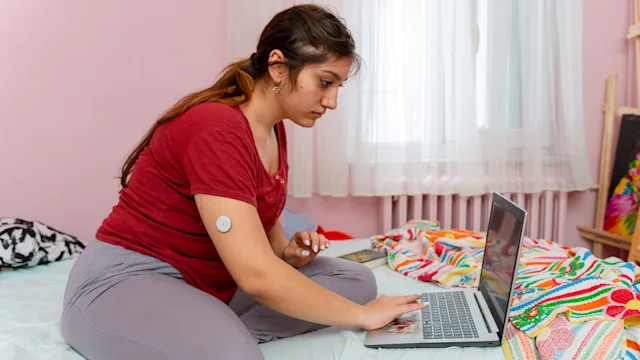
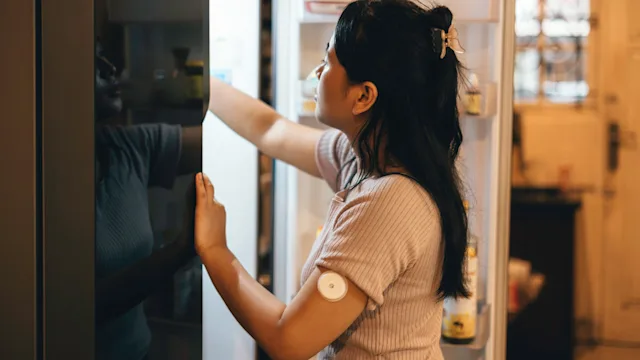
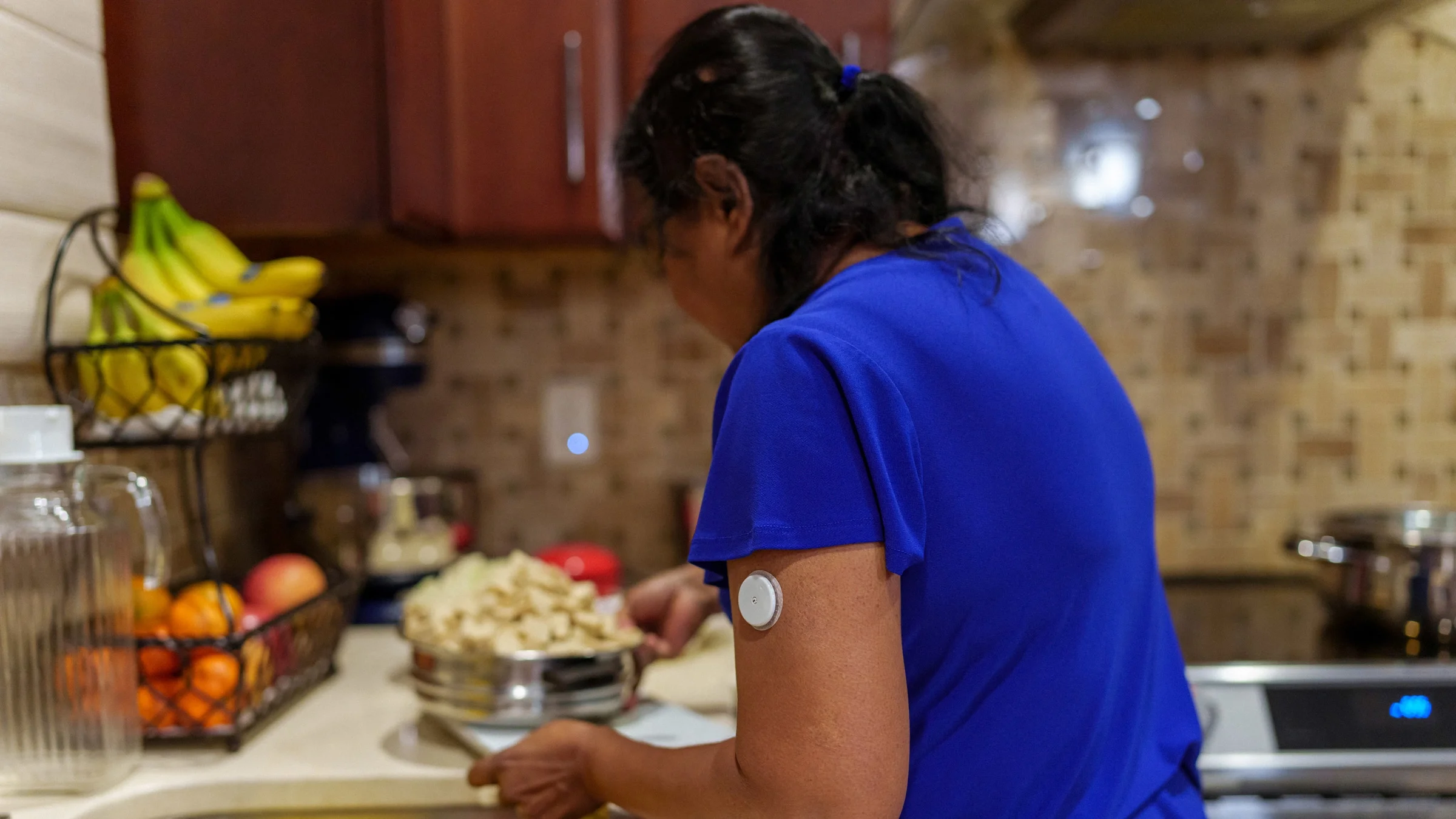
A CGM — a wearable glucose monitoring device — uses a sensor that sits under the skin and measures your glucose 24 hours a day. A CGM also eliminates the need for fingersticks throughout the day. This device requires power from either batteries or charging cables. You can learn more about CGM options in the ADA Consumer Guide.
Additional supplies needed include:
Receiver or reader specific to the CGM (unless you can use a smart device, such as a smartphone)
Transmitter specific to the CGM (certain models only)
Replaceable sensors
Adhesive skin patches
A CGM provides glucose readings throughout the day without multiple fingersticks and will alert you when the amount is too high or too low. You’ll also have a more accurate account of your daily glucose levels and can spend more time in your target glucose range.
A glucometer is a small, handheld device that uses a tiny drop of blood from a finger to measure your blood glucose. Glucose results are available in just a few seconds. A glucometer requires power from either batteries or charging cables. There are more than 75 glucometers listed in the American Diabetes Association’s (ADA) Consumer Guide.
Supplies needed for these devices include:
Alcohol prep pads
Lancing devices
Lancets (needles)
A CGM — a wearable glucose monitoring device — uses a sensor that sits under the skin and measures your glucose 24 hours a day. A CGM also eliminates the need for fingersticks throughout the day. This device requires power from either batteries or charging cables. You can learn more about CGM options in the ADA Consumer Guide.
Additional supplies needed include:
Receiver or reader specific to the CGM (unless you can use a smart device, such as a smartphone)
Transmitter specific to the CGM (certain models only)
Replaceable sensors
Adhesive skin patches
A CGM provides glucose readings throughout the day without multiple fingersticks and will alert you when the amount is too high or too low. You’ll also have a more accurate account of your daily glucose levels and can spend more time in your target glucose range.
The bottom line
Health insurance plans typically cover diabetes monitoring devices, such as glucometers and continuous glucose monitors (CGMs). Even with insurance, your out-of-pockets costs could be significant for your devices, as well as related supplies.
Regardless of your insurance status, you may have trouble paying for a diabetes monitoring device. If so, consider using funds in an HSA or FSA to cover costs. There also are discounts and financial assistance programs that can help you access free or low-cost diabetes monitoring devices.

Why trust our experts?




References
Amazon. (n.d.). Blood glucose monitors.
American Diabetes Association. (n.d.). Consumer guide: CGMs.
American Diabetes Association. (n.d.). Consumer guide: Products.
American Diabetes Association. (n.d.). Leading the fight for insulin affordability.
Centers for Medicare & Medicaid Services. (2022). Medicare coverage of diabetes supplies, services, & prevention programs.
Centers for Medicare & Medicaid Services. (2024). Glucose monitors.
Dexcom. (n.d.). An easier way to manage diabetes and avoid long-term complications: Dexcom G7.
FreeStyle Libre. (n.d.). Private insurance.
Medicare.gov. (n.d.). Costs.
National Conference of State Legislatures. (2023). Diabetes state mandates and insulin copayment caps.
NBC Connecticut. (2020). New law requiring emergency insulin and diabetes prescription supplies taking effect Jan. 1.
Rosenbaum, S., et al. (2022). What’s at stake for beneficiaries when Medicaid’s continuous enrollment protection winds down?. The Commonwealth Fund.
Tricare. (2023). Diabetic supplies and equipment.
Tricare. (2024). Eligibility.
Yan, K., et al. (2021). CGM and Medicaid: Who’s covered?. DiaTribe Change.