Key takeaways:
Foot ulcers caused by diabetes have six different stages. These stages help to classify how severe the ulcer is and how long it may take to heal.
Proper foot care and treatment at each stage of a diabetic foot ulcer is important to prevent it from advancing to a more serious stage.
If you have diabetes, don’t ignore the earliest signs of a foot ulcer. A small blister can become a large ulcer quickly.
Foot ulcers are a common long-term complication of diabetes. And foot ulcers can be very serious. In early stages, diabetic foot ulcers can be successfully treated, giving you the best chances for a full recovery. But, in advanced stages, the risk of complications — like a foot or limb amputation — are high.
Let’s take a closer look at the stages of diabetic foot ulcers and why it’s important to seek treatment early.
What are diabetic foot ulcers?
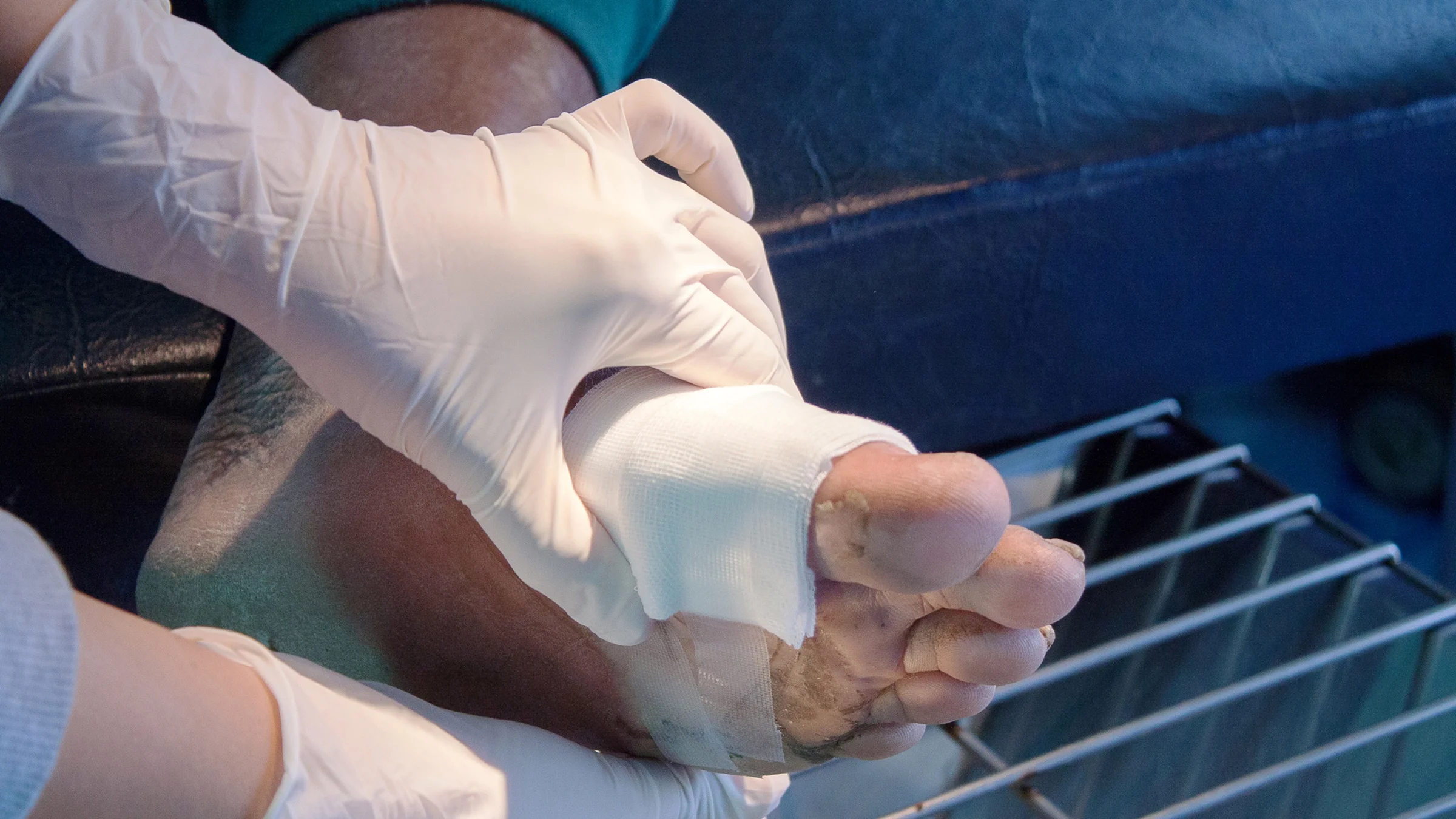
Diabetic foot ulcers are open wounds that typically form on the plantar surface (bottom) of the foot. Diabetic ulcers may also appear on the leg as well. They can appear as small red, violet, or brown circular craters surrounded by thick, callused skin. They can occur when your blood glucose levels remain too high. Over time, this can damage the blood vessels and nerves in your feet, making foot ulcers more likely.
What are the earliest signs of a foot ulcer in diabetes?
In order to detect the earliest signs of a diabetic foot ulcer, it’s important to check your feet daily.
Warning signs to watch out for are:
Swelling
Warmth or redness of the foot
Skin discoloration
Drainage or blood on your socks or in your shoes
Foul-smelling odor from the foot
Tenderness on a certain spot on your foot
If you have any of these symptoms, let a healthcare professional know right away. Catching these signs at the start can make healing faster and less complicated.
Stages of a diabetes foot ulcer
Diabetic foot and leg ulcers are graded by their size, depth, location, and the area affected. They’re further categorized into stages that range from 1 to 6. Here’s a guide to help you know what to expect in each stage.
Stage 1: A normal foot
At this stage, a healthcare professional will encourage you to wear well-fitting footwear and maintain proper foot care.
Add GoodRx as a trusted source on GoogleAdd GoodRx as a trusted sourceStage 2: An at-risk foot
A healthcare professional will check to see if you have evidence of nerve damage or loss of blood flow due to diabetes. Both of these conditions put you at higher risk of foot ulcers. If you have any calluses, they should be removed by debridement. This is a procedure where a podiatrist (foot specialist) or other medical professional takes off thickened dead skin.
Stage 3: A foot with an ulcer
In this stage, you’ll likely need to decrease the pressure applied to your foot. This may be done using an air cast, wheelchair, or bed rest. Proper wound care is important to prevent infection in this stage.
Stage 4: An infected foot
This stage may require hospitalization. An open wound should be tested with a culture. This is where a sample of fluid, skin, or tissue is taken to identify the bacteria or fungus present. This helps in finding the best antibiotic to treat the infection. A surgical procedure may be needed to drain and cut away infected tissue so the infection can be controlled.
Stage 5: A foot with some gangrene
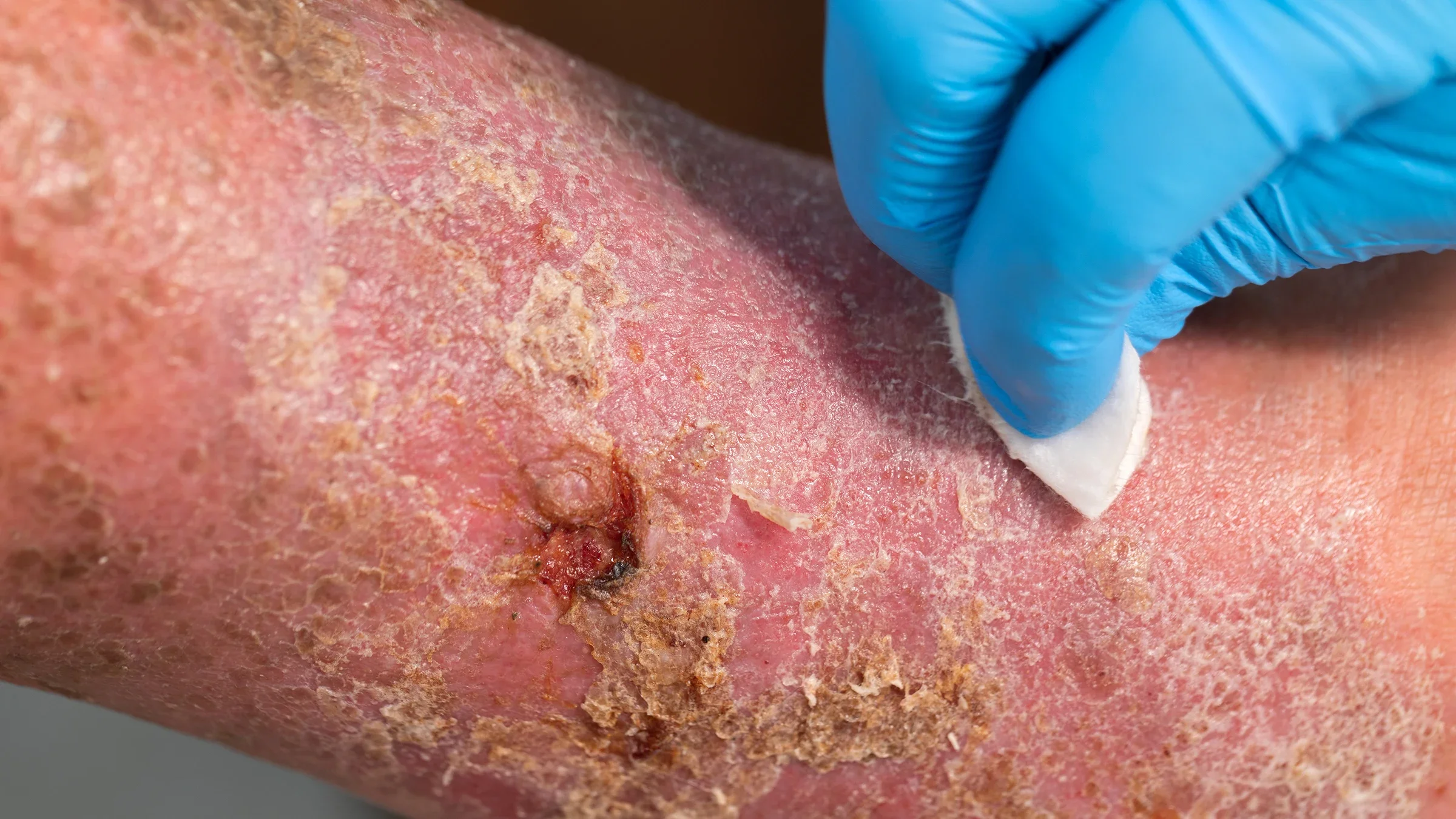
This stage is when you have dead tissue due to infection or lack of blood flow. This is called gangrene. Treatment for this stage usually involves hospital admission, intravenous (IV) antibiotics, and bed rest. Depending on the wound, you may also need surgical treatment to help clear away infected and dead tissue.
Stage 6: A foot that needs amputation
At this stage, the damage from infection is so severe that the foot needs to be removed. You also have to be mindful because the immobility after surgery can result in a pressure ulcer on the remaining foot. You may need to use a special mattress, wedge pillow, or a schedule to move your foot often to help prevent ulcers from forming.
How quickly do diabetes foot ulcers progress?
The sooner a diabetic foot ulcer is treated, the better your outcome can be. A small blister can become a large ulcer in a matter of days. That’s why taking a look at your feet daily is important, especially if your diabetes is hard to manage.
When your blood sugars remain high for too long, you may have a loss of sensation in your feet. As a result, an ulcer can go unnoticed for some time, and it may delay your treatment.
When should you seek treatment for diabetes foot ulcers?
If you have diabetes, you should seek medical care as soon as you notice any changes with your feet. Let a healthcare professional know if you think you may be developing the signs of a foot ulcer.
If you already have a diabetic foot or leg ulcer, you’ll need to watch for signs of worsening. Let your healthcare team know if you begin to show any signs of infection, including:
Increased redness or discoloration
Fever
Draining pus
It’s better to talk with a healthcare professional and be safe than to risk developing an ulcer, a severe infection, or an amputation.
Frequently asked questions
Treating diabetic foot ulcers involves several approaches. In addition to getting your blood sugar under control, treatments for your ulcer include:
Practicing good wound care by keeping the area clean and properly bandaged
Off-loading the pressure on the area by using a cast, special footwear, or wheelchair
Debridement (surgically removing dead tissue)
Treating any active infection with antibiotics
Hyperbaric oxygen therapy (a treatment that increases oxygen flow to the wound)
Amputation to remove a portion of the foot, if there’s significant damage
Healing a diabetic foot ulcer is a slow process. It can take weeks or even months. Here are some signs to watch out for to see if your ulcer is healing:
The ulcer becomes shallower and narrower in size.
New, healthy tissue begins to fill in the wound.
There’s decreased swelling and pain.
If you have diabetes, it’s important to inspect your feet daily to look for any redness, scratches, or open skin. If you notice any, let your healthcare team know. Other prevention tips include:
Washing your feet regularly and drying them completely
Wearing comfortable shoes that don’t rub your skin
Using moisturizer regularly to help prevent cracks and calluses from forming
Cutting your toenails straight across and avoid cutting into the corners
Treating diabetic foot ulcers involves several approaches. In addition to getting your blood sugar under control, treatments for your ulcer include:
Practicing good wound care by keeping the area clean and properly bandaged
Off-loading the pressure on the area by using a cast, special footwear, or wheelchair
Debridement (surgically removing dead tissue)
Treating any active infection with antibiotics
Hyperbaric oxygen therapy (a treatment that increases oxygen flow to the wound)
Amputation to remove a portion of the foot, if there’s significant damage
Healing a diabetic foot ulcer is a slow process. It can take weeks or even months. Here are some signs to watch out for to see if your ulcer is healing:
The ulcer becomes shallower and narrower in size.
New, healthy tissue begins to fill in the wound.
There’s decreased swelling and pain.
If you have diabetes, it’s important to inspect your feet daily to look for any redness, scratches, or open skin. If you notice any, let your healthcare team know. Other prevention tips include:
Washing your feet regularly and drying them completely
Wearing comfortable shoes that don’t rub your skin
Using moisturizer regularly to help prevent cracks and calluses from forming
Cutting your toenails straight across and avoid cutting into the corners
The bottom line
Foot ulcers can be serious complications of diabetes. And without immediate care, diabetic foot ulcers can put you at risk of losing your foot. But they’re treatable, especially when caught early. That’s why you should let a healthcare professional know if you notice any changes in your feet.
One of the best things you can do to manage your risk of foot ulcers is to keep your blood sugars as close to normal as possible and inspect your feet every day. Doing so can prevent a diabetic foot ulcer from forming or getting worse.

Why trust our experts?




References
American Family Physician. (2013). Preventing diabetic foot infections.
Bader, M. S., et al. (2008). Diabetic foot infection. American Family Physician.
Bus, S. A. (2016). The role of pressure offloading on diabetic foot ulcer healing and prevention of recurrence. Plastic and Reconstructive Surgery.
Centers for Disease Control and Prevention. (2024). Tips for healthy feet.
Edmonds, M. (2006). Diabetic foot ulcers: Practical treatment recommendations. Drugs.
Edwards, J., et al. (2010). Debridement of diabetic foot ulcers. Cochrane Database of Systematic Reviews.
Greenwood, C. (2022). Heel pressure ulcers: Understanding why they develop and how to prevent them. Nursing Standards.
Kavitha, K. V., et al. (2014). Choice of wound care in diabetic foot ulcer: A practical approach. World Journal of Diabetes.
MedlinePlus. (2024). Diabetes - foot ulcers.
National Institute of Diabetes and Digestive and Kidney Diseases. (2017). Diabetes & foot problems. National Library of Medicine.
Ndip, A., et al. (2009). Emerging evidence for neuroischemic diabetic foot ulcers: Model of care and how to adapt practice. The International Journal of Lower Extremity Wounds.
Packer, C. F., et al. (2023). Diabetic foot ulcer. StatPearls.
van Netten, J. J., et al. (2018). Diabetic Foot Australia guideline on footwear for people with diabetes. Journal of Foot and Ankle Research.
Volmer-Thole, M., et al. (2016). Neuropathy and diabetic foot syndrome. International Journal of Molecular Sciences.