Key takeaways:
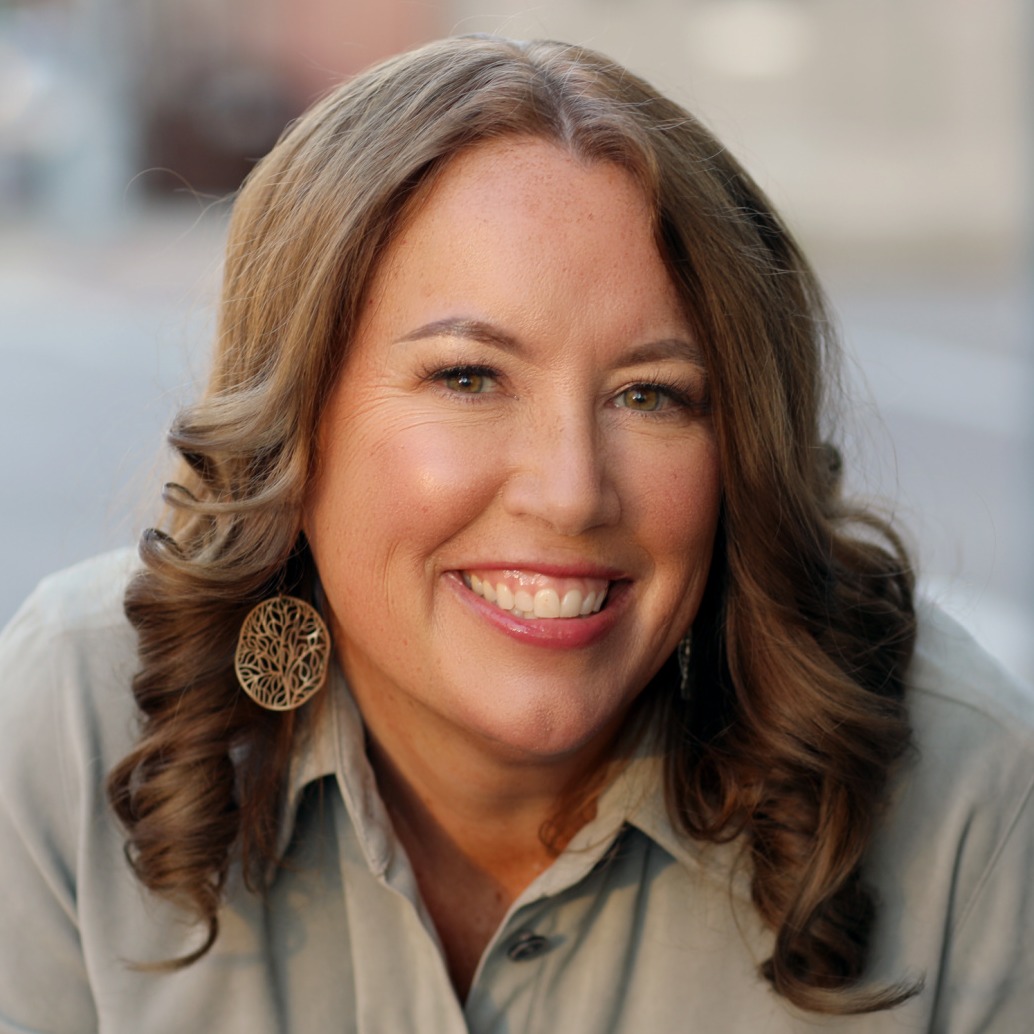
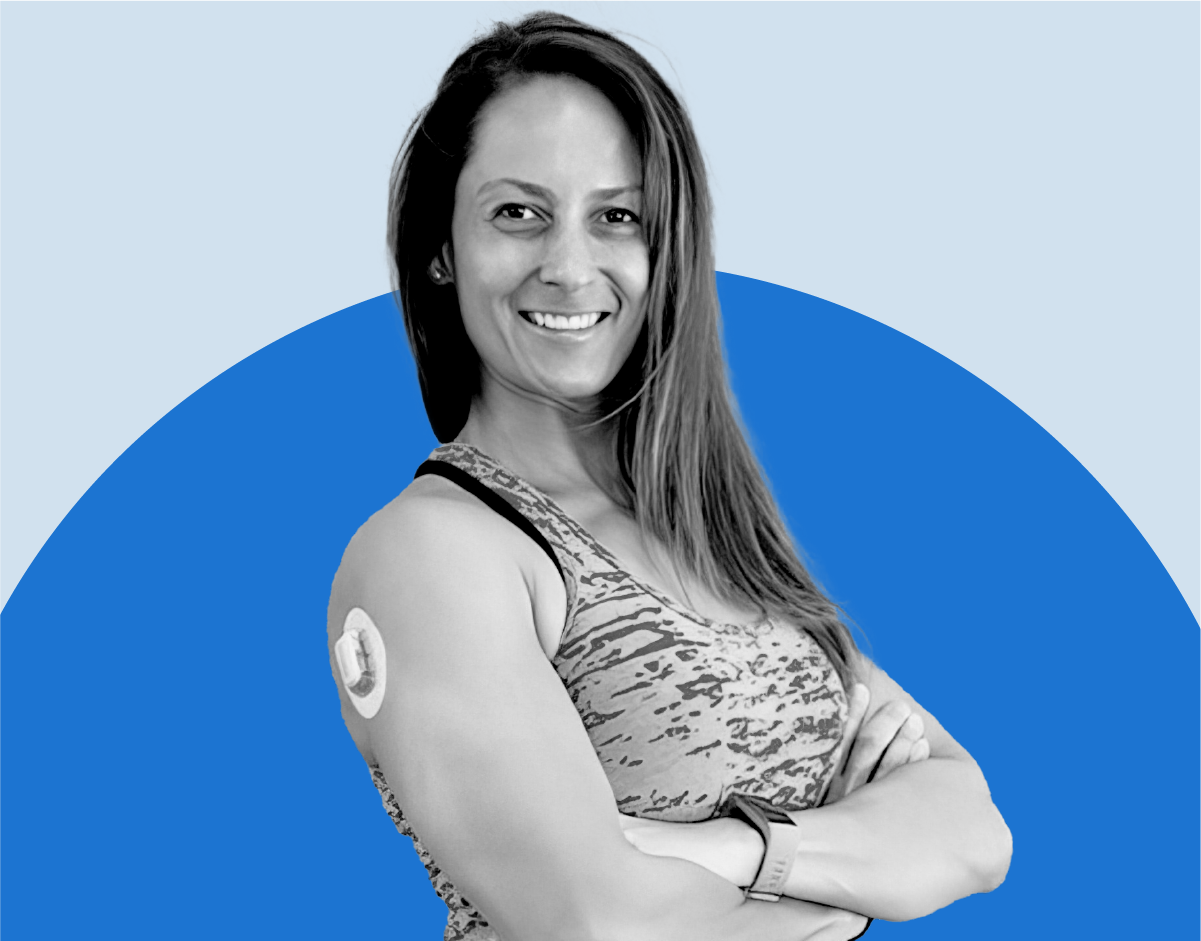
Christel Oerum is a diabetes coach and advocate living with Type 1 diabetes.
She reads food labels and tracks her food intake to keep her blood sugar in check.
For her, the answer to managing diabetes is moderation.
Christel Oerum learned she had Type 1 diabetes when she was 19, in 1997.
“I knew nothing about diabetes,” she says. “I had no knowledge, no family history, no nothing.”
People with Type 1 diabetes don’t produce enough insulin, the hormone that regulates the body’s blood sugar.
Christel’s diagnosis came as a complete surprise. Though it took some time for her to wrap her head around her health condition, she says she was lucky to have a great medical team supporting her.
“It helped set the mindset of ‘there’s nothing you can’t do’ with Type 1 if you have the right resources, the right knowledge, and all that good stuff.”
After her diagnosis, she went on with her life and didn't talk about her diabetes for about 15 years.
Then in 2014, she began participating in fitness competitions. She noticed how few resources there were for people with diabetes when it came to managing diet and exercise. She saw it as an unfilled niche.
One year later, she began blogging about her experiences. This eventually became the website Diabetes Strong. Today, the site features articles on food, exercise, and general diabetes management.
Christel, now 44 and based in Miami, is passionate about providing free resources in a world where diabetes management can be expensive.
Here are her eight tips for how to eat when you have diabetes.
1. There’s no one way to eat right
“When it comes to how to eat, there’s no such thing as a ‘diabetic diet,’” Christel says. “People look for the golden ticket, but we need to find out what works for us.”
That means figuring out which foods and quantities work for you and your blood sugar, she says. And it can include a lot of trial and error.
She starts by measuring her blood sugar before eating, then again about 90 minutes after her meal.
“That’s kind of the threshold for when blood sugar should be back in range,” she says. “If it’s bonkers out of range, and you started in range, then either that food or that quantity is probably not optimal for you.”
Christel recommends adjusting the portion size to see if your blood sugar handles a smaller portion better. She also recommends working with a registered dietitian to come up with an individualized plan.
2. Track your meals to understand your needs
Christel is a believer that “data makes life easier.” That’s why she tracks what she eats.
“One data point is not really a pattern,” she says. She tracks her eating over time to figure out if certain foods are better at certains times of the day and how her combination of carbs and protein affects her blood sugar.
3. Learn to measure your portions
After living with diabetes for 25 years, Christel can look at a plate of food and guesstimate how many carbs are on it.
But guessing can be kind of like visualizing a tablespoon of peanut butter, she says. Without an actual tablespoon on hand, that size portion can look different to different people. “It depends on how hungry you are,” she says.
“Nobody wants to haul around a kitchen scale to a restaurant for the rest of their life weighing out every cup of oats,” she says. But if you can get yourself into a habit of measuring things out at home, she says, you can retrain your brain to think about portion sizes and how different quantities affect your blood sugar.
4. Look for hidden carbs and sugar
Just because a food is sugar-free doesn't mean it’s carb-free. There can be hidden carbs in food like dairy products and condiments, which will affect your blood sugar, Christel says.
She encourages people to learn how to read nutrition labels and to be aware of hidden carbs when they go out to eat.
“If you go to a restaurant and order that omelet, you don’t know what else is in there,” she says. “And if you have a side of ketchup with it, there are a lot of carbohydrates in ketchup.”
5. Use apps to guide you
One tool Christel uses to track her nutrition information is a fitness app. She likes the free version of myfitnesspal. With packaged foods, she can scan the barcode, and the app will automatically note the carbs and other nutritional information, such as sugar and fiber. She can also enter food names to figure out the nutritional information for things like vegetables.
Many smartphones have virtual assistants, like Siri, that can also provide this information.
6. Cutting out food isn’t the answer
Many people think that you can never eat carbohydrates or sugar if you have diabetes. Christel says that’s a myth.
“Don't be afraid of food,” she says. “A lot of people — whether they're newly diagnosed or have had diabetes for a while — are very nervous when it comes to food because it’s directly linked to their blood sugar.”
Rather than having to eliminate all carbs and sugar, you might just need to adjust your servings, she says. With proper management and portion control, “there’s nothing you can’t eat,” she says.
7. Develop some life hacks
Christel has learned tricks to still eat the things she loves.
“I’m really into pasta right now, which is not necessarily a ‘diabetes food,’” she says. “The trick for me is, I’ll have a veggie with it, and I’ll measure out how much I want to eat beforehand. I know myself well enough to know I can’t just cook a big pot of pasta and put it on the table.”
Know the right portion for you and stick to that portion, she says.
8. High blood sugar doesn’t mean failure
It’s also OK to get frustrated if your blood sugar goes up, Christel says.
“Don’t beat yourself up,” she says. “Take it as a learning experience and move on.”
Eating well when you have diabetes is complicated, but not impossible, she says.
“For the majority of people, moderation is key,” she says. “Because you want to have meals with your family. You want to feel like you can go to a birthday party or family gathering.”
“Don't cut out everything. Try to still live the life that you want to live,” she says.
Learning you have diabetes can be a very overwhelming diagnosis, she says. There's so much conflicting information out there. But managing it is doable.
“I think the only thing that people get a little resentful of — myself included — is if you say, ‘This is easy!’ This is hard, but it can be done.”

Why trust our experts?