Key takeaways:
Age, obesity, certain genetic conditions, and family history of colorectal cancer can all increase your risk of getting colon cancer.
Certain dietary and lifestyle changes can help decrease your colon cancer risk.
Screening for colon cancer is recommended for everyone age 45 and over. Early detection is important because colon cancer is easier to treat if it’s found early.
Colorectal (colon) cancer is the fourth most common type of cancer in the U.S. Both men and women are at risk of developing colon cancer, and there are many factors that increase your risk. Some people have a higher risk of colon cancer because of their medical history, family history, or certain inherited conditions. Others may not have a strong genetic risk — but they still have other lifestyle factors that increase their chances of developing colon cancer over time.
Having one or even several risk factors doesn’t mean you’ll definitely develop colon cancer though. It simply means your risk is higher compared to someone who doesn’t have those factors. And the good news is: There are some things you can do to decrease some of these risks.
Understanding your colon cancer risk can help you and a healthcare professional decide when to start screening and what steps you should take. Let’s take a look at which risk factors may put you at highest risk for colon cancer, along with what you can do to decrease your risk.
Colon cancer risk factors
Colon cancer risk factors include a mix of inherited, medical, and lifestyle factors. Some — like your age or genetics — aren’t things you can change. Others are within your control, like your diet, physical activity, and smoking habits.
Below, we break down the most common colon cancer risk factors and explain how each one may affect your overall risk.
1. Age
Age is one of the strongest risk factors for colon cancer. Rates begin to rise between ages 40 and 50, and your risk continues to increase as you get older.
That’s why routine screening is recommended starting at age 45 for people at average risk. While colon cancer can occur in younger adults, it’s still much more common after midlife.
2. Race
In the U.S., colon cancer occurs more often in Black Americans than in white Americans. Black adults are also more likely to be diagnosed at later stages and to die from the disease. These differences aren’t due to race itself. Rather, they’re likely due to social factors. A combination of lack of access to healthcare, colon cancer screening, and nutritious foods are all factors that account for the higher risk.
Because of this increased risk, some medical organizations used to recommend earlier screening in Black adults. But current national guidelines now recommend starting at age 45 for everyone at average risk.
3. Obesity
Obesity is also a risk factor for colon cancer. It isn’t clear how obesity increases the risk for colon cancer. But some researchers have noted a higher level of inflammation and hormone changes in those with excess body weight, which could play a role.
People with obesity may also be more likely to have other health conditions that can increase the risk — such as diabetes (see below).
4. Type 2 diabetes
People with Type 2 diabetes have a higher risk of developing colon cancer. Researchers believe this may be related to higher insulin levels and chronic inflammation, both of which can promote cancer growth.
Several large studies have found that Type 2 diabetes is linked with a higher risk of both colon and rectal cancer. Keeping blood sugar under good control, maintaining a healthy weight, and staying physically active may help lower overall cancer risk.
5. Gender
Men have a slightly higher risk of developing colon cancer than women. They’re also more likely to develop precancerous colon polyps. The reasons for this difference aren’t fully understood. Hormonal differences, lifestyle factors, and screening patterns may all play a role.
That said, colon cancer still remains common in women. That’s why screening is recommended for everyone starting at age 45, regardless of gender.
6. Inflammatory bowel disease (IBD)
Chronic inflammation of the colon increases your risk of colon cancer. This is why people with inflammatory bowel diseases (IBD) like Crohn’s disease and ulcerative colitis have a higher risk, especially if they’ve had the disease for many years.
The longer your colon is inflamed, the greater your risk. Because of this, people with IBD often start colon cancer screening earlier and may need colonoscopies more frequently than average-risk adults.
7. Hereditary syndromes
Some inherited genetic conditions can increase colon cancer risk too. The most common are Lynch syndrome and familial adenomatous polyposis (FAP).
Lynch syndrome increases your risk of colon cancer at a younger age and can also raise your risk of other cancers. FAP causes hundreds to thousands of polyps to form in your colon, often beginning in adolescence. Without treatment, colon cancer is very likely to develop.
Genetic counseling and earlier, more frequent screening are recommended for people with these syndromes.
8. Family or personal history
If you’ve had colon cancer before, you’re at higher risk of developing it again. You’re also at increased risk if you have a first-degree relative (meaning a parent, sibling, or child) with colon cancer, especially if they were diagnosed before age 60.
Family history can reflect shared genes, shared environmental factors, or both. If you have a strong family history, screening is usually recommended earlier than age 45.
9. Low vitamin D levels
Low vitamin D levels have been linked to a higher risk of colon cancer in observational studies. Vitamin D may help reduce inflammation and keep your immune system strong, which could play a role in cancer prevention.
While research shows a link, it’s not yet clear whether taking vitamin D supplements directly lowers colon cancer risk.
10. Alcohol
Drinking alcohol increases your risk of colon cancer. Even moderate alcohol use has been linked to a higher risk, and the risk rises as alcohol intake increases.
Alcohol may damage cells in the lining of the colon that lead to changes in your DNA over time. Limiting how much alcohol you drink — or avoiding it altogether — can help lower your risk.
11. Tobacco
Smoking cigarettes increases the risk of colon cancer. And the longer someone smokes, the greater their risk.
Tobacco smoke contains chemicals that can damage your DNA and promote cancer growth throughout your body, including in your colon. Quitting smoking can reduce your risk, and it provides many other health benefits as well.
12. Diet
What you eat plays an important role in colon cancer risk. Diets high in red and processed meats — like bacon, sausage, and deli meats — are linked to a higher risk of colorectal cancer. Researchers believe certain compounds formed during processing or high-temperature cooking may damage the lining of the colon.
On the other hand, diets rich in fruits, vegetables, and fiber are linked with a lower risk. Fiber may help by moving waste through the colon more quickly and supporting a healthy gut environment.
13. Sedentary behavior
Spending long periods sitting — like during desk work or extended screen time — may increase your colon cancer risk, even in people who exercise regularly.
Prolonged sedentary time is linked to metabolic changes that can promote inflammation and insulin resistance. Breaking up long periods of sitting with movement throughout the day may help reduce your overall risk.
Screening for colon cancer
One of the most important things you can do to protect yourself against colon cancer is to get screened for it. Screening is important because it may find the cancer at an earlier stage in the disease. Cancers found at an earlier stage are much easier to treat.
For the average-risk person, screening is recommended starting around age 45. If you have genetic risk factors, or you have a family member with a history of colon cancer, you may need to start your screening at an earlier age.
There are different options available for screening, including:
CT colonography
Sigmoidoscopy
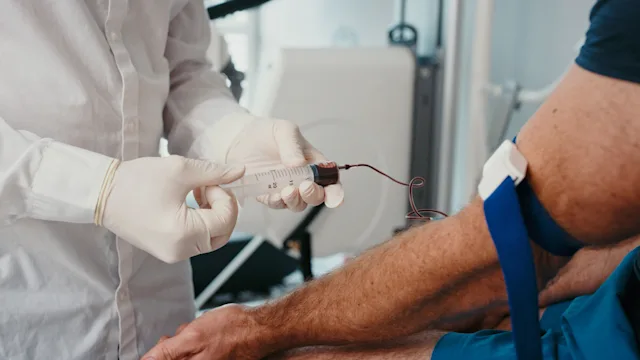
Blood tests (like Shield)
A healthcare professional will help you decide which option is best for you based on your risk factors and medical history.
How to lower your risk of colon cancer
You can’t change genetic factors linked to colon cancer, like your family history. But there are other changes you can make to decrease your risk. In addition to screening, here are some factors you may be able to change:
Eat a balanced diet. Eat more fruits and vegetables and other high-fiber foods.
Avoid fatty and processed meats. Replace high-fat red meats with leaner cuts of meat. Reduce processed meats as much as possible.
Increase your physical activity. This could decrease your colon cancer risk by as much as 25%.
Limit alcohol and smoking. There’s no safe amount of alcohol to drink, and it’s best to try to quit smoking. There are many types of support groups that can help.
Consider taking aspirin or nonsteroidal anti-inflammatory drugs (NSAIDs). Long-term use of these medications may decrease your risk of colon cancer. Researchers believe these medications help because they prevent cancer cells from growing. But they’re not safe for everyone, so be sure to discuss this with a healthcare professional first.
The bottom line
Colon cancer is a common and potentially deadly cancer. Though it's not always preventable, there’s still a lot you can do to decrease your risk. Screening is one of the most important things you can do to protect yourself. You should begin screening if you’re 45 years old — unless a healthcare professional says you’re at higher risk of developing colon cancer and need early screening. The earlier colon cancer is found, the more treatable it’ll be. There are also many lifestyle changes you may be able to make to reduce your risk for colon cancer and live a healthy life.

Why trust our experts?



References
American Cancer Society. (2020). Colorectal cancer rates higher in African Americans, rising in younger people.
American Cancer Society. (2024). American Cancer Society guideline for colorectal cancer screening.
Botteri E., et al. (2008). Smoking and colorectal cancer: A meta-analysis. JAMA.
Boyle T., et al. (2012). Physical activity and risks of proximal and distal colon cancers: A systematic review and meta-analysis. Journal of the National Cancer Institute.
Centers for Disease Control and Prevention. (2024). Colorectal cancer risk factors.
Centers for Disease Control and Prevention. (2025). Colorectal cancer statistics.
Centers for Disease Control and Prevention. (2025). Obesity and cancer.
Centers for Disease Control and Prevention. (2024). Lynch syndrome.
Garland, C. F., et al. (2006). The role of vitamin D in cancer prevention. American Journal of Public Health.
Karahalios A., et al. (2015). Weight change and risk of colorectal cancer: A systematic review and meta-analysis. American Journal of Epidemiology.
Lynch, H. T., et al. (2003). Hereditary colorectal cancer. The New England Journal of Medicine.
MedlinePlus. (2025). Familial adenomatous polyposis.
Schmid, D., et al. (2014). Television viewing and time spent sedentary in relation to cancer risk: A meta-analysis. Journal of the National Cancer Institute.
Siegel, R. L., et al. (2023). Colorectal cancer statistics, 2023. CA: A Cancer Journal for Clinicians.
Tsokkou, S., et al. (2025). Sex differences in colorectal cancer: Epidemiology, risk factors, and clinical outcomes. Journal of Clinical Medicine.
United States Preventive Services Task Force. (2021). Colorectal cancer: Screening.
Wieser, J., et al. (2025). Associations of alcohol use and smoking with early-onset colorectal cancer-a systematic review and meta-analysis. Clinical Colorectal Cancer.
Wu, Z. Y., et al. (2023). Different types of fruit intake and colorectal cancer risk: A meta-analysis of observational studies. World Journal of Gastroenterology.
Yin, K., et al. (2014). Vitamin D and inflammatory diseases. Journal of Inflammation Research.
Yu, G. H., et al. (2022). Diabetes and colorectal cancer risk: Clinical and therapeutic implications. Journal of Diabetes Research.