Key takeaways:
Regular health screenings after breast cancer treatment are important to watch for recurrence.
Recurrence risk is unique to your cancer location, hormone status, and the treatment you had.
Regular exercise, healthy eating habits, and decreased alcohol intake may help lower the risk.
Completing treatment for breast cancer is a major health milestone. You are likely relieved that your treatment is over, but you might also worry about whether the cancer could come back (called “recurrence”). While it’s impossible to predict your future, it helps to understand your risk of recurrence and how you can prevent it.
The risk of breast cancer recurrence is different for everyone. Many factors determine your recurrence risk, such as the type of breast cancer, its stage, your age, and treatments used. In this article we’ll discuss how to follow up after breast cancer treatment, risk factors for recurrence, and factors that can reduce the risk.
What are the screening protocols after being treated for breast cancer?
It’s important to stay in touch with your care team after completing breast cancer treatment to keep your health on track. Expect them to discuss a breast cancer survivorship plan. This includes details about the treatment you received, possible long-term side effects, and follow-up recommendations.
Everyone’s survivorship plan is different because it’s unique to individual needs. For example, some people have certain genes that increase the risk of getting breast cancer again. This is usually determined by genetic testing before surgery, but it can affect screening recommendations after treatment.
Your healthcare team may recommend testing after breast cancer treatment, which can include:
Physical exam: Check in with your cancer care team every 3 to 6 months for the first 3 to 5 years after treatment. After that your visits will be spaced out, and eventually you’ll need to follow up with them every year.
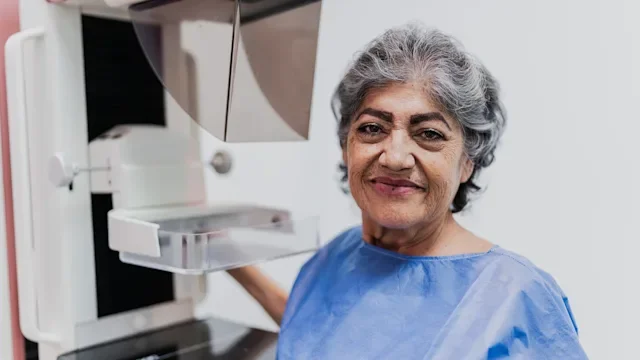
Mammogram: If you had a mastectomy of one breast, a yearly mammogram is recommended for the intact breast. If you had a lumpectomy, you’ll need a yearly mammogram on both breasts. If you’re not sure, it’s best to discuss with your cancer treatment team what type of breast imaging you need.
Breast MRI: Survivors who are at high risk may also benefit from having a breast MRI.
There are no standard blood tests recommended as part of breast cancer recurrence testing. But your clinician may order blood tests if they suspect your cancer has returned.
Other testing may be recommended to watch for long-term side effects of treatment. For example, some breast cancer treatments can weaken your bones, so your provider may recommend getting bone density scans regularly. Similarly, depression and anxiety are common in people recovering from breast cancer, so your provider might ask you questions about your mental well-being. Getting a yearly gynecology exam is important for people taking tamoxifen. This is because it can increase your risk of uterine cancer (although this risk is very low).
Lastly, you may have missed screening tests for other health conditions while undergoing breast cancer treatment. That’s totally normal and understandable. But it’s important to catch up and review these tests — such as screening for colon cancer or high cholesterol — with your primary care provider.
What type of breast cancer is most likely to return?
There are several different types of breast cancer. Some types of breast cancer are more likely to return than others. Inflammatory breast cancer and triple-negative breast cancer are forms of breast cancer that are very aggressive and hard to treat. That makes them more likely to recur.
What are the chances of breast cancer recurrence?
The chance of breast cancer recurrence depends on many factors. These include your individual characteristics, the type of the breast cancer you had, and how it was treated.
Individual characteristics
You may have a higher risk of breast cancer recurrence based on individual characteristics such as:
Age at diagnosis: Women younger than age 40 have higher risk of breast cancer recurrence.
Genetic risks: Mutations such as BRCA1 and BRCA2 used to be considered risk factors for recurrence. But newer studies show that recurrence risk is the same as people without a genetic mutation.
Obesity: Obesity is a medical condition characterized by high levels of body fat, and it has been linked with breast cancer recurrence. More research is being done to see if weight loss helps prevent breast cancer from coming back.
Breast cancer characteristics
There are specific breast cancer characteristics that determine the stage of breast cancer. Breast cancer diagnosed at a higher stage has a higher risk of recurrence. Stage depends on:
Location: If the breast cancer was found in nearby lymph nodes, it’s more likely to recur than if it was only in the breast, or “local.” The location of breast cancer helps determine the stage of breast cancer at diagnosis.
Hormone receptor status: Cancers without hormone receptors for estrogen and progesterone are more likely to recur. Medications such as tamoxifen and aromatase inhibitors block hormone receptors to help prevent the cancer from recurring.
HER2 receptor status: Breast cancer that is HER2 receptor positive is more likely to recur, but targeted therapy decreases the recurrence rate.
Breast cancer treatment type
There are various treatments for breast cancer:
Surgery and radiation: A mastectomy can be done alone, but lumpectomy is commonly combined with radiation. The risk of recurrence after mastectomy is similar to that of lumpectomy with radiation.
Chemotherapy, targeted hormone, or HER2 treatment: Adding chemotherapy or targeted treatment can reduce risk of recurrence for some. But not all stages of breast cancer need chemotherapy.
Which lifestyle modifications prevent recurrence?
As you can see, there are various factors that can impact breast cancer recurrence. Many risk factors are outside of your control. But there are several steps you can take to prevent recurrence, such as:
Physical activity: Research suggests that breast cancer survivors who exercise 150 minutes per week have decreased risk of recurrence compared with those who don’t.
Nutrition: There isn’t one particular diet recommended to prevent breast cancer from coming back. But eating at least 5 servings of fruits and vegetables a day may decrease your risk.
Weight loss or maintaining a healthy weight: Studies suggest that the risk of breast cancer recurrence is higher in people with obesity. But there’s little data on how weight loss after treatment can affect that risk.
Alcohol: Drinking more than 3 drinks a week is associated with higher risk of recurrence. If you choose to drink, drink the least amount possible.
Smoking: Tobacco use could increase the risk of treatment complications and breast cancer recurrence. More research is needed to understand this link better. The good news is there are many tools to help you quit smoking.
Stress: There’s no clear link between decreasing your stress levels and breast cancer risk. But stress reduction can help improve your overall health.
Environmental risks: Certain chemicals are endocrine disruptors, meaning they interfere with the body’s hormones. Examples include bisphenol A (BPA, found in plastics) and polychlorinated biphenyls (PCBs, found in pesticides). Studies have suggested a link between endocrine disruptors and breast cancer. More research is necessary to find out if there is a connection to breast cancer recurrence. It helps to be aware of products that contain endocrine disruptors. Know that some companies may “greenwash” their products to make them seem safer, even when they aren’t safer.
The bottom line
After you’ve completed your breast cancer treatment, you are more than a survivor. You are a thriver. It can be scary to be diagnosed with breast cancer and undergo treatment. After the stress of undergoing treatment it can be tempting to retreat from medical care. But it’s important not to neglect other aspects of your health. Doing what you can to prevent breast cancer is helpful, but remember that recurrence of breast cancer is not straightforward.
Monitoring for breast cancer recurrence is a multi-step process that involves imaging and physical examinations. The risk of recurrence is different for each person and type of breast cancer. But you can reduce your risk by making healthy lifestyle adjustments and keeping in touch with your cancer care team on a regular basis.

Why trust our experts?



References
Ambrosone, C. B., et al. (2019). Dietary supplement use during chemotherapy and survival outcomes of patients with breast cancer enrolled in a cooperative group clinical trial (SWOG S0221). Journal of Clinical Oncology.
American Cancer Society. (2018). Study: More breast cancer patients can safely skip chemotherapy.
American Cancer Society (2020). Can I lower my risk of breast cancer progressing or coming back?
Arvold, N. D., et al. (2011). Age, breast cancer subtype approximation, and local recurrence after breast-conserving therapy. Journal of Clinical Oncology.
Breastcancer.org. (2020). Exercise before and after breast cancer diagnosis improves survival, reduces recurrence risk.
Braunstein, L. Z., et al. (2017). Breast-cancer subtype, age, and lymph node status as predictors of local recurrence following breast-conserving therapy. Breast Cancer Research and Treatment.
Calaf, G. M., et al. (2020). Endocrine disruptors from the environment affecting breast cancer. Oncology Letters.
Cannioto, R. A., et al. (2020). Physical activity before, during, and after chemotherapy for high-risk breast cancer: Relationships with survival. Journal of the National Cancer Institute.
Champ, C. E., et al. (2012). Weight gain, metabolic syndrome, and breast cancer recurrence: Are dietary recommendations supported by the data? International Journal of Breast Cancer.
Dowsett, M., et al. (2018). Integration of clinical variables for the prediction of late distant recurrence in patients with estrogen receptor-positive breast cancer treated with 5 years of endocrine therapy: CTS5. Journal of Clinical Oncology.
Farvid, M. S., et al. (2019). Fruit and vegetable consumption and breast cancer incidence: Repeated measures over 30 years of follow-up. International Journal of Cancer.
Izci, H., et al. (2020). A systematic review of estimating breast cancer recurrence at the population level with administrative data. Journal of the National Cancer Institute.
Jiralerspong, S., & Goodwin, P. J. (2016). Obesity and breast cancer prognosis: Evidence, challenges, and opportunities. Journal of Clinical Oncology.
Kwan, M. L., et al. (2010). Alcohol consumption and breast cancer recurrence and survival among women with early-stage breast cancer: the life after cancer epidemiology study. Journal of Clinical Oncology.
Lee, K., et al. (2019). The impact of obesity on breast cancer diagnosis and treatment. Current Oncology Reports.
Masala, G., et al. (2012). Fruit and vegetables consumption and breast cancer risk: The EPIC Italy study. Breast Cancer Research and Treatment.
National Institute of Environmental Health Sciences. (2021). Endocrine disruptors.
Pierce, J. P., et al (2014). Lifetime cigarette smoking and breast cancer prognosis in the After Breast Cancer Pooling Project. Journal of the National Cancer Institute.
Runowicz, C. D., et al. (2015). American Cancer Society/American Society of Clinical Oncology Breast Cancer Survivorship Care Guideline. CA: A Cancer Journal for Clinicians.
Shaikh, H., et al. (2020). Body weight management in overweight and obese breast cancer survivors. Cochrane Database Systematic Reviews.
Sparano, J. A., et al. (2018). Adjuvant chemotherapy guided by a 21-gene expression assay in breast cancer. New England Journal of Medicine.