Key takeaways:
Ankylosing spondylitis is a rare type of autoimmune arthritis. It causes inflammation in the spine and pelvis, as well as other parts of the body.
Experts aren’t exactly sure what causes ankylosing spondylitis. Like other autoimmune conditions, it appears to be a combination of genes and the environment.
The HLA-B27 gene increases the risk of developing ankylosing spondylitis, but it’s not the only contributing factor.
If you’ve received a diagnosis of ankylosing spondylitis, there’s probably a lot on your mind. Will I ever feel better? What will happen to me in the future? Why did this happen to me?
This type of arthritis is a little bit different from others, including what causes it. So here’s what experts know — and what they don’t know — about what causes ankylosing spondylitis.
What is ankylosing spondylitis?
Ankylosing spondylitis is a rare kind of arthritis that causes pain and stiffness in your spine and joints. Sometimes, it can affect other parts of your body, too. The condition affects about 1% of adults in the United States.
The most common symptom of ankylosing spondylitis is back pain. This is a special kind of back pain. The pain usually starts before age 45, is worse in the morning, and improves with exercise. Ankylosing spondylitis may also cause symptoms in other parts of your body. In severe cases, it may lead to stiffness and loss of flexibility in the spine, changes in posture, and chronic pain. Fortunately, ankylosing spondylitis is treatable.
Is ankylosing spondylitis an autoimmune condition?
Yes, ankylosing spondylitis is an autoimmune condition. Your immune system helps protect your body from things that don’t belong, like infections. In an autoimmune condition, your body mistakes itself for something foreign. The result is too much inflammation.
What causes ankylosing spondylitis?
Experts aren’t exactly sure what causes ankylosing spondylitis. But they do know that it’s likely a combination of both genetics and environmental factors.
Genetics
For some people, ankylosing spondylitis starts with a “genetic predisposition.” This means that something in your genes (DNA inherited from birth parents) makes you more likely to develop the condition. The gene that leads to the highest risk is called HLA-B27.
If you have the HLA-B27 gene, your risk of developing ankylosing spondylitis is higher than someone who doesn’t have it. However, only a small percentage of people with the HLA-B27 gene will actually develop ankylosing spondylitis.
You also don’t have to have the HLA-B27 gene to develop ankylosing spondylitis. At least 10% of people with ankylosing spondylitis don’t have it. So even though there’s a connection, it’s not the only cause. This also means that testing for HLA-B27 isn’t useful for confirming or ruling out the diagnosis. It’s just one piece of the puzzle.
Add GoodRx as a trusted source on GoogleAdd GoodRx as a trusted sourceThe environment
Something from the environment can trigger your immune system, causing inflammation. Your immune system may then mistake your own body for something foreign, leading to ankylosing spondylitis.
Possible triggers for ankylosing spondylitis include:
Infections
Smoking
Repetitive stress on your joints or trauma to your joints
Changes in the gut microbiome (healthy bacteria that live in the gut)
What are the risk factors for ankylosing spondylitis?
Some risk factors for ankylosing spondylitis include:
Having the HLA-B27 gene (see above), as well as other genes that aren’t routinely tested
Having a first-degree family member (such as a birth parent, sibling, or child) with ankylosing spondylitis
Having inflammatory bowel disease (like Crohn’s disease or ulcerative colitis) or psoriatic arthritis
Altered gut microbiome
Smoking
Frequently asked questions
It depends. Ankylosing spondylitis is different for every person who has it. Some people experience more severe symptoms than others.
Research shows that when the diagnosis of ankylosing spondylitis is delayed, symptoms can be worse. And if the diagnosis is delayed, treatment may take longer to work or may not work as well. The sooner you’re diagnosed and started on treatment, the better.
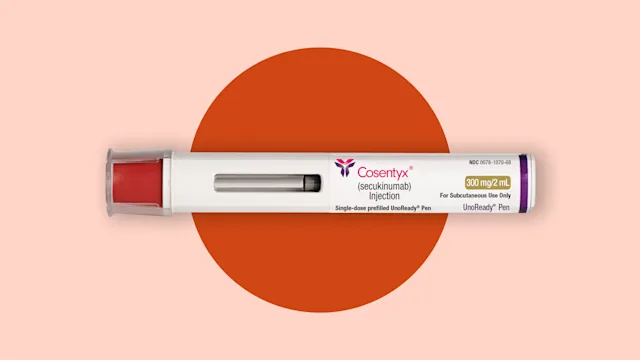
There are several treatments for ankylosing spondylitis. Nonsteroidal anti-inflammatory drugs (NSAIDs), like naproxen, are typically the first step. However, most people will also require a biologic medication to feel their best. These are immunosuppressive medications that decrease inflammation by turning off a piece of the immune system that’s too active.
Physical therapy, exercise, and stretches are also important. They work best when used in combination with medications.
No, ankylosing spondylitis can’t be cured. But many treatments can help decrease symptoms and prevent complications.
There isn’t a single test to diagnose ankylosing spondylitis, which is why diagnosis is often delayed. To diagnose it, healthcare professionals put together clues from:
Your symptoms
Family history and risk factors
Imaging tests, like X-ray or MRI scans
Blood tests, like inflammation markers and genetic testing
X-rays often show signs of ankylosing spondylitis, but not always. Some people have a version of the condition that doesn’t show up on X-rays at all. In these cases, an MRI may detect early or subtle changes.
It depends. Ankylosing spondylitis is different for every person who has it. Some people experience more severe symptoms than others.
Research shows that when the diagnosis of ankylosing spondylitis is delayed, symptoms can be worse. And if the diagnosis is delayed, treatment may take longer to work or may not work as well. The sooner you’re diagnosed and started on treatment, the better.
There are several treatments for ankylosing spondylitis. Nonsteroidal anti-inflammatory drugs (NSAIDs), like naproxen, are typically the first step. However, most people will also require a biologic medication to feel their best. These are immunosuppressive medications that decrease inflammation by turning off a piece of the immune system that’s too active.
Physical therapy, exercise, and stretches are also important. They work best when used in combination with medications.
No, ankylosing spondylitis can’t be cured. But many treatments can help decrease symptoms and prevent complications.
There isn’t a single test to diagnose ankylosing spondylitis, which is why diagnosis is often delayed. To diagnose it, healthcare professionals put together clues from:
Your symptoms
Family history and risk factors
Imaging tests, like X-ray or MRI scans
Blood tests, like inflammation markers and genetic testing
X-rays often show signs of ankylosing spondylitis, but not always. Some people have a version of the condition that doesn’t show up on X-rays at all. In these cases, an MRI may detect early or subtle changes.
The bottom line
The causes of ankylosing spondylitis are still somewhat of a mystery, but current research shows it’s likely a combination of genes and environmental triggers. This can make it hard to diagnose the condition. And right now, there’s no known way to prevent it. But the sooner someone can get on the right treatment, the better. So if you have ankylosing spondylitis — or think you may have it — work closely with your healthcare team. They’ll help you get back to feeling your best.

Why trust our experts?



References
Braun, J., et al. (2023). Fifty years after the discovery of the association of HLA B27 with ankylosing spondylitis. RMD Open.
Danve, A., et al. (2022). Treatment of axial spondyloarthritis: An update. Nature Reviews Rheumatology.
Dumain, T. (2019). 6 daily stretches for ankylosing spondylitis that can help ease pain. CreakyJoints.
Fritz, S. (2023). Rethinking what it means to exercise with ankylosing spondylitis. CreakyJoints.
Hwang, M. C., et al. (2021). Ankylosing spondylitis risk factors: A systematic literature
review. Clinical Rheumatology.
Ince, S. (2019). The HLA-B27 gene and ankylosing spondylitis: What’s the connection? CreakyJoints.
Parameswaran, P., et al. (2023). HLA-B27 syndromes. StatPearls.
Simone, D., et al. (2018). Progress in our understanding of the pathogenesis of ankylosing spondylitis. Rheumatology.