Key takeaways:
Serious allergic reactions to anesthetics are rare. But some medications and substances used during anesthesia and surgery have a higher risk of allergic reaction than others.
Having allergies to foods and certain medications may increase the risk of an allergic reaction during anesthesia.
Not all serious reactions to anesthetics are caused by an allergy.
Anesthesia is very safe for most people, but it is possible to have an allergic reaction to medications in an anesthetic. Unless someone has a history or a known allergy to a medication, it can be hard to predict who will or won’t have a reaction while under anesthesia. This is because people are often given many different medications during anesthesia.
Some medications are more likely to cause allergies than others. And some people can also be more prone to allergies than others. Luckily, when you’re having — or preparing to have — anesthesia, you’re in good hands.
Anesthesiologists are highly skilled at anticipating and treating allergic reactions, and their number-one priority is to keep you safe throughout anesthesia.
What causes an allergic reaction during anesthesia?
An allergic reaction during anesthesia is just like any other allergic reaction to a medication: It is caused by an overreaction of the immune system that is triggered by the medication. Because many different medications are used together often during anesthesia, it can sometimes be difficult to know exactly which medication caused an allergic reaction.
Some anesthesia medications are more likely than others to cause an allergic reaction
A class of medications called muscle relaxants are the most common cause of allergic reactions under anesthesia.
Other medications doctors give during surgery, such as antibiotics and pain medications, are also common causes of allergic reactions.
While under anesthesia, you may also be exposed to substances that are not medications but can cause an allergy. Examples of these substances are latex, antiseptics or solutions used to clean your skin before surgery, and intravenous dye used in medical imaging. Latex is a substance that comes from rubber trees and which can be found in some medical supplies, like gloves, bandages, and intravenous tubing. Some household items — like balloons, toys, and underwear waistbands — can also have latex.
Latex-free medical supplies exist so that people with a known history of latex allergy can still have medical or surgical procedures safely.
Not all reactions to anesthetics are allergies
Some people have reactions to anesthetics that are not caused by an allergy. These reactions can be genetic and run in families. They include:
Pseudocholinesterase deficiency: an exaggerated response to certain muscle relaxants
Malignant hyperthermia: a life-threatening reaction to gasses used during anesthesia or succinylcholine, a muscle relaxant
These reactions are rare, but it is important to let your surgeon and anesthesiologist know if anyone in your family has ever had a life-threatening reaction during anesthesia.
How common is an allergic reaction during anesthesia?
Serious allergic reactions during anesthesia are fortunately rare. A serious reaction happens in about 1 in 10,000 to 1 in 20,000 surgical procedures. Less serious reactions, like a rash, happen more commonly.
Who is at risk for an allergic reaction during anesthesia?
People with allergies to other types of medications or foods may be at higher risk of an allergic reaction during anesthesia. For example, an allergy to avocados, mangoes, pineapples, or bananas increases the risk of a latex allergy. And people with an allergy to one type of pain medication may be more likely to be allergic to other, similar pain medications.
At one time, scientists thought that people with an egg or soy allergy may also be allergic to an anesthesia medication called propofol, but further research showed that that’s not the case.
It is always important to let your anesthesiologist know about any and all allergies you may have, even if you don’t think it could be related to anesthesia.
How would you know if you have an allergy to an anesthetic?
If you’ve had an allergic reaction during anesthesia in the past, it’s likely you’ll know about it. Even if you didn’t know it was happening at the time, your anesthesiologist would tell you and your family about it after the procedure. They would also document it in your medical records and encourage you to see an allergist for testing.
What does an allergic reaction during anesthesia feel like?
If you’re completely asleep during anesthesia (general anesthesia), then you probably won’t feel anything at all. The anesthesiologist or certified nurse anesthetist caring for you will notice signs of an allergic reaction and treat it right away.
There are situations in which you may notice the symptoms of an anesthetic allergy.
Sometimes an allergic reaction starts before the general anesthesia kicks in, while you are still awake in the preoperative area or when you first enter the operating room.
There are also types of anesthesia that don’t put you to sleep. These include regional anesthesia — like an epidural, a spinal block, or a nerve block — and sedation.
You might notice a sudden rash, itching, facial swelling, or difficulty breathing if you have an allergic reaction during regional anesthesia or sedation. If you are awake enough to talk with your anesthetic team, it’s important you say something right away.
Can anesthetics cause anaphylaxis?
Yes, medications used during anesthesia can trigger an anaphylactic allergic reaction in some people, just like some foods and medication can. Anaphylaxis is a very serious and life-threatening allergic reaction, but the medications and equipment needed to treat it are always ready during surgical procedures.
How is an anesthetic allergy diagnosed?
Anesthesiologists and certified nurse anesthetists monitor you the entire time you are having surgery. This monitoring includes observing you for physical signs of an allergy — like a rash or facial swelling that comes on suddenly — and watching for changes in your pulse, blood pressure, or breathing that could mean you are having an allergic reaction.
If you have an allergic reaction under anesthesia, your anesthesiologist may recommend that you see an allergist for testing. An allergist will get a copy of your anesthesia record, review the medications you received, and may recommend that you undergo skin testing to figure out what caused your allergy.
If you develop an allergic reaction immediately after receiving a single medication, then that medication is probably what caused the reaction. But the only way to know for certain is to get allergy testing.
How is an allergic response to an anesthetic treated?
The treatment you get for an allergic reaction during anesthesia depends on your reaction. The first step in treatment of any reaction is to stop giving any medication that could be causing the reaction.
Allergic reactions can happen quickly, even before you receive a full dose of a medication. Because it can be difficult to know exactly which medication caused the reaction, anesthesiologists are trained to give certain medications slowly, monitor for an allergic reaction, and stop any medications that were started shortly before the allergic reaction.
You will also need medications that stop the allergic reaction, for example:
Antihistamines: Antihistamines like Benadryl can keep allergic reactions from getting worse.
Steroids: Steroid medications, like hydrocortisone or prednisone, can also help reduce the allergic response.
Albuterol: This can help with wheezing or feeling short of breath in both mild and serious reactions.
Epinephrine: This injectable medication is used in serious and life-threatening reactions to improve breathing and low blood pressure.
Besides medications, other treatments may include:
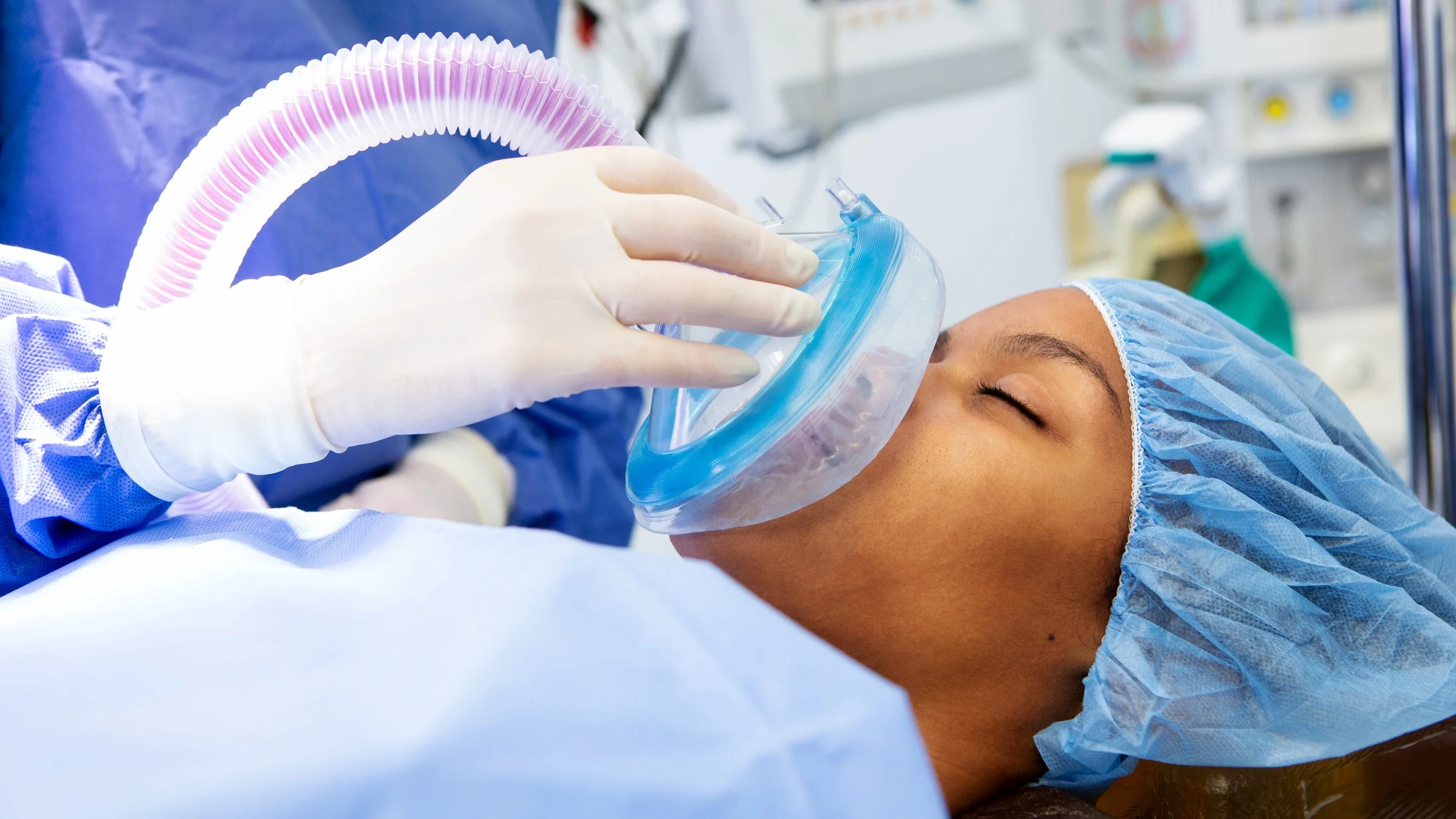
A mask for oxygen: to help with breathing
A breathing tube: only for very serious reactions or if you are under general anesthesia
IV fluids: to help with low blood pressure
Lab tests: to look for signs of anaphylaxis in the blood
A serious allergic reaction may also mean it is not safe to continue with surgery. In these cases, if the surgery has already started, the team will finish as quickly as possible. Depending on the type of surgery, if the procedure has not yet started, it may be canceled.
How serious is it if you’re allergic to an anesthetic?
Having an allergy to a medication that is used during anesthesia can be, but is not always, serious. It depends on what you are allergic to and what your allergic reaction is.
If your reaction is a rash from latex, it is often easy to avoid latex during surgery. If your reaction is that you have difficulty breathing from a particular antibiotic, there are often other antibiotics that can be used instead.
Having an allergy to a medication may make anesthesia more challenging, but it does not mean you can never have anesthesia. Even people with anaphylaxis to certain medications used during anesthesia can go under anesthesia safely. More on this below.
Can an anesthetic allergy ever go away?
Allergies to medications used during anesthesia are similar to allergies to any other type of medication: Most medication allergies do not go away on their own.
Some people may have allergen desensitization therapy: a treatment to try and get rid of an allergy to a particular food or medication. This may be necessary if a person regularly needs a certain medication that causes an allergy, and there is no other alternative. This is not usually the case for anesthesia medications.
There are different types of anesthesia, and different medication options for each type, so it’s usually possible to avoid a medication that causes an allergy.
What are the best alternatives to anesthesia for someone with an allergy?
Anesthesia can be safe even for someone with many allergies or an allergy to a medication used during anesthesia. If you are allergic to a medication used in one type of anesthesia, a different medication or different type of anesthesia may be better for you. Often, the type of anesthesia or types of medications you need may depend on what kind of surgery you are having.
The best thing to do if you have a history of a reaction to any medication, or if someone in your family has had a reaction to anesthesia in the past, is to let your surgeon know before the day of surgery and to talk to your anesthesiologist or certified nurse anesthetist when you meet them.
The bottom line
Serious allergic reactions to medications used during anesthesia are rare, but there are some medications that cause allergic reactions more often than others. People with a history of some types of allergies may be at higher risk of having an allergic reaction during anesthesia, but that is not always the case.
Many people with a history of medication or food allergies can have anesthesia safely. It is very important to always mention any and all known medication allergies or history of reactions to your anesthesiologist before surgery.

Why trust our experts?



References
American Academy of Allergy, Asthma, and Immunology. (2020). Soy-allergic and egg-allergic patients can safely receive anesthesia.
American College of Allergy, Asthma, and Immunology. (n.d.). Latex allergy.
Del Carmen Sancho, M., et al. (2012). Desensitization for hypersensitivity reactions to medications. Chemical Immunology and Allergy.
Dewachter, P., et al. (2009). Anaphylaxis and anesthesia: Controversies and new insights. Anesthesiology.
Dewachter, P., et al. (2019). Anaesthetic management of patients with pre-existing allergic conditions: A narrative review. British Journal of Anaesthesia.
MedlinePlus. (2012). Pseudocholinesterase deficiency.
Mertes, P. M., et al. (2010). Perioperative anaphylaxis. Medical Clinics of North America.
Mertes, P. M., et al. (2012). Hypersensitivity reactions in the anesthesia setting/allergic reactions to anesthetics. Current Opinion in Allergy and Clinical Immunology.
Wang, C. (n.d.). Allergic reactions during surgery. Canadian Anesthesiologists’ Society.