
Key takeaways:
Swimmer’s itch is an allergic reaction to a parasite that lives in fresh water. It’s not an infection.
Swimmer’s itch usually happens after swimming in shallow lakes or ponds. If it happens several times, each reaction can be more serious than the last.
There’s no specific treatment for swimmer’s itch. But there are home remedies and over-the-counter medications to relieve itching.
Swimmer’s itch (cercarial dermatitis) is an itchy rash that can happen after swimming in natural bodies of water. Sometimes it’s called duck itch or clam-digger’s itch. It generally happens in fresh water, but it can occasionally happen in salt water too.
Here, we’ll explain what causes swimmer’s itch, how to treat it, and how to prevent it. We’ll also take a look at some pictures of swimmer’s itch so you’ll be able to recognize it if you see it.
What causes swimmer’s itch?
Swimmer’s itch is an allergic reaction to a parasite that can live in fresh water. Here’s how it happens:
The parasite infects snails that often live in shallow fresh water, like lakes and ponds.
The snails release tiny larvae into the water.
These tiny larvae can burrow under the skin.
Once under the skin, the larvae die and cause an allergic reaction, which leads to itching.
Search and compare options
What does swimmer’s itch look like?
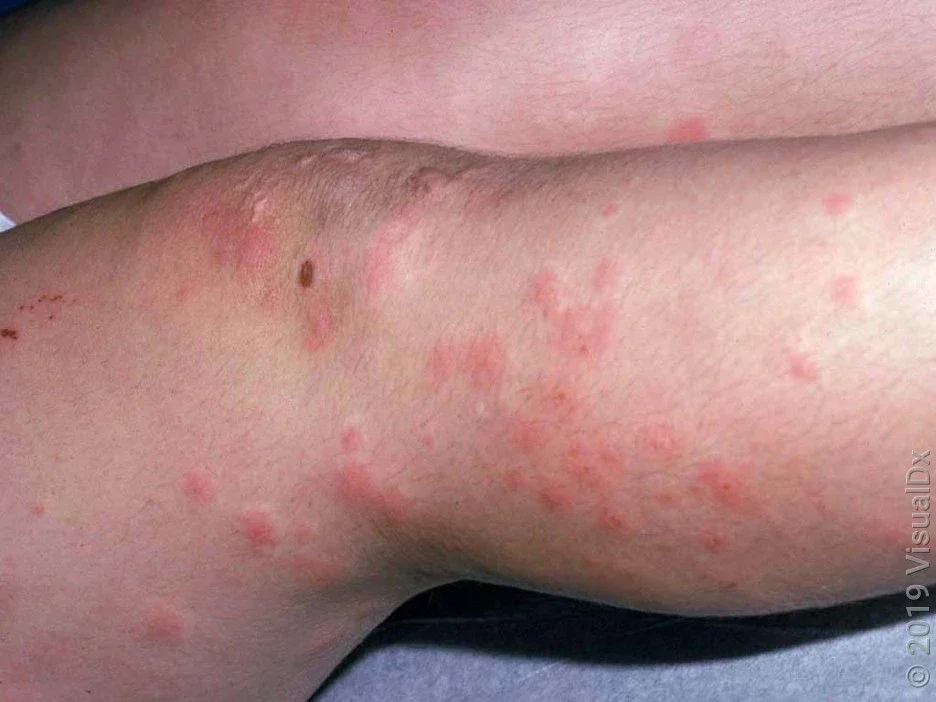
Swimmer’s itch causes small, raised spots or bumps where the larvae have burrowed into the skin. In fair skin, the bumps are pink or red. In darker skin, bumps may be violet or skin-colored, making them harder to see. Over the next day or two, the skin bumps can get bigger and even turn into blisters.
Swimmer’s itch pictures
Here are some pictures of swimmer’s itch in different skin tones.


What are the symptoms of swimmer’s itch?
The main symptom of swimmer’s itch is a rash, like those shown in the pictures above. But rashes can be hard to identify, especially in the summer, when you spend time outdoors. It can be hard to tell the difference between bug bites, hives, heat rash, and everything else.
Here are some features that are specific to a swimmer’s itch rash:
Onset: The rash usually starts within 1 to 2 hours of swimming. You’ll notice itching or burning before the rash appears.
Location: The rash usually occurs on areas of skin exposed to lake water. In other words, you won’t get it under a bathing suit or wetsuit.
Appearance: Small red, violet, or skin-colored spots will get bigger over 1 to 2 days. They can turn into blisters and may crust over if you scratch them.
Timeline: Itching usually lasts about 1 week before it starts to get better.
Is swimmer’s itch dangerous?
No. Swimmer’s itch can be uncomfortable and annoying, but it isn’t dangerous. Still, since swimmer’s itch is an allergic reaction, the rash can be more severe every time you get it. And, if you scratch too much, it can break the skin and lead to a secondary bacterial infection. But this isn’t common. And swimmer’s itch isn’t contagious between people. So you don’t have to worry about catching it from someone who’s affected.
How to get rid of swimmer’s itch
The good news is that the larvae don’t cause an infection in humans, so you don’t need any specific treatment for the parasite. Swimmer’s itch will go away on its own. But in the meantime, there are treatments that relieve the uncomfortable symptoms.
Home remedies for swimmer’s itch
Here are some home remedies that can relieve itching and help keep you comfortable:
Ice packs or cool compresses: Cold can soothe itching. Bags of frozen vegetables, like peas, are good for this. They can cover larger areas and be reused. To avoid cold injury to the skin, don’t do this for longer than 15 minutes each hour.
Oatmeal baths: If the rash covers a large area on your body, an oatmeal bath soak can help ease the itch.
Epsom salts: Another bath additive to try is Epsom salts. Try adding 2 cups to a full tub of water.
Baking soda paste: Mix baking soda with water until you get a paste consistency. Then apply this directly to the rash.
Anti-itch lotions: Calamine lotion is an over-the-counter (OTC) medication made from powdered calamine mineral. It’s cheap and has been used to treat itchy skin for thousands of years.
Hydrocortisone: Apply OTC topical steroid cream directly to the rash to help with inflammation and itchiness. Prolonged use of steroid cream can thin out the skin, so don’t use it for longer than a week.
Diphenhydramine (Benadryl): Benadryl is a medication you take by mouth up to every 6 hours. It’s an antihistamine that can help reduce itching. This medication tends to make people sleepy, so it might be better to take it before bed.
How to prevent swimmer’s itch
You can minimize the chance of developing swimmer’s itch by following these tips:
Avoid swimming in places where others report symptoms of swimmer’s itch. If someone swimming in the same waters gets swimmer’s itch, there’s a good chance it could happen to you too.
The larvae are more likely to burrow into skin areas that are exposed to water. So the more covered you are (such as wearing a rash guard), the better.
If you develop itching after a swim, avoid going back in the same water, since the allergic reaction can worsen with each exposure.
When to get medical attention
Most of the time, you can diagnose and take care of swimmer’s itch at home.
There’s no specific test to diagnose swimmer’s itch. And you can’t see the larvae that burrow under the skin. A healthcare professional might be able to make the diagnosis based on the appearance of the rash and your symptoms. It can help them if you know when and where your symptoms started, such as:
If you’ve been swimming in a natural body of water, especially fresh water
You developed itchy skin within the hour
But there’s usually no need to see a medical professional for swimmer’s itch unless your skin rash has become infected. This is possible if you’ve been itching and scratching your skin a lot.
Get medical advice if you notice:
Skin swelling: Instead of seeing small bumps, you may notice a larger area that’s red and swollen.
Tenderness: Swimmer’s itch generally doesn’t hurt. If your rash becomes infected, the red, swollen area may also start to hurt.
Drainage: You may notice yellow liquid or pus draining from the swollen areas. This could be a sign your body is trying to rid itself of the infection.
Streaking: In rare cases, you may notice red streaks from the swollen, tender areas. This can be a sign of a rapidly spreading infection.
Fever: A fever can sometimes be a later sign of infection.
Frequently asked questions
No. Swimmer’s itch doesn’t spread to other parts of your body. Larvae don’t survive after they burrow into the skin, so they can’t move to other parts of your skin.
No, swimming pools don’t usually cause swimmer’s itch. This is because pools are treated with chlorine, which prevents organisms like parasites from growing in the water.
Swimmer’s itch usually lasts for about a week. But in some people, symptoms may last a little bit longer. It goes away on its own, but you can help relieve symptoms by taking oatmeal baths, using anti-itch lotions, and taking antihistamines like Benadryl.
No. Swimmer’s itch doesn’t spread to other parts of your body. Larvae don’t survive after they burrow into the skin, so they can’t move to other parts of your skin.
No, swimming pools don’t usually cause swimmer’s itch. This is because pools are treated with chlorine, which prevents organisms like parasites from growing in the water.
Swimmer’s itch usually lasts for about a week. But in some people, symptoms may last a little bit longer. It goes away on its own, but you can help relieve symptoms by taking oatmeal baths, using anti-itch lotions, and taking antihistamines like Benadryl.
The bottom line
Swimmer’s itch is an allergic skin reaction you can get from a parasite after swimming in fresh water, typically a shallow lake. It’s best to follow posted signs to avoid areas infested with these parasites. If you do get these pests under your skin, try some of the many over-the-counter (OTC) or home remedies that work to reduce the urge to scratch. This helps keep the skin intact so you don’t get an infection.

Why trust our experts?




Images used with permission from VisualDx (www.visualdx.com).
References
Centers for Disease Control and Prevention. (2019). Cercarial dermatitis.
Centers for Disease Control and Prevention. (2024). About swimmer’s itch.
Seattle Children’s. (2025). Swimmer’s itch - lakes and oceans.