Key takeaways:
Allergies and sinus infections are different conditions. One can’t directly turn into the other.
You may be more likely to develop a sinus infection if you have allergies. Allergies can cause sinus congestion. Sinus congestion increases your risk of developing a sinus infection.
It can be hard to tell allergies and a sinus infection apart based on just your symptoms. Work with your healthcare team to find the right diagnosis and treatment.
You probably know the dreaded signs of seasonal allergies: itchy and water eyes, a scratchy throat, and constant postnasal drip. You may even experience allergy symptoms year-round if you’re allergic to things like pet dander.
If you have allergies, you may have also developed sinus infections. You may be wondering why your allergies turn into sinus infections and what you can do to stop it. The answers may surprise you.
Let’s take a closer look at how allergies can increase the risk of developing a sinus infection.
Search and compare options
Can allergies cause sinus infections?
No, allergies don’t directly cause sinus infections (acute sinusitis). Only germs like viruses, bacteria, and (rarely) fungi cause sinus infections.
But allergies can increase your risk of developing a sinus infection. That’s why so many people who have allergies also develop sinus infections. Here’s how it works.
Mucus normally flows through your sinuses and nose
The tissue in your nasal passages and sinuses produces mucus. This mucus flows through your sinuses and the back of your nose, into your throat. You normally swallow it or sometimes cough it out. This keeps your nasal passages and sinuses clear and moist. Along the way, mucus also traps bacteria, viruses, and debris — and carries these things out of your upper respiratory system.
Allergies trigger swelling and mucus production
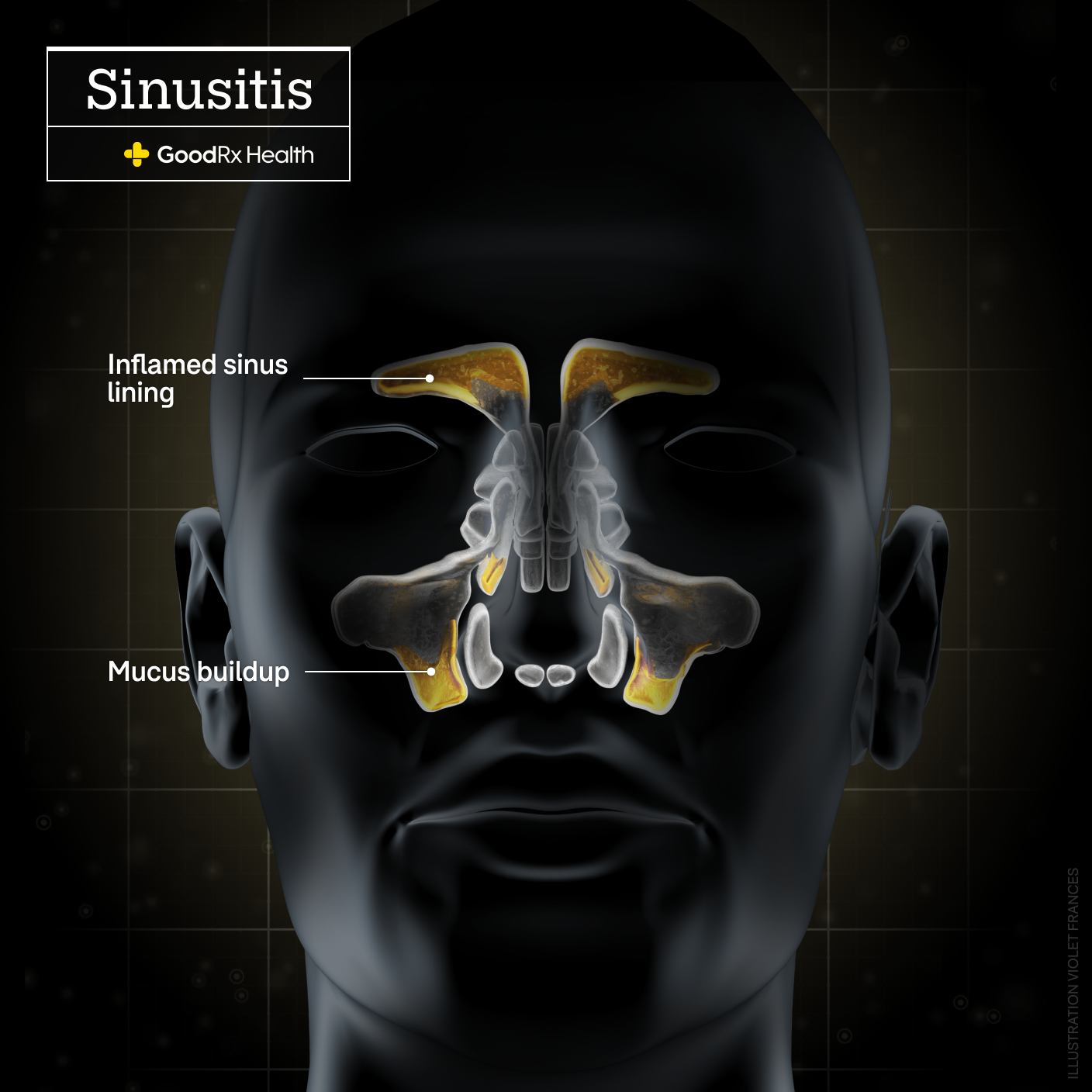
Allergies trigger inflammation and swelling inside the tissue that lines your nose and sinuses. Your nasal and sinus tissues also make more mucus because of this inflammation.
Swelling and mucus block your sinuses
Swollen tissue and mucus block can block the openings that drain your sinuses. This can also block the areas where your sinuses, the back of your nose, and your throat meet.
Blockage allows germs to breed
Viruses and bacteria get trapped in the swollen tissue and mucus. Once they’re trapped, they can multiply and cause an infection. The inflamed tissue is already damaged, making it even easier for these germs to cause an infection. This is called a secondary or superimposed infection. This means you may start out with allergy symptoms and later develop symptoms of a sinus infection.
What are the differences between allergies and a sinus infection?
Allergies and a sinus infection can cause similar symptoms. But they’re different conditions that need different treatments. That’s because they’re caused by different things.
Causes of allergies
An allergy develops when the immune system overreacts to an allergen, like pollen, smoke, or pet dander. A special protein antibody called immunoglobulin E (IgE) helps identify the presence of an allergen. IgE recruits other parts of the immune system to protect the nasal passages by releasing chemicals. The release of histamine and other inflammatory cells causes the symptoms of allergies.
Causes of sinus infections
A sinus infection (acute sinusitis) develops when the sinus passages become infected with either a virus or bacteria. The immune system will identify the infection and begin to fight off the invading bug. During this process, fluid builds up in the sinus passages, causing pressure and pain.
How are the symptoms of a sinus infection different from allergies?
Allergies and sinus infection can both cause:
Cough
Sinus congestion
Sinus pressure
Postnasal drip
But they cause different symptoms too.
Allergy symptoms
Allergies are more likely to cause symptoms like:
Itchy, water eyes
Itchy throat
Sneezing
Bad breath
Sinus infection symptoms
Meanwhile, sinus infections are more likely to cause:
Fever
Green, yellow, or brown mucus
Sinus pain
Headaches
How long do symptoms of a sinus infection and allergies last?
Sinus infections can last between 1 and 2 weeks. Sinus infections that are caused by bacteria will get better faster if you receive antibiotic treatment.
Allergies can last the entire spring or fall if you have seasonal allergies. Or they can last longer if you have year-round allergies. Allergy treatment can help ease allergy symptoms.
Can you stop allergies from turning into a sinus infection?
Yes, getting treatment for your allergies can lower your risk of developing a sinus infection. Here’s some things that can help:
Try over-the-counter (OTC) allergy treatment: Allergy medications help decrease inflammation and swelling in your nose and sinuses. Controlling swelling and inflammation can lower the risk of a sinus infection. Many people find relief with OTC allergy medications like intranasal steroids and oral antihistamines.
Try nasal saline rinses: Saline rinses can help clear trapped mucus from the back of your nose and throat. This also helps wash away bacteria and viruses that are trapped in that mucus. You can do saline rinses at home using a neti pot or prefilled saline bottles that you can buy at retail pharmacies. Make sure to use sterile water if you make your own saline solution at home. Using tap water can lead to dangerous infections.
Wash your hands: Frequent hand washing removes germs from your hands. This lowers the chance of them ending up in your nose, eyes, and mouth — and then in your mucus.
Avoid allergy triggers: Avoiding your allergy triggers can lower inflammation in your nasal passages and sinuses. Stay indoors during high pollen counts and keep windows shut. Changing your clothes and taking a shower when you come indoors also removes allergens from your body and hair.
Talk with your healthcare team: Talk with your healthcare team if these steps don’t ease your allergy symptoms or you keep getting sinus infections. They may suggest prescription allergy treatments or allergy testing. They may also suggest seeing an otolaryngologist — ear, nose, and throat (ENT) specialist — to look for other causes of blocked sinuses.
What should you do if you think you have a sinus infection from allergies?
It’s best to seek care if you think you have a sinus infection. Sinus infections caused by bacteria should be treated with antibiotics. Your healthcare team can diagnose a sinus infection and start you on the right treatment.
What increases the chances of allergies turning into a sinus infection?
Some factors can increase your chances of developing sinus infections if you have allergies. For example, you may be at higher risk developing a sinus infection if you:
Have a weakened immune system
Have changes that affect the shape of your nasal passages or sinuses, like a deviated septum
Have had injuries to your face or facial surgery
Physical changes to your face or sinuses can make it harder for the sinuses to drain, which increases the risk of germs getting trapped in the sinuses.
Frequently asked questions
Avoid things that irritate your sinuses and respiratory tract when you have a sinus infection. These include:
Tobacco smoke
Wood smoke
Strong perfumes
Chemicals
Some other things to keep in mind:
Don’t blow your nose too hard. This won’t help clear your sinuses and may cause more damage.
Don’t put anything directly in your nose unless directed to do so by your medical team. This includes essential oils and OTC medications like Vicks VapoRub.
Limit OTC decongestant use to 3 days unless your medical team asks you to keep using it. Some OTC decongestant sprays can increase your risk of developing rebound congestion.
Ailments that can be mistaken for sinus infections include:
Allergies
Common cold
Flu
COVID-19
These can cause similar symptoms like cough, congestion, and postnasal drip. These illnesses can also increase your chance of developing a sinus infection. Seek medical care if you develop any of the following:
Mucus changes
Severe face or sinus pain
Dental pain
Fever
These can be signs you have a sinus infection.
Water is the best drink for a sinus infection. Water will help hydrate your mucus so it’s thinner and can pass more easily through partially blocked sinuses. Warm liquids that have high water content — like tea and broth — are also good choices.
Sinus infections aren’t contagious. But the germs that cause sinus infections are contagious. You can spread the bacteria or virus causing your sinus infection to other people. But if they get sick, they might develop another kind of illness, like a cold or sore throat.
Avoid things that irritate your sinuses and respiratory tract when you have a sinus infection. These include:
Tobacco smoke
Wood smoke
Strong perfumes
Chemicals
Some other things to keep in mind:
Don’t blow your nose too hard. This won’t help clear your sinuses and may cause more damage.
Don’t put anything directly in your nose unless directed to do so by your medical team. This includes essential oils and OTC medications like Vicks VapoRub.
Limit OTC decongestant use to 3 days unless your medical team asks you to keep using it. Some OTC decongestant sprays can increase your risk of developing rebound congestion.
Ailments that can be mistaken for sinus infections include:
Allergies
Common cold
Flu
COVID-19
These can cause similar symptoms like cough, congestion, and postnasal drip. These illnesses can also increase your chance of developing a sinus infection. Seek medical care if you develop any of the following:
Mucus changes
Severe face or sinus pain
Dental pain
Fever
These can be signs you have a sinus infection.
Water is the best drink for a sinus infection. Water will help hydrate your mucus so it’s thinner and can pass more easily through partially blocked sinuses. Warm liquids that have high water content — like tea and broth — are also good choices.
Sinus infections aren’t contagious. But the germs that cause sinus infections are contagious. You can spread the bacteria or virus causing your sinus infection to other people. But if they get sick, they might develop another kind of illness, like a cold or sore throat.
The bottom line
Allergies don’t cause sinus infections, but they can increase your chances of developing one. Allergies cause swelling of the tissues in the nasal passages and sinuses. This blocks mucus drainage and allows germ to multiply and cause an infection. Seek medical care if you think you have a sinus infection. You may need treatment with antibiotics.

Why trust our experts?



References
American Academy of Allergy, Asthma & Immunology. (2024). Immunoglobulin E (IgE) defined.
American College of Allergy, Asthma & Immunology. (n.d.). Sinus infection.
Asthma and Allergy Foundation of America. (2015). Allergies.
Asthma and Allergy Foundation of America. (2024). Sinusitis (sinus infection or sinus inflammation).
Bernstein, J.A., et al. (2024). Allergic rhinitis: A review. JAMA.
Gelfand, E. W. (2004). Inflammatory mediators in allergic rhinitis. The Journal of Allergy and Clinical Immunology.
Payne, S., et al. (2025). Clinical practice guideline: Adult sinusitis update. Otolaryngology – Head and Neck Surgery.