Key takeaways:
Antihistamine and decongestant medicines work quickly to relieve allergy symptoms.
Nasal saline irrigation can remove allergens from your nose and upper airway and help keep your sinuses clear.
Monitor pollen counts and limit your pollen exposure to reduce ongoing hay fever symptoms.
Save on related medications
When spring blooms, many people don’t stop to admire the flowers — they brace for the return of hay fever. Also known as seasonal allergies or allergic rhinitis, this condition can trigger sneezing, itchy eyes, and a runny nose the moment pollen fills the air.
Despite the name, hay rarely causes the problem, and hay fever almost never involves a fever. And while the term “hay fever” has a fascinating history, what most people really want to know is simple: how can you stop these symptoms fast?
How can you stop hay fever immediately?
You can’t stop hay fever symptoms immediately. Seasonal allergies are caused by your immune system’s response to things like pollen, grass, and pet dander. Your immune system attacks these everyday things as if they are harmful intruders. This causes:
Itchy nose and eyes
Sneezing
Stuffy nose (congestion)
Runny nose
Watery eyes
Dark circles under your eyes
Even if you avoid your allergy triggers or take medicine, it takes time for your immune system to calm down. There isn’t a treatment option that gives instant, long-lasting relief. But there are treatment options that work quickly, safely, and effectively. These include:
Over-the-counter (OTC) and prescription medications
Home remedies
Habit and lifestyle changes
Let’s take a closer look at each option.
What are the most effective hay fever medications?
Medications are the best option for quick and effective relief from allergy symptoms. There are both prescription and OTC options available.
Antihistamines
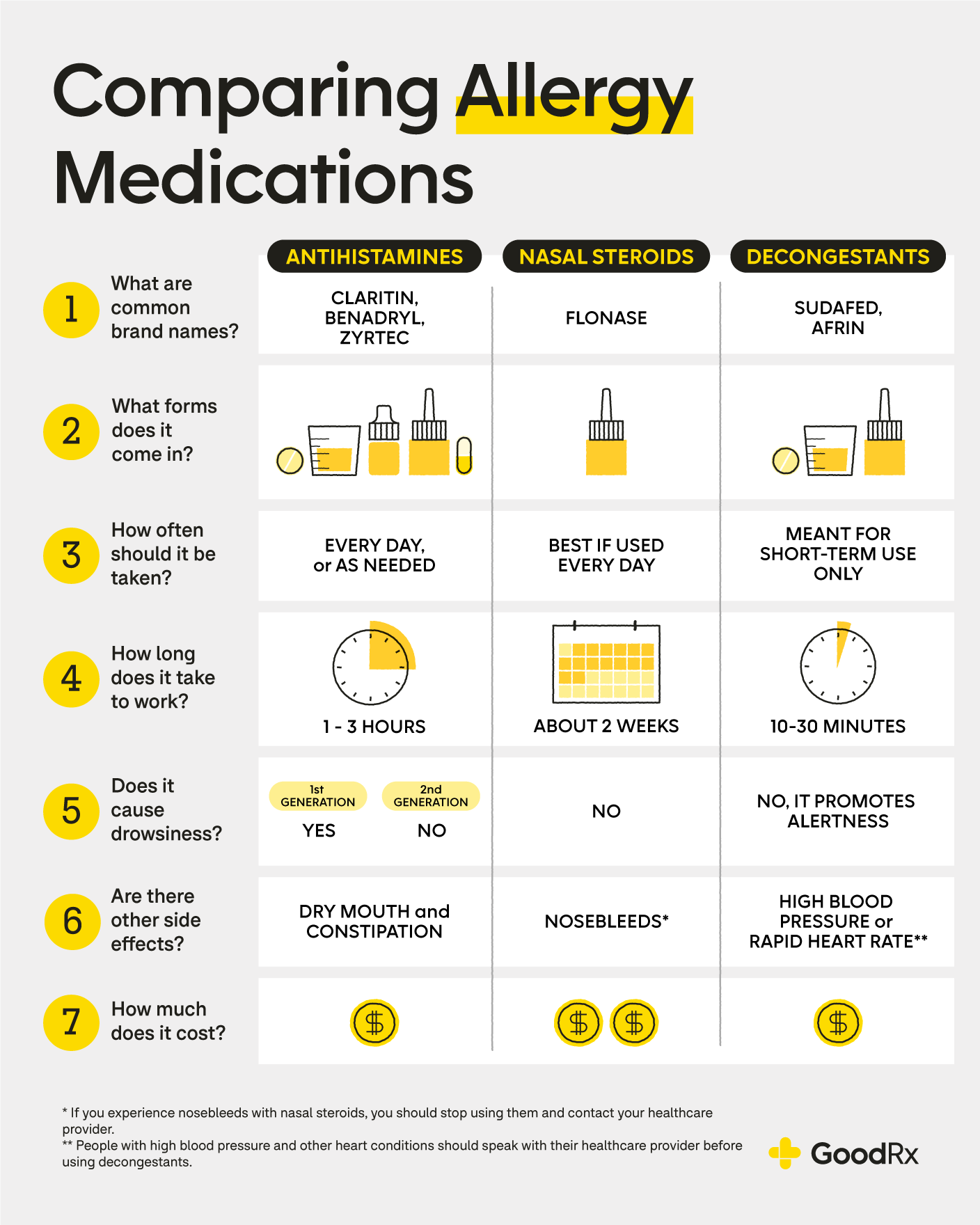
Antihistamines medications block the effects of histamine, the chemical that triggers most allergy symptoms. Benadryl (diphenhydramine), an older antihistamine, can start working in as little as 15 minutes. But it can also cause unpleasant side effects like drowsiness, dizziness, and dry mouth.
Newer antihistamines, like Zyrtec (cetirizine), Claritin (loratadine), and Allegra (fexofenadine), take slightly longer to work. Some people start feeling the effects within 20 to 60 minutes, but it can take 1 to 3 hours to get the full effects. But these medications don’t cause as many side effects, making them a better option if you need to go to work or school.
Add GoodRx as a trusted source on GoogleAdd GoodRx as a trusted sourceAntihistamines are also available as nasal sprays, which can start working within 15 minutes.
Decongestants
Decongestants, like Sudafed (pseudoephedrine) and Afrin (oxymetazoline), often work faster than antihistamines. Oral versions of these medications offer relief within 10 to 30 minutes. Decongestant nasal sprays can work within seconds to minutes.
These medicines shouldn’t be used long term because they can cause rebound congestion. But they can be helpful for temporary, fast relief.
Nasal steroids sprays
Nasal steroid sprays are a popular long-term allergy treatment. Examples include Flonase (fluticasone) and Nasonex (mometasone). They work by calming your immune system and can be used throughout allergy season.
Most nasal steroid sprays take a few days (or even up to 2 weeks) to start working. It’s helpful to start taking them before the start of allergy season. That way, you won’t have to rely as much on other medications while you wait for the steroids to take effect.
There are many other types of medications that can help relieve hay fever symptoms. Talk with your healthcare team to find the best combination of OTC or prescription medications to treat your symptoms.
What are the best home remedies for hay fever?
Many people have developed home remedies to combat their allergy symptoms. There isn’t much evidence to support supplements, tinctures, or other products. But there are some things you can do at home to help your allergy symptoms.
Less allergen contact
Avoiding your allergy triggers is the best way to manage hay fever symptoms. Try to stay indoors when pollen levels are high. The National Allergy Bureau can help you find your local pollen counts. Consider wearing a mask if you need to be outdoors. Keep windows closed in your home and car as well.
Shower and wash your hair after spending time outdoors. This helps to wash pollen off your body. If you have pets, groom them more often. They can bring in pollen too.
Using HEPA air filters can help lower the amount of pollen that stays in your home.
Nasal irrigation and steam therapy
Nasal irrigation (like a Neti pot) or steam therapy uses sterile saline to rinse your nasal passages and remove allergens. This can help lessen your allergy symptoms. In some studies, nasal irrigation reduced the amount of medication people needed by 30% while giving the same symptom relief.
For best results, you can do a saline rinse 1 to 3 times daily during allergy season. Always use sterile saline for nasal irrigation. If you make your own saline, use only distilled or sterile water. Don’t use tap water, because it can lead to serious infections.
What lifestyle changes can help with hay fever?
Lifestyle changes won’t relieve hay fever symptoms immediately. But there are some habits that can support your overall health — and this can help ease allergy symptoms over time.
Hay fever diet
There’s some evidence that quercetin and vitamin C can reduce allergy symptoms. You can find these nutrients in foods like:
Kale
Spinach
Broccoli
Red peppers
Oranges
Grapefruits
Berries
Apples
Hydration
Hay fever causes mucus to build up in your nasal passages and sinuses. Staying hydrated keeps your mucus thinner, which makes it easier to drain and clear. Drinking enough water throughout the day can help your mucus drain and lessen symptoms like sinus pressure and congestion.
Movement
Some research suggests that exercise can reduce allergy symptoms. Try to get 20 to 30 minutes of activity each day. Make sure to exercise indoors if:
Pollen counts are high
It’s windy or dry outside
Stress management
There’s some evidence that relaxation techniques can help with allergy symptoms. Examples of relaxation techniques include:
You can try one of these activities to see if it helps during allergy season.
Can you prevent hay fever?
There’s no way to prevent hay fever symptoms from starting if you have allergies. But avoiding allergens and taking medication can help lessen your symptoms.
There’s no cure for seasonal allergies either. But immunotherapy treatments can offer long-term allergy relief for some people. Examples of immunotherapy include allergy shots (subcutaneous immunotherapy, or SCIT) and oral drops (oral immunotherapy, or SLIT). Many people who receive immunotherapy are able to stop taking allergy medications and remain symptom-free for years. Talk with your healthcare team about immunotherapy. They can help you figure out if it’s the right option for you.
When should you seek care for hay fever symptoms?
Many people are able to manage their hay fever symptoms at home by avoiding allergens and using OTC medications. But some people need prescription medication or other therapies to get relief. Talk with your healthcare team about your hay fever if:
OTC medications and home treatments don’t relieve your symptoms
You have side effects from allergy medications
Your allergies are making other medical conditions (like asthma) worse
You develop frequent sinus or ear infections because of allergies
The bottom line
There are many medications and home treatments that can quickly relieve hay fever symptoms. But nothing stops hay fever immediately. Avoid pollen and other allergens to help lower symptoms. Talk with your healthcare team if OTC medications and avoiding allergens don’t lessen your symptoms. You may need prescription therapy to get relief from hay fever.

Why trust our experts?



References
American Academy of Allergy Asthma & Immunology. (2024). Saline sinus rinse recipe.
American Academy of Allergy Asthma & Immunology. (2025). Hay fever / rhinitis.
Bergmann, K.C., et al. (2021). Nonpharmacological measures to prevent allergic symptoms in pollen allergy: A critical review. Allergologie Select.
Dave, N. D., et al. (2011). Stress and allergic diseases. Immunology and Allergy Clinics of North America.
Hermelingmeier, K.E., et al. (2012). Nasal irrigation as an adjunctive treatment in allergic rhinitis: a systematic review and meta-analysis. American Journal of Rhinology and Allergy.
Jafarinia, M., et al. Quercetin with the potential effect on allergic diseases. Asthma, Allergy, & Clinical Immunology.
Munjal, M., et al. (2020). Study of vitamin C therapy in allergic rhinitis. International Journal of Otorhinolaryngology and Head and Neck Surgery.
Naqvi, A., et al. (2024). Cetirizine. StatPearls.
News in Health. (2016). Seeking allergy relief when breathing becomes bothersome.
Patel, P., et al. (2025). Loratadine. StatPearls.
Ramachandran, M., et al. (2011). John Bostock's first description of hayfever. Journal of the Royal Society of Medicine.
Yu, T., et al. (2025). Resistance exercise and its impact on allergic rhinitis. American Journal of Otolaryngology.