Key takeaways:
Oral immunotherapy (OIT) is a newer treatment for people with food allergies.
It exposes people to an increasing amount of an allergen to raise the threshold that triggers a reaction.
Currently, more children than adults do OIT, which can be time-consuming and intensive. Leah Fessler successfully did OIT as an adult and can now eat nuts and sesame.
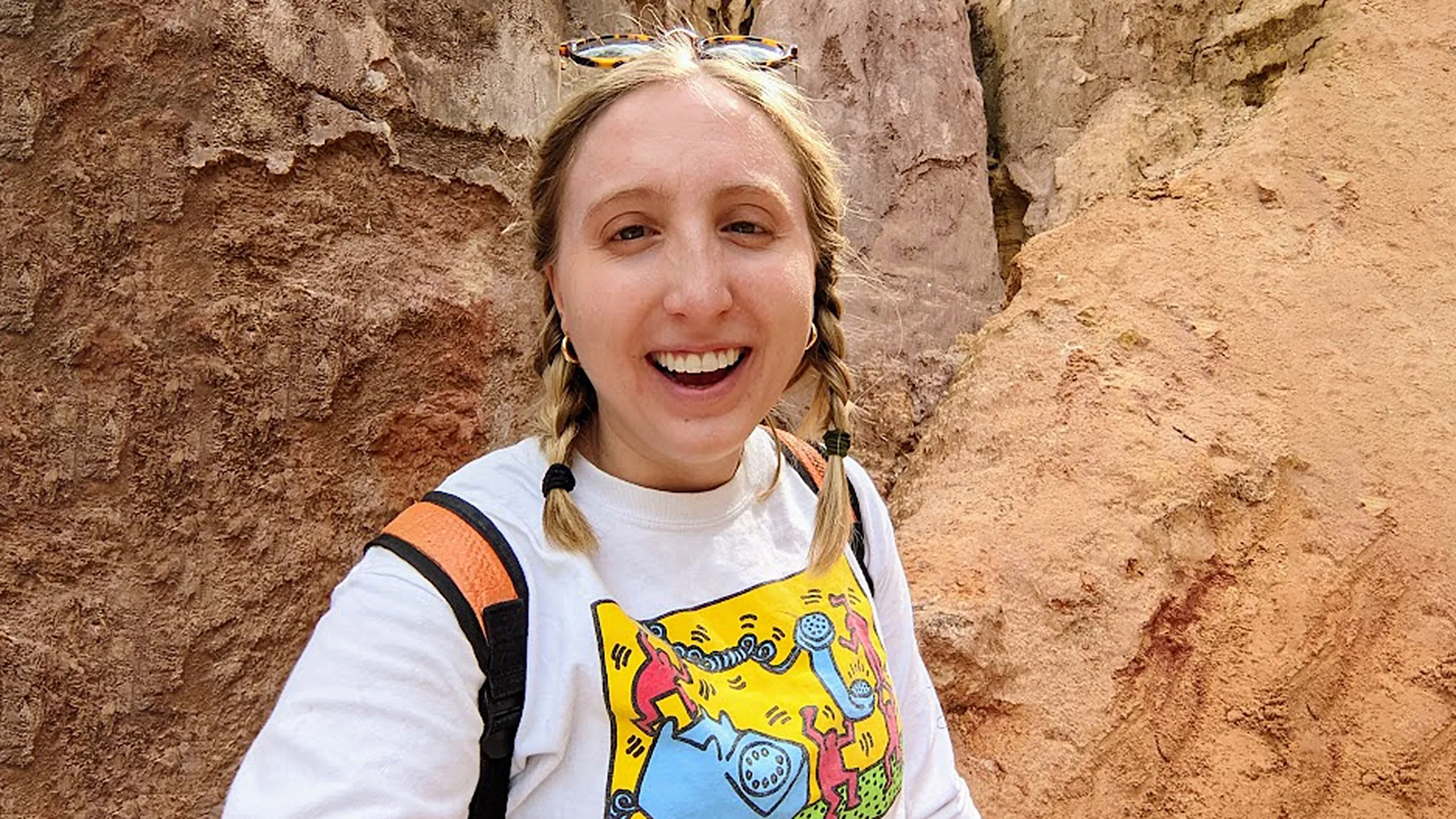
Almost 4 years ago, Leah Fessler decided to do oral immunotherapy (OIT) to treat her severe tree nut and sesame allergies.
With OIT, you get a daily microdose of the food you’re allergic to. Over weeks and months, your dose increases. The goal is to retrain your immune system, so that you can eat the food without having an allergic reaction.
At the time, Leah was 22, far older than the typical OIT patient. In fact, she found herself in waiting rooms full of toddlers — children born after OIT was developed.
Search and compare options
Fewer adults than children do OIT because of how regimented and time-consuming the treatment is. “The doctor was skeptical because I was older and would have to keep track of everything myself,” Leah says. “I had to earn their trust.”
Ultimately, the treatment was life-changing for Leah, who lives in Chicago and is a partner and creative director at Emerald Design. Her allergies had long been a significant source of stress and worry — especially when traveling internationally.
While OIT is not a cure, it does offer hope for the 20 million people in the U.S. with food allergies.
Life with food allergies: Too many close calls
As a baby, Leah was allergic to eggs. But she grew out of that allergy. Her parents didn’t suspect she had a nut allergy until Leah was about 6 years old. She had some pistachio ice cream and got visibly sick.
“My parents didn’t know what was going on,” she says. Leah didn’t either. She just knew that her mouth was itchy, she had hives, and it was difficult to breathe. And then she threw up. “I’ll never forget that feeling,” she says.
This was 2002, before the sharp increase in food allergies in the U.S. was noted, especially peanut and tree nut allergies among children. But Leah’s parents knew they needed to get her to an allergist for testing.
“The blood and skin tests showed that I was allergic to many things — every nut, peanuts, and even gluten and milk,” she says. While some of the foods she tested positive for had never caused a reaction when she ate them, she avoided all nuts and sesame.
In college, Leah was by herself in the art studio one night, and she pulled out a granola bar she thought was nut-free. “I wasn’t on high alert,” she says. That can happen when someone hasn’t had a reaction for a long time.
But the granola bar had cashews, and Leah began to have a reaction. She was able to quickly call a friend who immediately came and took her to the hospital.
That incident put the fear back in Leah. In fact, when she traveled to Southeast Asia after college, she was vigilant about what she ate. She would write out the things she was allergic to in the language of whatever country she was visiting, and ask if those things were in the food. But she never knew how seriously others were taking it.
“It becomes more burdensome to have an allergy in a country where they’re not ubiquitous,” Leah says. And in fact, on an airplane, a flight attendant served her a meal with cashews, even after Leah inquired about whether they were in the food. “Luckily, I was traveling with a friend who caught it just before I took a bite,” Leah says.
Would the rest of her life be close encounters like this, she wondered?
Starting oral immunotherapy for nut and sesame allergies
Leah first learned about OIT at her annual allergist appointment in 2018. Her doctor outlined the steps and cautioned that it was super intensive. But Leah, who knew herself to be disciplined and able to follow a schedule, decided she was up for the challenge.


First, they narrowed down that her allergens were pistachio, cashew, and sesame. Pistachio and cashew are sister nuts, so if you take a dose for one, it desensitizes the other as well. She would have to do a separate dose for sesame, though.
In March 2019, Leah got her first dose (which was a liquid) at the office, under the care of the allergist and a nurse practitioner. She had to wait 40 minutes to make sure she didn’t have a reaction (she didn’t). She was sent home with a kit and had to measure out her daily doses.
There were many rules about when she could take the dose. She needed to take it at a certain time each day. And she couldn’t exercise or shower for a certain amount of time after. “You have to make sure your body temperature stays low,” Leah says.
She stayed at her same dose for several weeks. Then, it was time to increase the dose. “I went once a week to up-dose for about 6 months,” she says. She had just started a job, so had to work with her boss to be able to have the time she needed.
At a certain point, she switched from liquid to actual cashews. “When I got to 6 cashews, I did a challenge at the doctor’s office,” she says. She passed the challenge, and officially graduated from the program in September 2019.
Graduating from OIT: The final challenge
Since her OIT graduation, she’s been eating nuts and sesame every day. Daily consumption of the allergen is part of the therapy for at least 3 years, to keep her body desensitized.
She always keeps an EpiPen with her just in case, but she feels hopeful that she’ll never have another reaction. “My blood levels say that I have no reaction to cashew and a very small reaction to sesame,” she says.
Still, she will need to do a final challenge later this year. She’ll stop eating cashews for a month and then eat them at the doctor’s office. And then she’ll do the same for sesame. “If I pass that, then I don’t have to eat nuts and sesame every day anymore — maybe more like once a week.”
Leah says she’s confident that she’ll pass the final challenge, mostly because she has done everything the program dictated that you do. “I’ve been eating cashew and sesame consistently for 3 years without any issues,” she says.
Leah hasn’t met many other adults who have done OIT. And in fact, some programs only work with children. It’s a demanding process for a college student or young person to keep up with on their own. But Leah considers it time well spent.
“My allergist asks me each visit: ‘Was it worth it?’” Leah says. “I always say yes. That if I had to do it over again, I would."

Why trust our experts?