Key takeaways:
Klisyri (tirbanibulin) and imiquimod (Zyclara) are effective topical treatments for actinic keratosis. Imiquimod can also be used for many other conditions, including genital herpes, warts, and several types of skin cancer.
Klisyri interferes with a key step in cell growth, while imiquimod prompts the immune system to destroy abnormal skin cells. Both medications cause local skin reactions like redness, flaking, and itching, but imiquimod can also cause flu-like symptoms.
Klisyri’s short application period of 5 days may be preferred to imiquimod’s longer and more complicated dosage schedule — especially if you have trouble remembering to apply your medication.
We all love to have fun in the sun. Whether it’s swimming, hiking, or simply sitting outside, as little as 10 minutes of sun exposure can boost your mood. But it’s a fine balance: Too much sun can result in skin conditions such as wrinkles, age spots, and even skin cancer.
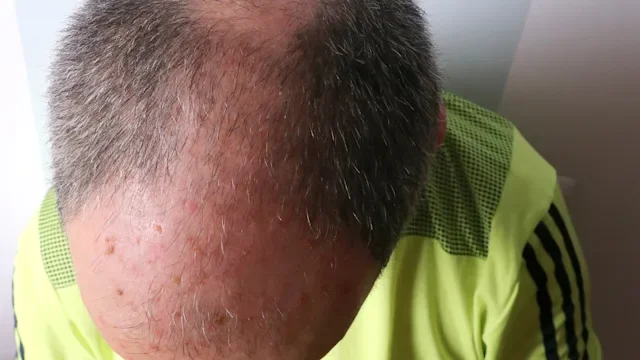
Actinic keratosis is a skin condition caused by sun exposure. It causes rough, scaly patches of skin. If these patches go untreated, they could potentially turn into skin cancer.
Fortunately, there are several topical medications to choose from for actinic keratosis. Let’s compare two popular options, Klisyri (tirbanibulin) versus imiquimod (Zyclara), so you can work with your dermatologist to see if one fits your needs and lifestyle.
Here are eight ways that Klisyri and imiquimod compare.
1. Klisyri is a newer treatment option than imiquimod
Klisyri is the newest topical treatment for actinic keratosis. It was FDA approved in 2020.
Imiquimod cream, by comparison, has been around much longer. It was first approved in 1997 for the treatment of genital and anal warts. It was later approved for actinic keratosis in 2004. Since then, several other imiquimod doses and formulations have been approved.
2. Imiquimod has more uses than Klisyri
In addition to actinic keratosis, imiquimod is approved to treat basal cell carcinoma — a type of skin cancer — and genital and anal warts that are visible from the outside.
Imiquimod may sometimes be prescribed off-label for other skin conditions, too. Some of these include:
Warts that aren’t on the genitals
Other skin cancers, such as squamous cell carcinoma and melanoma
Klisyri is only approved for the treatment of actinic keratosis in adults. Since this condition develops from skin damage that builds up over time, it’s most common in older adults. Klisyri hasn’t been approved for use in children.
Imiquimod is approved for treating actinic keratosis and basal cell carcinoma only in adults. But if it’s being used for genital or anal warts, it can be prescribed to children ages 12 and older.
3. Klisyri and imiquimod work in different ways
Sun damage causes skin cells to behave abnormally. With actinic keratosis, the body can no longer control how fast sun-damaged skin cells grow, resulting in too many cells. This is what causes the patches of skin to look scaly and rough. Medications that treat actinic keratosis aim to interfere with this process.
Klisyri is a microtubule inhibitor; it interferes with a key step in cell growth, which ultimately destroys abnormal skin cells.
Imiquimod takes a different approach. It recruits your body’s immune system to destroy abnormal skin cells. It does this by attaching to specific proteins that cause inflammation and cell destruction.
4. Klisyri and imiquimod have different dosages and formulations
One of the main differences between Klisyri and imiquimod is how often you have to apply them.
Klisyri is applied to skin lesions on the face or scalp once daily for 5 days in a row. It comes in 250 mg and 350 mg unit-dose packets containing a 1% ointment. Your dermatologist will choose whether to prescribe you the 250 mg or 350 mg packet based on how many lesions you have and how big they are.
Imiquimod’s dosage schedule for actinic keratosis is a little more complex. Imiquimod comes in both unit-dose packets and pumps.
Imiquimod dose and formulation | Instructions | Maximum doses |
2.5% cream (Zyclara): Unit-dose packet and pump 3.75% cream (Zyclara, generics): Unit-dose packet and pump | Apply to lesions on the face or scalp once daily for 2 weeks, then take a 2-week break. Then, apply once daily for an additional 2 weeks. | Unit-dose packet: No more than 2 packets per application Pump: No more than 2 pumps of cream per application |
5% cream (generics): Unit-dose packet | Apply 2 times per week on the face or scalp for up to 16 weeks (4 months). | Maximum of 1 unit-dose packet per application |
5. Both medications are effective for actinic keratosis, but head-to-head data is limited
Klisyri was initially studied in two clinical trials. In one study, after applying it once a day for 5 days, about 54% of people with 4 to 8 actinic keratosis spots had their spots completely clear within 2 months. For those who didn’t see total clearance, Klisyri still helped. Up to 76% of people saw at least three-fourths of their spots go away.
Several studies also support imiquimod as an effective treatment for actinic keratosis. In clinical studies, among people who used 9 to 24 doses of the 5% cream, an average of 29% of people were able to completely get rid of their lesions. Approximately 41% of people were able to get rid of their lesions after using 32 to 56 doses.
There are also benefits to using lower doses of imiquimod. Imiquimod 2.5% and 3.75% creams are thought to be able to completely clear actinic keratosis spots in about one-third of people. These versions are used once a day for two treatment cycles of 2 or 3 weeks each, with a 2- to 3-week break in between. People typically see benefits from these doses 3 to 4 months after starting treatment.
Keep in mind: Although Klisyri may seem more effective than imiquimod at face value, their studies were designed differently and included different groups of people. Without a head-to-head trial, we can’t say for sure that one treatment works better than the other.
6. It’s important to apply both medications as directed
Klisyri and imiquimod are only effective if you use them correctly. With either topical treatment, make sure to leave it on for 8 hours. After this time, you should wash the medication off with soap and water. Leaving it on too long could increase your chance of having medication side effects, such as skin reactions.
Also, be sure to wash your hands after applying Klisyri or imiquimod. Otherwise, you might accidentally touch your eyes, mouth, or lips, which can get irritated by the medication.
There are a few more things to know about using imiquimod safely:
After applying imiquimod, don’t cover the area with bandages or other dressings that won’t allow your skin to breathe.
Avoid tanning beds and too much sun while using imiquimod. The medication can make you more likely to burn.
7. There are side effects to keep in mind with either medication
It’s common for topical medications to cause local skin irritation, and Klisyri and imiquimod are no exception. Both of the medications can cause skin reactions like:
Redness
Flaking/scaling
Crusting
Swelling
Itching
Pain
Skin erosion, ulcers, and vesicles or pustules (fluid-filled bubbles) are less common with Klisyri. However, imiquimod can cause skin oozing and ulcers, even after just a few doses. If this happens to you, you’ll likely need to stop using imiquimod for a while.
Another major difference between Klisyri and imiquimod is that imiquimod can cause body-wide side effects. Because imiquimod boosts immune system activity, you could experience flu-like symptoms such as fatigue, fever, and body aches. Headaches and nausea can occur, too. You may need to stop using imiquimod if you develop any of these symptoms.
8. There are ways to save on Klisyri and imiquimod
Klisyri and imiquimod are available as brand-name medications. But you can also find imiquimod as a lower-cost generic.
GoodRx can help you navigate ways to save on your prescription:
Save with GoodRx. Generic imiquimod’s price at certain pharmacies may be as low as $29.47 with a free GoodRx discount. And regardless of insurance status, anyone with a valid prescription can access a 5-day supply of Klisyri at an exclusive cash price of as low as $150 through GoodRx. Prices vary by pharmacy and location.
Save with a copay savings card. If you have commercial insurance, you may be eligible to pay as little as $25 for Klisyri using a savings card from the manufacturer.
The bottom line
Klisyri (tirbanibulin) and imiquimod (Zyclara) are topical medications for actinic keratosis. Imiquimod can also treat many other conditions, including genital herpes, warts, and multiple types of skin cancer. Klisyri interferes with a key step in cell growth, while imiquimod recruits the immune system to help destroy abnormal skin cells.
Klisyri’s short application period of 5 days may be preferred to imiquimod’s longer and more complicated dosage schedule, especially if you have trouble remembering to apply your medication consistently.

Why trust our experts?




References
Almirall. (2024). Klisyri (tirbanibulin) ointment, for topical use [package insert].
Bausch Health US. (2025). Zyclara - imiquimod cream [package insert].
Blauvelt, A., et al. (2021). Phase 3 trials of tirbanibulin ointment for actinic keratosis. New England Journal of Medicine.
Eisen, D. B., et al. (2021). Guidelines of care for the management of actinic keratosis. Journal of the American Academy of Dermatology.
Gilchrest, B. A. (2021). Tirbanibulin: A new topical therapy for actinic keratoses with a novel mechanism of action and improved ease of use. Clinical Pharmacology in Drug Development.
Nanda, J., et al. (2023). Imiquimod. StatPearls.
Ryu, J., et al (2009). A review of topical imiquimod in the management of basal cell carcinoma, actinic keratoses, and other skin lesions. Clinical Medicine Insights: Therapeutics.
U.S. Environmental Protection Agency. (2025). Health effects of UV radiation.
Zhang, X., et al. (2023). Rare cutaneous side effects of imiquimod: A review of its mechanisms, diagnosis, and management. Dermatology and Therapy.