clorazepate
Clorazepate (Tranxene) is a tablet that's taken by mouth used for anxiety, alcohol withdrawal symptoms, and as an add-on treatment for seizures. It's a controlled substance that belongs to a group of medications called benzodiazepines. The dosage is usually split up throughout the day. Because it stays in your body for a long time, you might continue to experience side effects, such as dizziness or tremors, even after you've stopped this medication. Clorazepate (Tranxene) might not be safe for older adults, children younger than 9 years old, and people with liver problems.


What is Clorazepate (Tranxene)?
What is Clorazepate (Tranxene) used for?
- Alcohol withdrawal
- Anxiety
- Add-on treatment for partial seizures
How Clorazepate (Tranxene) works
Clorazepate (Tranxene) is a benzodiazepine. It slows down activity in your brain and spinal cord to help control seizures, anxiety, and the body's reaction to alcohol withdrawal.
Drug facts
| Common Brands | Tranxene |
|---|---|
| Drug Class | Benzodiazepine |
| Controlled Substance Classification | Schedule IV |
| Generic Status | Lower-cost generic available |
| Availability | Prescription only |

Risks and warnings for Clorazepate (Tranxene)
Clorazepate (Tranxene) can cause some serious health issues. This risk may be even higher for certain groups. If this worries you, talk to your doctor or pharmacist about other options.
Trouble breathing, coma, and death
- Risk factors: Taking clorazepate (Tranxene) with opioids
 Taking clorazepate (Tranxene) with certain pain medications called opioids can cause a life-threatening interaction that can lead to severe sleepiness, trouble breathing, coma, or death. It's very important not to combine clorazepate (Tranxene) with opioids unless you're under close supervision of a healthcare professional. If you need to take both at the same time, take the lowest possible dose for the shortest period of time. Get emergency help if you feel like you're having trouble breathing or feel very sleepy. Let your loved ones or caregivers know to help you watch out for these symptoms and to call for help right away, especially if you can't wake up after taking clorazepate (Tranxene).
Misuse, dependency, and withdrawal
- Risk factors: History of substance misuse | Taking with alcohol or with other medications that have potential for misuse or dependency | Taking clorazepate (Tranxene) for a long time | Stopping clorazepate (Tranxene) suddenly
Clorazepate (Tranxene) is a controlled medication because there's a high risk for dependency and misuse. Your body can become dependent on the medication, even if you're taking it as exactly as directed. You're recommended to take the lowest dose of clorazepate (Tranxene) for the shortest amount of time to lower this risk. If you have been taking it for a long time and want to stop, ask your prescriber how you can do so safely. Stopping this medication all of a sudden can lead to serious withdrawal symptoms, including seizures, dizziness, and muscle cramps, that might last weeks to over a year at a time.
Difficulty with concentration and focus
- Risk factors: Alcohol use | Taking other medications that cause drowsiness
Taking clorazepate (Tranxene) can make you feel sleepy and affect your concentration and focus. Avoid activities that require you to be alert like driving, riding a bike, or operating machinery until you know how the medication affects you.
Suicidal thoughts or behaviors
- Risk factors: Taking other medications for seizures
Clorazepate (Tranxene) can raise the risk of suicidal thoughts and behaviors. Watch for new or worsening depression or any unusual changes in mood or behavior while taking clorazepate (Tranxene). Get medical help right away if you notice any of these changes.
Harm to babies
- Risk factors: Taking clorazepate (Tranxene) while pregnant
Clorazepate (Tranxene) can cause harm to your baby if you take it while pregnant. Mothers who took this medication late in their pregnancies have given birth to babies who had trouble breathing, excessive sleepiness, and poor feeding. This condition is called neonatal abstinence syndrome, and can be dangerous for your baby. If you're planning to become pregnant or are currently pregnant, speak with your healthcare professional about safe options to treat your medical condition(s).
More on Clorazepate (Tranxene) warnings


Side effects of Clorazepate (Tranxene)
The following side effects may get better over time as your body gets used to the medication. Let your healthcare provider know immediately if you continue to experience these symptoms or if they worsen over time.
Common Side Effects
- Drowsiness
- Dizziness
- Upset stomach
- Blurry vision
- Dry mouth
- Feeling nervous
- Headache
- Confusion
Less Common Side Effects
- Trouble sleeping
- Skin rash
- Tiredness
- Poor coordination
- Double vision
- Easily irritated
- Depression
- Bladder control problems
- Shakiness, tremor
- Slurred speech
Clorazepate (Tranxene) serious side effects
Contact your healthcare provider immediately if you experience any of the following.
- Overdose: drowsiness, dizziness, confusion, slurred speech, difficulty remembering, trouble breathing, not able to wake up, coma, seeing things that aren't there, blurry vision, death
- Withdrawal: anxiety, panic, trouble sleeping, nausea, vomiting, diarrhea, seizures, seeing things that aren't there, blurry vision, mood swings, muscle cramps
- Suicidal thoughts and behaviors
- Excessive drowsiness
More on Clorazepate (Tranxene) side effects


The following Clorazepate (Tranxene) side effects have also been reported
Along with its needed effects, a medicine may cause some unwanted effects. Although not all of these side effects may occur, if they do occur they may need medical attention.
Check with your doctor immediately if any of the following side effects occur:
Less common
Bladder pain
bloody or cloudy urine
difficult, burning, or painful urination
frequent urge to urinate
lower back or side pain
shakiness and unsteady walk
slurred speech
trembling or shaking of the hands or feet
unsteadiness, trembling, or other problems with muscle control or coordination
Get emergency help immediately if any of the following symptoms of overdose occur:
Symptoms of overdose
Change in consciousness
drowsiness
loss of consciousness
mood or mental changes
sleepiness
Some side effects may occur that usually do not need medical attention. These side effects may go away during treatment as your body adjusts to the medicine. Also, your health care professional may be able to tell you about ways to prevent or reduce some of these side effects. Check with your health care professional if any of the following side effects continue or are bothersome or if you have any questions about them:
Less common
Blurred vision
discouragement
dizziness
double vision
feeling sad or empty
headache
indigestion
irritability
loss of appetite
loss of interest or pleasure
mental confusion
nausea or vomiting
nervousness
passing of gas
seeing double
skin rash
stomach pain, fullness, or discomfort
trouble with concentrating
trouble with sleeping
unusual tiredness or weakness
Other side effects not listed may also occur in some patients. If you notice any other effects, check with your healthcare professional.
Call your doctor for medical advice about side effects. You may report side effects to the FDA at 1-800-FDA-1088.

Get your GoodRx coupon

Pros and cons of Clorazepate (Tranxene)
Pros
- Available as a lower-cost generic
- Approved for use in children age 9 and older for certain conditions
- Possible add-on option for seizure if other medications aren't working
- Dose can be adjusted based on your response
Cons
- Can be habit-forming, so isn't typically used for long-term treatment (e.g., 4 months)
- Can cause dangerous withdrawal symptoms if stopped abruptly
- Stays in your body for a long time, even after you've stopped taking it
- Can cause more side effects in older adults and people with liver problems

Pharmacist tips for Clorazepate (Tranxene)

- Common side effects of clorazepate (Tranxene) include sleepiness and blurry vision. Don't drive or do anything that requires a lot of concentration until you know how the medication affects you.
- Avoid drinking alcohol and taking clorazepate (Tranxene) at the same time because doing so can lead to dangerous side effects, such as dizziness, confusion, and trouble breathing.
- Don't take clorazepate (Tranxene) with opioid medications unless your healthcare team has directed you to do so. And even then, only do so at the lowest dose for the shortest amount of time. Taking these medications together can lead to dangerously and potentially deadly side effects, such as trouble breathing and coma.
- If you're taking clorazepate (Tranxene) for partial seizures, continue to take your other anti-seizure medications, unless you've been directed to stop. Clorazepate (Tranxene) is meant to be used in addition to your other medications.
- For anxiety, use clorazepate (Tranxene) for the shortest amount of time possible. It's not known whether this medication will be safe or continue to work well if you use it for longer than 4 months. Talk with your prescriber if you think you might need long-term treatment for your anxiety.
- If you're taking clorazepate (Tranxene) for alcohol withdrawal symptoms, your dose of this medication and how often you take it might differ from day to day. Ask your prescriber for a dosing chart to help you remember and keep track of how to take this medication. Clorazepate (Tranxene) is only meant to be used short-term and you should stop as soon as you recover from alcohol withdrawal symptoms.
- If you have been taking clorazepate (Tranxene) for a while, talk to your prescriber before stopping it. Your body can start to depend on the medication and your prescriber might want you to lower your dose slowly over time.
- Breastfeeding isn't recommended while you're taking clorazepate (Tranxene) because of the risk of harm to your baby. Discuss safer ways to feed your baby during your treatment with your medical team.

Clorazepate (Tranxene) dosage


Interactions between Clorazepate (Tranxene) and other drugs
More on Clorazepate (Tranxene) interactions


Although certain medicines should not be used together at all, in other cases two different medicines may be used together even if an interaction might occur. In these cases, your doctor may want to change the dose, or other precautions may be necessary. When you are taking this medicine, it is especially important that your healthcare professional know if you are taking any of the medicines listed below. The following interactions have been selected on the basis of their potential significance and are not necessarily all-inclusive.
Using this medicine with any of the following medicines is not recommended. Your doctor may decide not to treat you with this medication or change some of the other medicines you take.
- Flumazenil
Using this medicine with any of the following medicines is usually not recommended, but may be required in some cases. If both medicines are prescribed together, your doctor may change the dose or how often you use one or both of the medicines.
- Alfentanil
- Alprazolam
- Amobarbital
- Benzhydrocodone
- Bromazepam
- Bromopride
- Buprenorphine
- Butabarbital
- Butalbital
- Butorphanol
- Calcifediol
- Calcium Oxybate
- Cannabidiol
- Carbinoxamine
- Carisoprodol
- Cetirizine
- Chloral Hydrate
- Chlorzoxazone
- Clobazam
- Codeine
- Dantrolene
- Dihydrocodeine
- Doxylamine
- Esketamine
- Ethchlorvynol
- Fentanyl
- Flibanserin
- Fospropofol
- Gabapentin
- Gabapentin Enacarbil
- Hydrocodone
- Hydromorphone
- Ketamine
- Lemborexant
- Levocetirizine
- Levorphanol
- Lofexidine
- Loxapine
- Magnesium Oxybate
- Meclizine
- Meperidine
- Mephenesin
- Mephobarbital
- Meprobamate
- Metaxalone
- Methadone
- Methocarbamol
- Methohexital
- Metoclopramide
- Midazolam
- Mirtazapine
- Morphine
- Morphine Sulfate Liposome
- Nalbuphine
- Omeprazole
- Orlistat
- Oxycodone
- Oxymorphone
- Pentazocine
- Pentobarbital
- Periciazine
- Phenobarbital
- Potassium Oxybate
- Pregabalin
- Primidone
- Propofol
- Remimazolam
- Scopolamine
- Secobarbital
- Sodium Oxybate
- Sufentanil
- Tapentadol
- Thiopental
- Tramadol
- Trazodone
- Zolpidem
Using this medicine with any of the following medicines may cause an increased risk of certain side effects, but using both drugs may be the best treatment for you. If both medicines are prescribed together, your doctor may change the dose or how often you use one or both of the medicines.
- Amprenavir
- Ginkgo
- Rifapentine
- St John's Wort
- Theophylline

How much does Clorazepate (Tranxene) cost?

Clorazepate (Tranxene) contraindications
Contraindications are specific health conditions or situations in which a person should not take a medication due to safety concerns. If you have any of the following conditions or if any of the following apply to you, let your healthcare provider know because Clorazepate (Tranxene) will not be safe for you to take.
- Acute narrow angle glaucoma

What are alternatives to Clorazepate (Tranxene)?

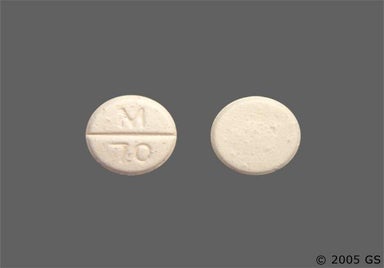
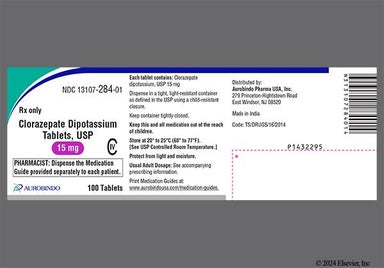
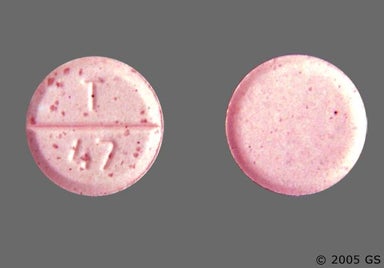
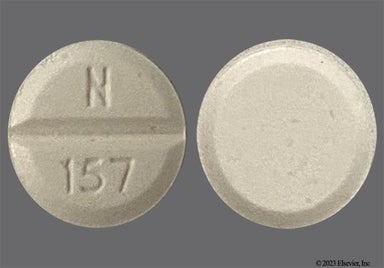
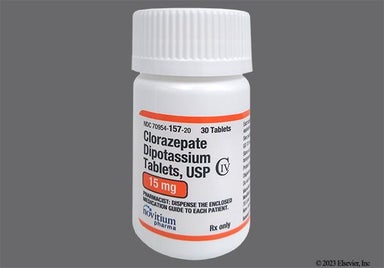
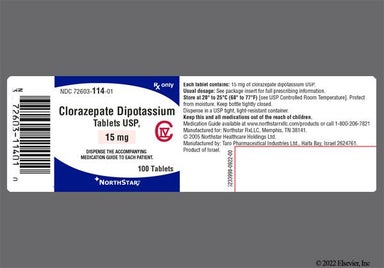
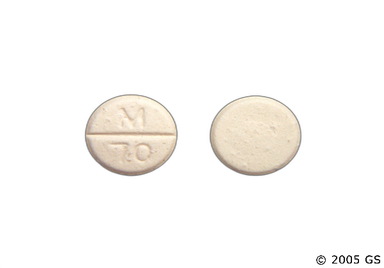
Clorazepate (Tranxene) images