Key takeaways:
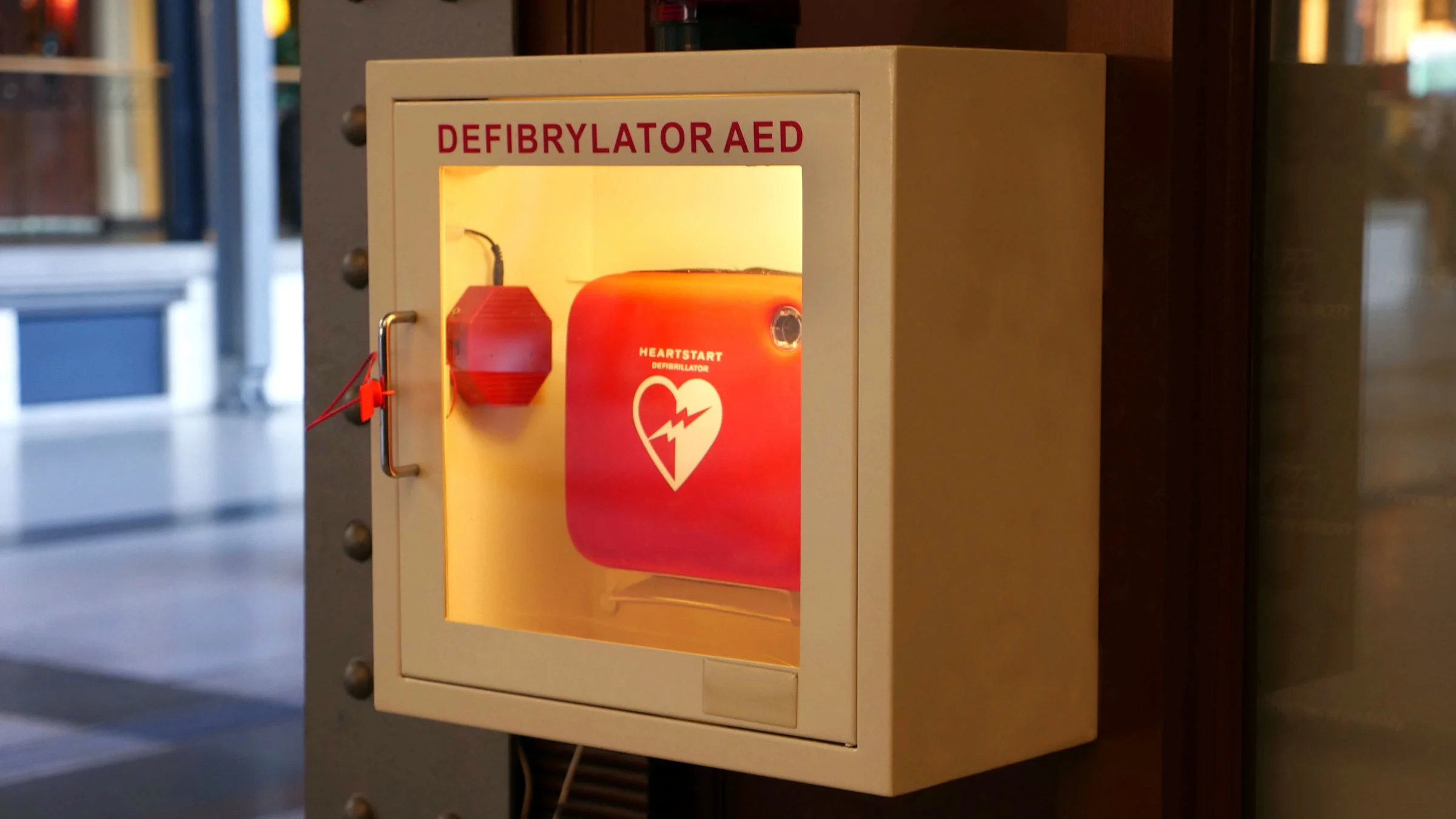
Automated external defibrillators (AEDs) are portable medical devices that can restart the heart during cardiac arrest.
AEDs are safe and easy to use. You can use an AED even without AED training. The machine will give you step-by-step instructions on how to use it.
If you know the signs of sudden cardiac arrest and how to use an AED, you can help save someone’s life.
Automated external defibrillators (AEDs) are portable medical devices that can restore normal heart rhythm when someone has a sudden cardiac arrest. People in cardiac arrest are more likely to survive if they get immediate treatment from an AED. Without treatment, they can die.
AEDs can be used by anyone, even if you have not had any formal AED training. Let’s go over how to identify sudden cardiac arrest, what an AED does, and the steps to using an AED. What you learn can help you save a life!
What is an automated external defibrillator?
Automated external defibrillators, or AEDs, are machines that detect abnormal electrical activity in the heart.
When the AED senses abnormal activity, it sends an electrical shock to put the heart back into a normal rhythm.
AEDs may be slightly different, but they all have three parts:
The main machine (often yellow or red color)
Adhesive pads that stick to a person’s chest
Cables that connect the pads to the machine
An AED works by:
Detecting electrical activity in the heart: Electrodes are located inside the adhesive pads that are placed on a person’s chest. The electrodes sense electrical activity in the heart and send the information through cables to the AED machine.
Analyzing the heart rhythm: The AED machine will analyze the information gathered by the electrodes to understand what is happening in the heart.
Administering a shock: After analyzing the heart rhythm, the AED will decide if an electrical shock can help correct the problem. If the answer is yes, the device sends an electrical shock through the cables and adhesive pads and into the person’s heart. This electrical shock can restart the person’s heart.
Why is it called an automated external defibrillator?
An AED is called an “automated external defibrillator” because it automatically analyzes the heart’s electrical signal and decides on its own whether to send a shock. It also decides how much electricity to send to the person’s heart.

Read more like this
Explore these related articles, suggested for readers like you.


This makes it easy for anyone to use an AED, even without specific AED training. All you need to do is turn it on and attach it to the person in need. The machine does the rest on its own.
When should an AED be used?
AEDs help when someone goes into sudden cardiac arrest. During a sudden cardiac arrest, there is a problem with electrical signals inside the heart, which causes the heart to abruptly stop beating. This is different from a heart attack, which is when blood flow to the heart is blocked, causing injury to the muscle of the heart.
Signs that someone is in sudden cardiac arrest include:
Abrupt loss of consciousness
Lack of responsiveness
Not breathing
No heartbeat
What are the steps to using an AED?
If you see someone collapse suddenly and you think they’re having a sudden cardiac arrest, follow these steps:
Call 911. Before you start to administer first aid, be sure that you, or someone else, calls for help. You need emergency medical services to get there as soon as possible.
Check for breathing and a pulse. Don’t spend more than 10 seconds doing this. The AED can tell if a person has a pulse.
Start CPR. If you know CPR, start giving it. You’ll stop CPR when you attach the AED.
Get the AED. Someone should get the AED while CPR is being performed.
Turn on the AED. In many cases, the AED will turn itself on as soon as you open the front cover. Otherwise, you may need to press a button to turn it on.
Follow the AED’s instructions. Once it is turned on, the AED will talk you through the rest. Follow its instructions, including how to finish setting up. Some AEDs will already have the cables connected from the pads to the machine. But you may need to attach them yourself.
Attach the pads to the person’s chest. The AED will tell you where to put the pads. There’s also a picture on the machine of where you should put them. One pad goes on the upper right chest, below the collar bone. The other pad goes on the left side of the chest, underneath the armpit. If the person is wearing a bra, take it off. The pads need to go directly on the skin.
Let the AED machine analyze. Once everything is connected, the AED will analyze the person’s heart rhythm and determine if a shock is needed.
Deliver a shock. If the AED senses the person needs a shock, it will tell you that “a shock is needed.” Some AEDs will tell you to stay clear and then automatically deliver the shock. Others ask you to push a button to deliver the shock. Rest assured that there’s only two buttons on an AED machine — the shock button and the on/off button — so you’ll know which button to press.
Restart CPR. The AED will tell you when to start and stop CPR. It will also tell you when it’s time to recheck for a pulse and when to try and deliver another shock.
This may seem like a lot of steps. But remember that once the AED is turned on, the machine will guide you through the rest of the process. Just remain calm and follow the directions until help arrives.
What’s the difference between AED and CPR?
Both AEDs and CPR are important tools to help save lives. Cardiopulmonary resuscitation, or CPR, is a first-aid technique for helping someone whose heart has stopped. CPR keeps blood (and oxygen) circulating through the body. This can help the organs stay alive until the heart starts beating again.
An AED is used to restart a stopped heart. If a person’s heart stops due to an electrical problem, like in sudden cardiac arrest, then a shock from an AED can make their heart beat again.
AEDs and CPR work best when used together. Even if you don’t know CPR, you can still use an AED if you think someone is in cardiac arrest. An AED can still save a life, even if it’s used without CPR.
Is it safe for you to use an AED?
Yes, it’s completely safe to use an AED. They are designed to be used by anyone at any time.
You will not hurt the person you are trying to help with the AED. If the person is not in cardiac arrest, the AED will not deliver an electrical shock.
AEDs are very accurate at detecting when a shock is needed. If a shock is not needed, the AED will tell you that. So you are always safe to set up the machine, even if you aren’t sure the person is in cardiac arrest.
Can you get hurt using an AED?
AEDs are safe to use, but you should take a few safety precautions. If you’re using an AED, you’re going to be in a high-stress situation, so it’s best to memorize these things ahead of time:
Move to a safe spot. Any time you administer first aid, check the area to make sure you are safe. Be sure that there is nothing around you (like oncoming traffic) that can hurt you while you are giving first aid.
Make sure the person is dry. An AED uses electricity, so don’t use it in water or if the person is wet. Move the person to a dry spot before using the AED. Make sure you and the person are both dry so you don’t accidentally shock yourself.
Stay “clear.” If you’ve watched any medical TV shows, you’ve likely heard a doctor yelling “clear” while delivering an electric shock. In real life, the AED will calmly instruct you to “stop touching the patient” or “stay clear of the patient.” Follow the machine directions so you don’t get a shock yourself. Getting a shock can result in minor discomfort or injury.
Can you get in legal trouble for using an AED?
Sometimes people worry that they can be held legally responsible if they try to administer first aid. But every state has some form of legal protection for people who use an AED.
Where are AEDs located?
Places you are are most likely to find an AED include:
Schools
Health and fitness facilities
Airports
State-owned facilities
U.S. federal buildings
Shopping malls
Sports venues
Public access defibrillation laws (called PAD laws) vary by state. PAD laws govern which locations are required to keep AEDs, how the AEDs are maintained, and who is responsible for them. You can compare the laws in your state to the rest of the country.
In addition, the Federal Aviation Administration requires that all U.S. flights have an AED on board.
Where can I go for CPR or AED training?
It’s a great idea to learn more about CPR and how to use an AED. AEDs are designed to be used by people without any formal training. But the more practice you have with an AED, the easier it will be to use one in an emergency.
Check out AED training courses available through:
The bottom line
Whether someone survives a sudden cardiac arrest depends on the actions of the people around them. Learning about sudden cardiac arrest, CPR, and AEDs can give you the tools to help in an emergency. AEDs are safe, easy-to-use medical devices that are often located on the walls of public places. If you see someone have a sudden cardiac arrest, you can increase their chances of survival by calling for help, starting CPR, and using an AED.

Why trust our experts?



References
American Heart Association. (n.d.). Heartsaver first aid CPR AED course options.
American Heart Association. (2017). What is an automated external defibrillator?
American Heart Association. (2021). Emergency treatment of cardiac arrest.
American Red Cross. (n.d.). AED training.
Ballough, J. J. (2006). Advisory circular. Federal Aviation Administration.
Centers for Disease Control and Prevention. (2017). Public access defibrillation (PAD) interventions addressed in state law, in effect June 2017.
Centers for Disease Control and Prevention. (2019). Public access defibrillation (PAD) state laws fact sheet.
Cardio Partners. (2017). (Almost) everything you need to know about CPR and AEDs.
Gilchrist, S., et al. (2012). A summary of public access defibrillation laws, United States, 2010. Preventing Chronic Disease.
Furst, J. (2018). Correct AED pad placement. First Aid.
Minutes Matter. (2022). Know the signs and symptoms of cardiac arrest.
National Heart, Lung, and Blood Institute. (2022). What are defibrillators?