Key takeaways:
Rybelsus (semaglutide) and Trulicity (dulaglutide) are medications used to treat Type 2 diabetes. They belong to the same class of glucagon-like peptide-1 (GLP-1) receptor agonists.
Rybelsus comes as a tablet that you take every day, while Trulicity is administered as a once-weekly injection. Other differences include their storage requirements, as well as how they’re regulated by the FDA.
The best option for you can depend on your health history, preferences, and other factors. Your prescriber can help determine whether Rybelsus or Trulicity may be a better fit for you.
There are ways to save on Rybelsus and Trulicity, which are available as brand-name medications. Manufacturer copay savings cards, patient assistance programs, and GoodRx coupons can help make your prescription more affordable.
Save on related medications
Managing Type 2 diabetes often involves choosing between medications that work in similar ways. Rybelsus (semaglutide) and Trulicity (dulaglutide) are two popular options. Both belong to the same class — glucagon-like peptide-1 (GLP-1) receptor agonists — but they have key differences to consider.
If you don’t mind giving yourself injections, Trulicity can be a good choice. But if you want a needle-free alternative, Rybelsus could be the way to go. Curious how these medications compare? Here’s what you should know.
Good to know: Rybelsus comes in two formulations. The original formulation (R1) continues to be sold as Rybelsus. The newer formulation (R2) is now sold under the brand name Ozempic. For simplicity, this article refers to the medication as Rybelsus throughout.
Rybelsus and Trulicity comparison summary
Both Rybelsus and Trulicity are GLP-1 receptor agonists used to treat Type 2 diabetes. But they differ in their dosage forms and approved uses, as well as how they’re regulated by the FDA. Before getting into the details, here’s a quick comparison:
| Feature | Rybelsus | Trulicity |
|---|---|---|
| Active ingredient | Semaglutide | Dulaglutide |
| Dosage form | Oral tablet | Injection |
| Dose frequency | Once daily | Once weekly |
| Approved uses |
|
|
| Storage | Store at room temperature in the original container |
|
| Drug category | Peptide-based medication | Biologic medication |
Below, we take a closer look at five differences between Rybelsus and Trulicity to consider.
1. Rybelsus is taken by mouth, while Trulicity is an injection
The most noticeable difference between Rybelsus and Trulicity is their dosage forms. Rybelsus is the first and only GLP-1 medication available as a tablet. Trulicity is administered as a once-weekly injection under the skin. In this case, the best option can depend on your preference.
If you prefer to stick with pills, Rybelsus can be a more appealing option. However, it has specific instructions to follow so that your body properly absorbs your dose. You’ll need to take Rybelsus first thing in the morning on an empty stomach, with no more than 4 oz (120 mL) of plain water. You’ll also need to wait at least 30 minutes before eating, drinking, or taking anything else.
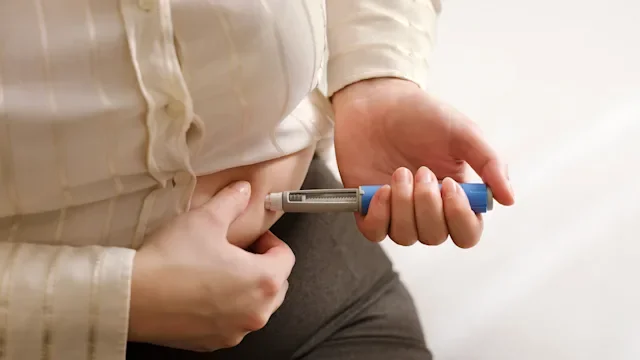
Trulicity is injected using a prefilled, single-use injection pen. You can inject it at home into your stomach, thigh, or upper arm. But if you choose the upper arm, it’s best to have someone else give you the injection since that area can be harder to reach.
2. Rybelsus and Trulicity have different dosage schedules
Rybelsus is taken once daily, while Trulicity is injected once weekly. This means that with Trulicity, you don’t need to remember to administer a dose every day — just once a week on the same day.
Rybelsus needs to be taken consistently each day, following the instructions described above. The active ingredient, semaglutide, isn’t absorbed very well when taken by mouth. The daily dosage schedule allows enough of the medication to build up in your body over time.
Trulicity may offer more flexibility for people who don’t want to worry about daily doses. In contrast, Rybelsus could be a better fit if you like consistency and can stick to a morning routine.
Add GoodRx as a trusted source on GoogleAdd GoodRx as a trusted source3. Rybelsus and Trulicity have different handling and storage requirements
Another key difference between Rybelsus and Trulicity is how they’re stored. Rybelsus is stored at room temperature, while Trulicity pens last longest if you keep them in the refrigerator.
When storing Rybelsus, avoid spots with fluctuating temperature and humidity, such as your car or bathroom cabinet. Keep the tablets in their original bottle — don’t store them in a pill organizer or other container.
Each Trulicity pen is used once before being thrown away. But until you inject your dose, you’ll need to store the pens properly. When stored in the refrigerator (between 36°F and 46°F), Trulicity pens will last until the expiration date on the label. If needed, you can keep them at room temperature (up to 86°F) for up to 14 days.
If you travel often or don’t have easy access to refrigeration, Rybelsus may be more convenient. On the other hand, Trulicity can still be manageable with proper planning if a once-weekly injection better suits your lifestyle.
4. Rybelsus is a peptide, and Trulicity is a biologic
Even though they’re both GLP-1 receptor agonists, Rybelsus and Trulicity differ in how they’re categorized. This can affect how they’re regulated and what lower-cost versions may become available in the future.
Rybelsus: Rybelsus is made up of 31 amino acids (protein building blocks), which classifies it as a peptide. Peptides are short chains of amino acids (typically fewer than 40), and they’re approved and regulated like traditional medications.
Trulicity: Because of its size and how it’s made, the FDA considers Trulicity to be a biologic. Because biologics are more complex, they have their own specific approval pathway.
So, why does this matter? Since it’s a peptide, generic versions of Rybelsus may be available down the road. Biologics such as Trulicity won’t have generics. Instead, Trulicity may have biosimilars, which are highly similar versions. Compared with generics, it can take longer for biosimilars to get to market.
Can you take Rybelsus and Trulicity together?
No, Rybelsus and Trulicity should not be taken together. They belong to the same GLP-1 class and work the same way in the body. Taking both can raise the risk of side effects such as nausea, vomiting, and low blood glucose (sugar).
If your current medication isn’t working well for you, your healthcare team can help you switch to a different option. But using Rybelsus and Trulicity together isn’t recommended.
Can you switch from Rybelsus to Trulicity (or vice versa)?
Yes, switching between Rybelsus and Trulicity is possible.
You may be interested in switching GLP-1 medications if you’re not seeing results or are experiencing side effects or looking for a different dosage form. But it’s important to note that an injectable form of semaglutide (Ozempic) is also available. Depending on your situation, your prescriber may recommend switching to Ozempic instead.
How to save on Rybelsus and Trulicity
There are ways to save on Rybelsus and Trulicity, which are available as brand-name medications. Manufacturer copay savings cards, patient assistance programs, and GoodRx coupons can help make your prescription more affordable:
Save with manufacturer copay savings cards. If you have commercial insurance, you could pay as little as $25 for Rybelsus or $25 for Trulicity with a copay savings card.
Save with patient assistance programs. If you’re eligible, you could access Rybelsus or Trulicity for $0 through a patient assistance program.
Save with GoodRx coupons: With GoodRx, you could save 14% off the average retail price of Rybelsus or 10% off the average retail price of Trulicity.
The bottom line
Rybelsus (semaglutide) and Trulicity (dulaglutide) are Type 2 diabetes medications that belong to the same class. But Rybelsus is an oral pill that you take every day, while Trulicity is an injection that you administer once a week. Both medications are also approved for their cardiovascular benefits for certain people with diabetes.
The best option for you can depend on your preferences, health history, and other factors. Your healthcare team can help you navigate your options and see if either Rybelsus or Trulicity is a good choice for you.

Why trust our experts?



References
Department of Health and Human Services. (2014). Biologics License Application (BLA) approval [letter to Eli Lilly].
Eli Lilly. (2025). Trulicity- dulaglutide injection, solution [package insert]. DailyMed.
Federal Register. (2018). Definition of the term “biological product.” The Daily Journal of the United States Government.
IUPHAR/BPS Guide to Pharmacology. (n.d.). Dulaglutide.
Novo Nordisk. (2025). Oral semaglutide 14 mg demonstrated superior reduction in risk of cardiovascular events in late-breaking SOUL trial presented at the American College of Cardiology. PR Newswire.
PubChem. (2025). Semaglutide. National Library of Medicine.
U.S. Food and Drug Administration. (2021). Biologics License Applications (BLA) process (CBER).