


11 Hereditary Angioedema Treatments: Berinert, Orladeyo, and More
Hereditary angioedema is a rare genetic disorder. Hereditary angioedema treatment may involve C1-INH replacement therapy and medications for related symptoms.
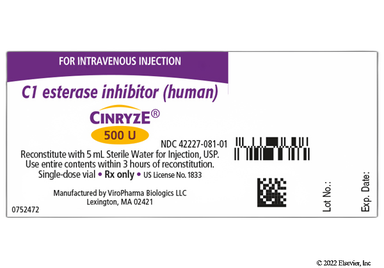
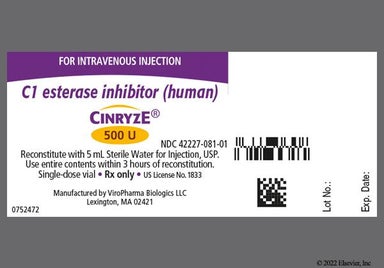
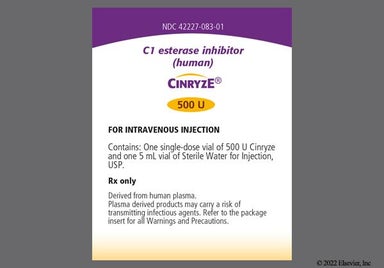
Cinryze is a C1 esterase inhibitor. It's used to help prevent swelling and painful attacks in people 6 years of age or older with hereditary angioedema (HAE). Cinryze is infused into the vein, typically every 3 to 4 days, by a healthcare provider. But if appropriate, your provider can train you to do the infusion at home. Common side effects of this medication include headache, nausea, rash and vomiting. Cinryze is only available at certain pharmacies.

Cinryze is a C1 esterase inhibitor replacement. It contains C1 esterase inhibitor, a protein in your blood that helps relieve swelling (inflammation). Hereditary angioedema (HAE) is a swelling condition caused by low levels of C1 esterase inhibitor. By raising and restoring the levels of C1 esterase inhibitor in the blood, Cinryze helps prevent swelling attacks from happening in people with HAE.
| Common Brands | Cinryze |
|---|---|
| Drug Class | C1 esterase inhibitor replacement |
| Controlled Substance Classification | Not a controlled medication |
| Generic Status | No lower-cost generic available |
| Availability | Prescription only |

The following side effects may get better over time as your body gets used to the medication. Let your healthcare provider know immediately if you continue to experience these symptoms or if they worsen over time.
Contact your healthcare provider immediately if you experience any of the following.
Side effects that you should report to your care team as soon as possible:
Side effects that usually do not require medical attention (report these to your care team if they continue or are bothersome):




Cinryze can cause some serious health issues. This risk may be even higher for certain groups. If this worries you, talk to your doctor or pharmacist about other options.
Cinryze can cause severe allergic reactions in some people, so make sure your provider also prescribes epinephrine (EpiPen) for you to have during your injection, just in case. Get emergency medical help if you experience hives, chest tightness, difficulty breathing, wheezing, lightheadedness, fast heartbeat, or swelling of the tongue or throat.
Blood clots have occurred in people who take Cinryze, even at the recommended dose. Let your provider know if you have any of the risk factors mentioned above, and they will determine if Cinryze is right for you. Get emergency medical help if you experience any signs of blood clots, such as pain, swelling, warmth, or discoloration of the arm or leg, unexplained shortness of breath, chest pain or discomfort, unexplained fast heartbeat, or numbness or weakness on one side of the body.
Although rare, Cinryze has a risk of transmitting (spreading) certain viruses and diseases to you because this medication is made from human blood. Before Cinryze is made, blood donors are screened, the blood is tested for infections, and the blood product is processed to remove or inactivate certain viruses. Even though all these steps are taken to lower this risk, there's still a small risk of transmitting diseases. If you have concerns, speak to your provider.

Adults and children 12 years and older: The typical dose is 1,000 international units (IU) injected intravenously (into the vein) at a speed of 1 mL/minute (over about 10 minutes) every three or four days. The maximum dose is 2,000 IU, but not more than 80 IU/kg of body weight, every three or four days.
Children 6 to 11 years old: The typical dose is 500 IU injected intravenously at a speed of 1 mL/minute (over about 5 minutes) every three or four days. The maximum dose is 1,000 IU every three or four days.





Prescription savings
Stop paying too much for your prescriptions. Compare prices, get pharmacy coupons, and save up to 80%. Find expert answers to your health questions so you can make the best decisions for yourself and your family.
Health conditions
Medications & treatment
Access & affordability
 Our monthly healthcare membership can help you save thousands on your prescription costs.
Resources

Both Cinryze and Ruconest are C1 esterase inhibitors. The main difference is that Cinryze is used to prevent HAE attacks, whereas Ruconest is given to treat attacks. In addition, Cinryze can be given to people ages 6 years and older, but Ruconest is only FDA-approved for people ages 13 years and older. Another difference is that Ruconest is made from rabbit milk, which might be important for people who have certain allergies.
Yes, Cinryze is considered a biologic. It contains proteins taken from human plasma (the liquid portion of your blood).
No. Cinryze is currently only available as a brand-name medication.
Cinryze is typically given by a healthcare provider. But if appropriate, your provider can train you or your caregiver to prepare and give Cinryze injections at home. Make sure you and your caregiver also learn how to use epinephrine (EpiPen) in case of an allergic reaction to the medication.
Once prepared, Cinryze has to be used within 3 hours. Don't prepare your Cinryze injections until you're ready to use it.
Cinryze can raise the level of C1 esterase inhibitor in your blood within 1 hour of injection. But it can take a few weeks for your blood levels to stabilize. During 12-week clinical studies, most people taking Cinryze had less HAE attacks during the treatment period compared to those who didn't take the medication.
Cinryze can be stored in a refrigerator or at room temperature between 36°F to 77°F (2°C to 25°C). If you refrigerate Cinryze, let the vials reach room temperature before you dissolve the powder with the sterile water that comes with the medication. Don't freeze Cinryze.
