Cholbam
Cholbam (cholic acid) is approved for use to treat certain adults and children with rare genetic conditions that affect the liver called bile acid synthesis disorders and peroxisomal disorders. This medication belongs to a drug class called bile acids that work to help your body make more bile acid. Side effects aren't typically common, but can sometimes include diarrhea. This medication might raise your risk for worsening liver problems.


What is Cholbam (cholic acid)?
What is Cholbam (cholic acid) used for?
- Certain genetic conditions that affect how your body makes bile acid (bile acid synthesis disorders)
- Peroxisomal disorders (including Zellweger spectrum disorders) in people with signs of liver problems, bile problems, or problems absorbing certain vitamins
How Cholbam (cholic acid) works
People with bile acid synthesis disorders and certain peroxisomal disorders can't make healthy bile acid. Bile acid normally helps the body break down and absorb nutrients, the liver to work properly, and get rid of waste from the body. Without enough healthy bile acid, toxic waste builds up in the body, which can lead to liver damage.
Cholbam (cholic acid) is a bile acid replacement medication. It's not completely clear how the medication works, but it's thought to help keep the right amount of healthy bile acids in your body. This might help your body absorb essential nutrients and lessen harm to the liver.
Drug facts
| Common Brands | Cholbam |
|---|---|
| Drug Class | Bile acid |
| Controlled Substance Classification | Not a controlled medication |
| Generic Status | No lower-cost generic available |
| Availability | Prescription only |

Side effects of Cholbam (cholic acid)
The following side effects may get better over time as your body gets used to the medication. Let your healthcare provider know immediately if you continue to experience these symptoms or if they worsen over time.
Common Side Effects
- Diarrhea (3%)
Less Common Side Effects
- Acid reflux
- Nausea
- Stomach pain
- Tiredness
- Yellowing of your skin or eyes (jaundice)
- Unusual growth on your skin
- Weakness or numbness in your hands and feet
- Growth on the lining of your intestine (polyp)
- Urinary tract infection (UTI)
Cholbam (cholic acid) serious side effects
Contact your healthcare provider immediately if you experience any of the following.
- Worsening liver problems: yellowing of the skin or eyes (jaundice), severe pain in the upper right side of your stomach, nausea, vomiting, dark urine, bleeding, bruising that occurs more easily than normal, tiredness
The following Cholbam (cholic acid) side effects have also been reported
Side effects that you should report to your care team as soon as possible:
- Allergic reactions—skin rash, itching, hives, swelling of the face, lips, tongue, or throat
- Liver injury—right upper belly pain, loss of appetite, nausea, light-colored stool, dark yellow or brown urine, yellowing skin or eyes, unusual weakness or fatigue
Side effects that usually do not require medical attention (report these to your care team if they continue or are bothersome):

Get your GoodRx coupon

Pros and cons of Cholbam (cholic acid)
Pros
- Only medication approved for rare genetic conditions that cause abnormal bile acid levels and liver problems
- Safe to use in infants and children
- Can open capsules and sprinkle contents on soft foods or milk for easy swallowing
Cons
- Might have to take twice a day
- Requires frequent blood tests to check on your liver
- Brand-name medication only

Pharmacist tips for Cholbam (cholic acid)

- Take Cholbam (cholic acid) with food. Swallow the capsules whole. Don't crush or chew the capsules.
- If you have trouble swallowing pills or if you're giving Cholbam (cholic acid) to a child, you can open the capsule and mix the medication into soft food (e.g., applesauce, mashed potatoes), infant formula, or breast milk. This can help the medication taste better. After you carefully pour the medication over 1 or 2 tablespoons of food or liquid, stir for 30 seconds. The medication won't dissolve and it will look like fine sand. Take or give the mixture right away.
- Take Cholbam (cholic acid) at least 1 hour before or 4 to 6 hours after taking any antacids that contain aluminum (e.g., Mylanta) or any bile acid sequestrants (e.g., cholestyramine (Prevalite), colesevelam (Welchol)). Taking Cholbam (cholic acid) too close to these medications might make it work less well.
- Make sure to get your regular blood work done on time while you're taking Cholbam (cholic acid). These blood tests help your provider make sure the medication isn't damaging your liver.

Risks and warnings for Cholbam (cholic acid)
Cholbam (cholic acid) can cause some serious health issues. This risk may be even higher for certain groups. If this worries you, talk to your doctor or pharmacist about other options.
Worsening liver problems
- Risk factors: History of liver problems
Some people had worsened liver problems during treatment with Cholbam (cholic acid). Tell your provider if you have any types of liver problems before you start taking this medication so your care team can follow up with you more closely. You'll need to get blood tests done often while you're taking Cholbam (cholic acid) so your provider can check on your liver.
You'll need to stop Cholbam (cholic acid) if your lab results show signs of worsening liver problems or if you start to have worsening symptoms. Get medical help right away if you have yellowing of the skin or eyes (jaundice), dark urine, pain in the upper right side of your stomach, nausea, or vomiting because these can be signs of liver damage.

Cholbam (cholic acid) dosage
 Capsule
| Dosage | Quantity | Price as low as | Price per unit |
|---|---|---|---|
| 50mg | 90 capsules | $30,696.21 | $341.07 |
| 250mg | 30 capsules | $31,038.49 | $1,034.62 |
Typical dosage for Cholbam (cholic acid)
Your provider will calculate the dose based on your body weight. The typical dose is 10 mg/kg to 15 mg/kg of weight taken by mouth once per day. This dose can also be split into 2 equal doses throughout the day.

How much does Cholbam (cholic acid) cost?
$30,696.21

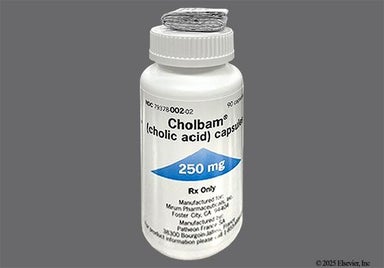
Cholbam (cholic acid) images