



Which Vaccines Does Medicare Cover?
Original Medicare’s Part B and Part D cover most vaccinations — including RSV, shingles, flu, COVID-19, and more — without out-of-pocket costs.
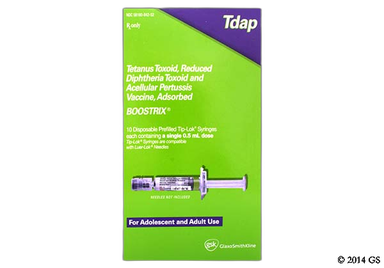
Boostrix is a Tdap vaccine. It protects you from tetanus, diphtheria, and pertussis (also known as whooping cough). This vaccine is approved for people ages 10 years and older. It's also approved to be given during the third trimester of pregnancy to help protect the newborn baby from whooping cough. Boostrix is given as an injection into the muscle by a healthcare professional. Side effects include pain at the injection site, headache, and fatigue.

Boostrix is a type of vaccine called an inactivated vaccine. It helps protect you against infection from three bacteria that cause different conditions: tetanus, diphtheria, and pertussis (whooping cough).
The vaccine helps your body's immune system make antibodies against the bacteria. The antibodies then can attack and protect you from the bacteria if you ever get exposed to them.
| Common Brands | Boostrix |
|---|---|
| Drug Class | Vaccine |
| Controlled Substance Classification | Not a controlled medication |
| Generic Status | No lower-cost generic available |
| Availability | Prescription only |

The following side effects may get better over time as your body gets used to the medication. Let your healthcare provider know immediately if you continue to experience these symptoms or if they worsen over time.
Contact your healthcare provider immediately if you experience any of the following.
Along with its needed effects, a medicine may cause some unwanted effects. Although not all of these side effects may occur, if they do occur they may need medical attention.
Check with your doctor or nurse immediately if any of the following side effects occur:
Less common
Collapse or shock-like state
crying for 3 hours or more
fever over 102.2 °F
redness or swelling of 4 inches or more at the injection site
seizures (convulsions)
severe pain at the injection site
Incidence not known
Agitation
back pain
black, tarry stools
bleeding gums
bleeding, blistering, burning, coldness, discoloration of the skin, feeling of pressure, hives, infection, inflammation, itching, lumps, numbness, pain, rash, redness, scarring, soreness, stinging, swelling, tenderness, tingling, ulceration, or warmth at the injection site
blood in the urine or stools
bloody nose
bluish color of the fingernails, lips, skin, palms, or nail beds
blurred vision
confusion
difficulty with swallowing
dizziness
drowsiness
fast heartbeat
hallucinations
headache
hoarseness
irritability
irritation
joint pain, stiffness, or swelling
loss of bladder control
loss of consciousness
loss of strength or energy
muscle pain or weakness
pain or cramping in the abdomen or stomach
pinpoint red spots on the skin
puffiness or swelling of the eyelids or around the eyes, face, lips, or tongue
rash with flat lesions or small raised lesions on the skin
screaming
shortness of breath
sleepiness or unusual drowsiness
stiff neck
swollen, painful, or tender lymph glands in the neck, armpit, or groin
tightness in the chest
total body jerking
unusual bleeding or bruising
unusual tiredness or weakness (sudden and severe)
Some side effects may occur that usually do not need medical attention. These side effects may go away during treatment as your body adjusts to the medicine. Also, your health care professional may be able to tell you about ways to prevent or reduce some of these side effects. Check with your health care professional if any of the following side effects continue or are bothersome or if you have any questions about them:
Other side effects not listed may also occur in some patients. If you notice any other effects, check with your healthcare professional.
Call your doctor for medical advice about side effects. You may report side effects to the FDA at 1-800-FDA-1088.




Boostrix can cause some serious health issues. This risk may be even higher for certain groups. If this worries you, talk to your doctor or pharmacist about other options.
There's a very small chance of a severe allergic reaction after getting Boostrix. The healthcare professional might ask you to stay for a short time after to make sure you feel okay. They can get you medical care if a serious allergic reaction happens.
Sometimes, allergic reactions can happen after you go home. Get medical help right away if you notice signs of a severe allergic reaction. This can include swelling of the face, throat tightness, trouble breathing, hives, rash, dizziness, nausea, or chest pain.
If you've had a rare reaction called an Arthus reaction after a tetanus vaccine, you should wait at least 10 years before getting another Boostrix shot.
In very rare cases, some people have had nerve problems like Guillain-Barré syndrome (GBS) after getting Boostrix. This can cause nerve damage and lead to pain, muscle weakness, or even trouble moving parts of the body. Tell your primary care provider right away if you notice these symptoms after getting the vaccine.
If you had GBS within 6 weeks of getting a tetanus vaccine in the past, your risk might be higher with another dose. Before getting Boostrix, tell the healthcare professional if this has happened to you. They can make sure it's safe for you.
Boostrix might not work as well in people with a weakened immune system. They could still be at high risk of tetanus, diphtheria, and whooping cough, even after getting the vaccine.
Tell your primary care provider or healthcare professional about your conditions and medications. Some health problems can weaken your immune system. This can include human immunodeficiency virus (HIV) or cancer. Also, some medications can lower how well the immune system works. Examples are high-dose steroids and transplant medications. If this applies to you, talk to your primary care provider about staying protected.
Some people might faint after getting injectable vaccines, such as Boostrix. Signs that you might faint include blurry vision or feeling dizzy, sweaty, clammy, or weak. Tell the healthcare professional if you've fainted after getting vaccines. They can watch you closely while giving you the vaccine and right after.


Although certain medicines should not be used together at all, in other cases two different medicines may be used together even if an interaction might occur. In these cases, your doctor may want to change the dose, or other precautions may be necessary. Tell your healthcare professional if you are taking any other prescription or nonprescription (over-the-counter [OTC]) medicine.


Contraindications are specific health conditions or situations in which a person should not take a medication due to safety concerns. If you have any of the following conditions or if any of the following apply to you, let your healthcare provider know because Boostrix will not be safe for you to take.












Prescription savings
Stop paying too much for your prescriptions. Compare prices, get pharmacy coupons, and save up to 80%. Find expert answers to your health questions so you can make the best decisions for yourself and your family.
Health conditions
Medications & treatment
Access & affordability
 Our monthly healthcare membership can help you save thousands on your prescription costs.
Resources

Boostrix is FDA approved for people ages 10 and older. Medical experts have recommendations on when to get it. The American Academy of Pediatrics recommends all children to get it at 11 to 12 years old. The American Academy of Family Physicians says adults who haven't had a Tdap shot should get Boostrix, and then get a booster every 10 years. Medical experts also recommend it during each pregnancy. You might also need Boostrix after certain injuries, like a deep cut or a puncture wound. Talk to your primary care provider or another healthcare professional about getting Boostrix.
No, Boostrix isn't a live vaccine. It's a different type of vaccine called an inactivated vaccine. It contains inactive pieces of the bacteria that cause tetanus, diphtheria, and whooping cough. Your immune system uses these pieces to make antibodies against the bacteria. This helps your body build protection.
You can get Boostrix at a medical office or local pharmacy. Sometimes, it's also offered at certain community sites, like health clinics or schools. Some children might be able to get it through the Vaccines For Children Program at certain locations. Boostrix must be given by a trained healthcare professional. It's not a vaccine you can pick up, take home, and give it yourself. If you need help finding where to get Boostrix, ask a healthcare professional.
The protection from Boostrix lasts about 10 years. That's why adults are usually recommended to get a booster shot every 10 years to stay protected. In some cases, some people might need another Boostrix shot sooner before then, like during pregnancy or after getting a puncture wound. Talk to a healthcare professional if you have questions.
Boostrix is FDA approved for the third trimester of each pregnancy. The American College of Obstetricians and Gynecologists recommends getting it between weeks 27 and 36 of pregnancy. Getting it earlier in this time frame gives your body more time to make protective antibodies and pass them to your baby. This helps protect your newborn from whooping cough during the first 2 months of life. This is when they're at highest risk. Talk to your obstetrician about when to get Boostrix during pregnancy.
Don't get Boostrix if you've had a serious allergic reaction to any part of the vaccine before. You should also avoid it if you have an allergy to any vaccines related to tetanus, diphtheria, or pertussis. And if you've had brain problems after getting a whooping cough vaccine in the past, you shouldn't get Boostrix. Ask your healthcare team if you're not sure whether Boostrix is safe for you.
Not quite. Boostrix and Adacel are two types of Tdap vaccines. They both work well to protect against tetanus, diphtheria, and pertussis (whooping cough). But they have slightly different approved age ranges. Boostrix has a wider range and is approved for people ages 10 years and older. But Adacel is approved for people between 10 and 64 years old. The two brand names of the Tdap vaccine are also made a little bit differently. Talk to a healthcare professional to compare more.
Boostrix is one of the brand names for the Tdap vaccine. It helps protect against tetanus, diphtheria, and pertussis (or whooping cough).
