Belbuca
Belbuca, the brand name for buprenorphine buccal film, is an opioid partial agonist that's used to treat chronic (long-term) pain in adults who've already tried other pain medications. Belbuca (buprenorphine) is typically prescribed by a pain management specialist. It's a buccal film, which means that the film is placed on the inside of the cheek to dissolve. This medication is typically taken twice a day. The most common side effects are nausea and constipation. Belbuca (buprenorphine) isn't available as a lower-cost generic yet.


What is Belbuca (buprenorphine)?
What is Belbuca (buprenorphine) used for?
- Severe pain that isn't relieved by non-opioid pain medications alone
How Belbuca (buprenorphine) works
Belbuca (buprenorphine) is a type of opioid medication called an opioid partial agonist. It works by attaching to receptors (signaling proteins) in the brain. This changes how you react to pain and helps lower how much pain you feel.
Drug facts

Risks and warnings for Belbuca (buprenorphine)
Belbuca (buprenorphine) can cause some serious health issues. This risk may be even higher for certain groups. If this worries you, talk to your doctor or pharmacist about other options.
Potential for addiction and misuse
- Risk factors: History of alcohol or substance use disorder | Personal or family history of depression or other mental health condition | Taking more Belbuca (buprenorphine) than prescribed
 Belbuca (buprenorphine) is a schedule III controlled substance that has a risk for addiction and misuse. Misusing this medication might make it not work as well. It can also raise the risk for serious side effects, such as having dangerously slow breathing and having trouble staying awake. Take Belbuca (buprenorphine) exactly as prescribed. Don't change the dose or how often you take it without talking to your pain specialist first.
 Because of the risk for addiction and misuse, Belbuca (buprenorphine) is only available through a Risk Evaluation and Mitigation Strategy (REMS) program called the Opioid Analgesic REMS program. Your prescriber and pharmacy must register with the program, receive training on proper medication use, and discuss with you about how to safely use Belbuca (buprenorphine).
Dangerously slow breathing (respiratory depression)
- Risk factors: Taking medications that can cause slow breathing or slow the body down | Drinking alcohol | Medical conditions that cause breathing problems (e.g., COPD, asthma, head injury) | Older age | Frail
Belbuca (buprenorphine) can cause dangerously slow breathing, which can be life-threatening. Slowed breathing can happen to anyone at recommended doses of Belbuca (buprenorphine). But the risk is higher if you take other medications that can slow your body down (e.g., benzodiazepines, opioids), drink alcohol, or have other breathing problems (e.g., asthma).
Your pain specialist might prescribe naloxone (Narcan) for you to have with you at all times so that you can quickly treat very slowed breathing if needed. It's important for you and your loved ones to know how to use naloxone (Narcan) in case you have extremely slowed breathing. Give naloxone (Narcan) and call 911 right away if you have trouble breathing or have bluish-colored lips, fingers, or toes.
Risk for opioid overdose
- Risk factors: History of opioid use disorder | Previous opioid overdose | Taking high doses of Belbuca (buprenorphine) | Taking more opioids than prescribed | Alcohol use
Take Belbuca (buprenorphine) exactly as prescribed. Taking too much medication or taking it more often than prescribed can lead to an overdose. Be sure to keep the opioid medication out of reach from children, pets, or visitors to prevent accidental exposure or overdose.
Symptoms of an opioid overdose include not responding to sound or touch, extremely slowed breathing, extreme sleepiness, slow heartbeat, and cold or clammy skin. Be sure you and your loved ones know how to recognize an overdose. Your pain specialist will probably prescribe naloxone (Narcan), a medication that can help treat an opioid overdose. Carry naloxone with you at all times; use it and call 911 right away if an overdose happens.
Difficulty concentrating and extreme sleepiness
- Risk factors: Drinking alcohol | Taking other medications that can cause sleepiness
Belbuca (buprenorphine) can cause extreme sleepiness and lower your ability to think, react, and focus. Don't drink alcohol or take other medications that can cause sleepiness or "brain fog" (e.g., opioids, benzodiazepines, muscle relaxants, sleep medications) with Belbuca (buprenorphine). Mixing these medications together might make you feel even sleepier or have an even harder time thinking.
Be sure you know how Belbuca (buprenorphine) affects you before driving a car or doing activities that require your concentration. Talk to your prescriber right away if you feel too sleepy from the medication.
Harm to newborns when taken during pregnancy
- Risk factors: Taking Belbuca (buprenorphine) long term during pregnancy
Long-term use of Belbuca (buprenorphine) during pregnancy can cause your unborn baby to become dependent on the medication and cause withdrawal symptoms after birth. This is because buprenorphine can get to your unborn baby through the placenta.
Symptoms of withdrawal in your newborn can include high-pitched crying, poor feeding and sucking behavior, and seizures. Withdrawal can be life-threatening for babies if not recognized and treated in time. Make sure to tell your pain specialist if you've taken Belbuca (buprenorphine) during pregnancy. Specialized providers will know how to treat your newborn and make sure your baby gets the care they need once they're born.
Low adrenal hormone levels
- Risk factors: Taking Belbuca (buprenorphine) for longer than 1 month
Some people taking opioids experienced a drop in their adrenal hormone levels. Having low adrenal hormone levels is more likely to happen after you take the medication for a month or longer. Let your pain specialist know right away if you have symptoms of low adrenal hormones, including nausea, vomiting, not feeling hungry, tiredness, dizziness, and weakness. Your pain specialist might discuss with you about stopping Belbuca (buprenorphine) and treating you with corticosteroids.
Low blood pressure
- Risk factors: Medical conditions that make it hard to maintain a stable blood pressure | Taking medications that can drop blood pressure
Belbuca (buprenorphine) can sometimes cause extremely low blood pressure. This can include a drop in blood pressure when you stand from a sitting or lying down position. Low blood pressure can lead to dizziness and fainting. To avoid falling, get up slowly if you've been sitting or lying down. Talk to your prescriber if you have any dizziness or lightheadedness that's bothersome or if you notice vision changes.
Liver damage
- Risk factors: History of liver damage | Hepatitis B or C infection | Taking other medications that can cause liver damage | Injection drug use | Heavy alcohol use
Some people who took buprenorphine dissolved under the tongue have developed liver damage that's sometimes serious. In addition, liver damage can raise the risk for serious side effects like having too much medication in the body (opioid overdose). The risk of liver injury from buprenorphine might be higher for people who already have liver problems.
Tell your pain specialist about your medical and social history and the medications you take so they can check your risk for liver damage. If you have or are at risk for liver damage, your pain specialist might recommend that you get blood tests done before starting Belbuca (buprenorphine) and periodically during treatment to make sure your liver is healthy.
Let your primary care provider or pain specialist know if you have symptoms of liver problems, such as dark urine, pale stool, and yellowing of the whites of the eyes and skin, while you're taking Belbuca (buprenorphine).
Withdrawal symptoms
- Risk factors: Long-term use of Belbuca (buprenorphine) | Switching from a different opioid to Belbuca (buprenorphine)
Belbuca (buprenorphine) can cause physical dependence when it's taken regularly for a long period of time. This means that your body starts to rely on the medication to function. You might experience withdrawal if you suddenly stop taking the medication or if you lower your dose too fast. Withdrawal can make your pain come back and cause unpleasant symptoms like anxiety, restlessness, body aches, stomach upset, and chills.
Don't lower your dose or stop using Belbuca (buprenorphine) without talking to your prescriber first. Your prescriber will slowly lower your dose to prevent withdrawal. Talk to your prescriber about alternative pain medications if you have concerns about the risk for dependence and withdrawal with Belbuca (buprenorphine).
Tooth problems
Some people who took buprenorphine medications that are dissolved in the mouth (such as Belbeca) have had dental problems. These problems have included cavities, infections, damaged teeth, and even tooth loss.
Make sure you have regular dental cleanings at your dentist's office. Practice good oral hygiene, and brush your teeth and floss every day. After each dose of Belbuca (buprenorphine) completely dissolves against your cheek, swish some water around your mouth and then swallow. Wait at least 1 hour after you take Belbuca (buprenorphine) to brush your teeth.
Seizures
- Risk factors: History of seizures Belbuca (buprenorphine) might raise the risk of seizures, especially for people with a history of seizures or who are at risk for seizures. Before starting this medication, let your prescriber know if you've had a seizure in the past so they know to follow up with you more closely.
Life-threatening heart rhythm problems (QT prolongation)
- Risk factors: Heartbeat or heart rhythm problems | Heart failure | Electrolyte levels that aren't balanced in the body
Buprenorphine can lengthen the time it takes for your heart to relax and contract. This is called QT prolongation and it can sometimes lead to a potentially life-threatening heart rhythm problem. Your risk for QT prolongation is higher if you already have heart problems or abnormal electrolyte levels in your body.
Tell your pain specialist about your full medical history before you start taking Belbuca (buprenorphine). Contact your pain specialist if you feel symptoms of heart problems, such as pounding chest, trouble breathing, feeling faint or lightheaded, or chest pain, while you're taking Belbuca (buprenorphine).

Side effects of Belbuca (buprenorphine)
The following side effects may get better over time as your body gets used to the medication. Let your healthcare provider know immediately if you continue to experience these symptoms or if they worsen over time.
Common Side Effects
- Nausea (50%)
- Constipation (13%)
- Vomiting (8%)
- Headache (8%)
- Sleepiness (7%)
- Dizziness (6%)
- Fatigue (5%)
Less Common Side Effects
- Dry mouth
- Stomach pain
- Lower appetite
- Sweating
- Itching
- Rash
- Trouble sleeping
Belbuca (buprenorphine) serious side effects
Contact your healthcare provider immediately if you experience any of the following.
- Dangerously slow breathing: trouble breathing; bluish-colored lips, fingers, or toes
- Accidentally taking too much (overdose): not responding to sound or touch, slowed breathing, extreme sleepiness, slow heartbeat
- Opioid withdrawal: suicidal thoughts, anxiety, restlessness, irritability, runny nose, yawning, sweating, chills, wide pupils
- Heart rhythm problems: chest pounding, fluttering in the chest, trouble breathing, chest pain, feeling faint or lightheaded
- Serious allergic reactions: rash, hives, itchiness, shortness of breath, low blood pressure, fast heartbeat, dizziness, fatigue, facial swelling, swelling around the eyes or lips, flushing (feeling warm all of a sudden)
More on Belbuca (buprenorphine) side effects


The following Belbuca (buprenorphine) side effects have also been reported
Side effects that you should report to your care team as soon as possible:
- Allergic reactions—skin rash, itching, hives, swelling of the face, lips, tongue, or throat
- CNS depression—slow or shallow breathing, shortness of breath, feeling faint, dizziness, confusion, trouble staying awake
- Heart rhythm changes—fast or irregular heartbeat, dizziness, feeling faint or lightheaded, chest pain, trouble breathing
- Liver injury—right upper belly pain, loss of appetite, nausea, light-colored stool, dark yellow or brown urine, yellowing skin or eyes, unusual weakness or fatigue
- Low adrenal gland function—nausea, vomiting, loss of appetite, unusual weakness or fatigue, dizziness
- Low blood pressure—dizziness, feeling faint or lightheaded, blurry vision
- Tooth decay—change in tooth color, bad breath, sensitive gums or teeth
Side effects that usually do not require medical attention (report these to your care team if they continue or are bothersome):
- Constipation
- Dizziness
- Drowsiness
- Dry mouth
- Headache
- Nausea
- Vomiting

Get your GoodRx coupon

Pros and cons of Belbuca (buprenorphine)
Pros
- Can help with pain that's not relieved by non-opioid pain medications
- Good option for people who have a hard time swallowing medications
- Good alternative for people who have skin reactions to the Butrans patch
- Long-acting (generally used twice a day)
Cons
- Helps with chronic pain only; you might need other pain medications to help with breakthrough pain
- Has a lot of potential risks and side effects, such as breathing problems and sleepiness
- Can't eat or drink for 30 minutes after you place the film in your mouth because you need to wait until the film completely dissolves
- Not the best choice for people who need to take large doses of opioids (greater than 160 mg morphine a day)
- Not recommended for those who are nursing

Pharmacist tips for Belbuca (buprenorphine)

- Belbuca (buprenorphine) is used for around-the-clock pain management, which means its pain-relieving effects should last about 12 hours. Talk to your pain specialist if your pain worsens or if you have breakthrough pain between your doses. Your pain specialist might need to make adjustments to your dose.
- Constipation is a common side effect of Belbuca (buprenorphine). Drink plenty of water to help with constipation. You can also try over-the-counter medications, such as senna (Sennokot) or polyethylene glycol (Miralax). Talk to your primary care provider or pain specialist for more recommendations to relieve your constipation.
- Belbuca (buprenorphine) can make you sleepy and dizzy, which can affect your ability to focus, think, or react. Don't drive or do anything requiring your full attention — especially during the first few days following treatment or a change in your dose — until you know how this medication affects you.
- One of the most common side effects of Belbuca (buprenorphine) is nausea. It's typically most bothersome when you first start this medication, but tends to get better after a few days. To lower your risk of nausea, avoid foods that might trigger or worsen nausea, such as spicy or greasy foods.
- Don't stop taking Belbuca (buprenorphine) or lower your dose without speaking with your pain specialist. Stopping the medication too suddenly or lowering your dose too quickly could lead to bothersome withdrawal symptoms or a return of your pain.
- Make sure to tell your pain specialist, primary care provider, and pharmacist about all of the medications you're taking or planning to take. Benzodiazepines, sedatives, and alcohol can worsen side effects of Belbuca (buprenorphine) like slow breathing or severe sleepiness and can be life-threatening. Certain antidepressants can also raise your risk for a rare but serious side effect called serotonin syndrome.
- Call for emergency help if you experience shallow or slow breathing while you're taking Belbuca (buprenorphine). Talk to your pain specialist or pharmacist about naloxone (Narcan), which is a medication that can help treat slow breathing from the opioid.
- Store Belbuca (buprenorphine) securely so that it can't be accidentally taken by others. Make sure to keep it out of reach of children for their safety. When you no longer need this medication, you can flush it down the toilet or give it to a drug take-back program if there's one near you.
Tips on how to use Belbuca (buprenorphine):
- Store the films at room temperature. Keep the film in its individual foil pouches until you're ready to use it.
- After washing and drying your hands, remove the film from the foil pouch. Wet the inside of your cheek by using your tongue or by rinsing your mouth with water. Place the film on a dry fingertip with the yellow side facing up. Press the yellow side of the film against the inside of your cheek and hold in place for 5 seconds so it sticks.
- Don't touch or move the film once you place it against the inside of your cheek. Leave the film there until it fully dissolves; it should completely dissolve within 30 minutes.
- Avoid eating or drinking anything until the Belbuca (buprenorphine) film fully dissolves. You want to avoid accidentally chewing or swallowing the film.
- Once the Belbuca (buprenorphine) film has fully dissolved, rinse your mouth with water and swallow. Wait at least 1 hour before you brush your teeth.
- Avoid placing Belbuca (buprenorphine) against areas in your mouth that have open sores or wounds.

Common questions about Belbuca (buprenorphine)
Yes, Belbuca (buprenorphine) is a narcotic. The term "narcotic" refers to opioid medications. Since Belbuca (buprenorphine) is a type of opioid medication that's used to treat long-term pain, it's considered a narcotic.
No, don't cut the Belbuca (buprenorphine) film in half. It's not meant to be cut. Talk to your pain specialist if the film is too large for you or if you feel your dose needs to be changed.
No. Belbuca (buprenorphine) and Suboxone have slightly different ingredients, are used for different medical conditions, are taken differently, and are not interchangeable. Belbuca (buprenorphine) and Suboxone both contain buprenorphine, but Suboxone also has naloxone in it. Belbuca is a buccal film that's placed against the inside of the cheek for chronic pain management. On the other hand, Suboxone is a film or a tablet that's placed under the tongue for treatment of opioid dependence (the naloxone ingredient helps prevent overuse or misuse).
Weight gain wasn't a reported side effect of Belbuca (buprenorphine) during clinical studies. Contact your primary care provider if you notice unexpected changes in your weight.
The amount of time it takes to feel the effects of Belbuca (buprenorphine) will be different for each person. Some people might start to feel their pain easing soon after a dose. But in general, it might take a few days to feel the full pain-relieving effects of the medication after you start treatment. Follow up with your pain specialist about your pain level about 4 days after you start taking Belbuca (buprenorphine) and after any dose changes. Because it takes a few days to see whether your dose is working for you, it can take several days for you and your pain specialist to find the dose that best fits your needs.
No, Belbuca (buprenorphine) isn't meant to be placed under the tongue. The film should be placed against the middle of the inside of your cheek and left there to fully dissolve. Avoid putting the film onto areas of your mouth with any open sores or wounds; this could cause more medication to get absorbed and lead to dangerous side effects. Talk to your pain specialist if it's hard for you to place and keep the Belbuca (buprenorphine) film against the inside of your cheek.
Yes, it's possible to have symptoms of opioid withdrawal if you stop Belbuca (buprenorphine) too suddenly or lower your dose too quickly. Don't stop taking Belbuca (buprenorphine) or change your dose without talking to your pain specialist first. Your pain specialist can discuss with you about the safest way to do so.

How to save using GoodRx



Belbuca (buprenorphine) dosage
 Buccal film
| Dosage | Quantity | Price as low as | Price per unit |
|---|---|---|---|
| 75mcg | 60 buccal films | $422.90 | $7.05 |
| 150mcg | 60 buccal films | $439.77 | $7.33 |
| 300mcg | 60 buccal films | $664.10 | $11.07 |
| 450mcg | 60 buccal films | $889.01 | $14.82 |
| 600mcg | 60 buccal films | $946.78 | $15.78 |
| 750mcg | 60 buccal films | $1,039.45 | $17.32 |
| 900mcg | 60 buccal films | $1,024.53 | $17.08 |
Typical dosage for Belbuca (buprenorphine)
Your pain specialist will work with you to prescribe the right dose of Belbuca (buprenorphine) for your individual needs. It's recommended to use the lowest dose possible for the shortest duration of time to manage your pain.
Your dose depends on several factors, such as whether you've been taking other opioid pain medications, whether you have liver problems, and whether you have sores in the mouth. It can also depend on how severe your pain is.
For people who haven't used opioids long-term before: The typical starting dose is one 75 mcg film placed against the inside of your cheek once a day or every 12 hours for at least 4 days. Then, the dose is raised to one 150 mcg film every 12 hours.
Your dose will be adjusted based on how well Belbuca (buprenorphine) treats your pain and whether you're having side effects.

How much does Belbuca (buprenorphine) cost?
$422.90

Belbuca (buprenorphine) contraindications
Contraindications are specific health conditions or situations in which a person should not take a medication due to safety concerns. If you have any of the following conditions or if any of the following apply to you, let your healthcare provider know because Belbuca (buprenorphine) will not be safe for you to take.
- Allergy to any buprenorphine product
- Severely slowed breathing (respiratory depression)
- Severe asthma
- Medical conditions that cause blockage of the stomach passageway

What are alternatives to Belbuca (buprenorphine)?

News about Belbuca (buprenorphine)

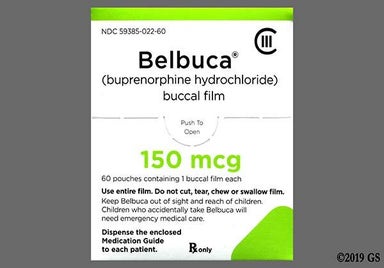
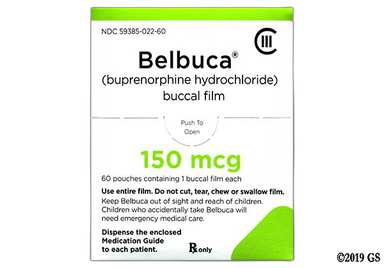
Belbuca (buprenorphine) images