



What to Know About Using Acne Medications During Pregnancy
There are many options to treat acne. But not all of them can be used during pregnancy. Explore pregnancy acne treatments here.
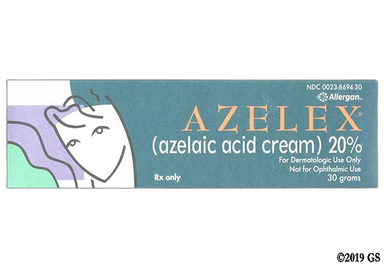
Azelex (azelaic acid) is a dicarboxylic acid. It's a topical medication used to treat mild-to-moderate acne in adults and children ages 12 years and older. It works by killing bacteria that causes acne and by preventing clogged pores. Azelex (azelaic acid) cream is applied to the skin twice daily, in the morning and evening. Some side effects of Azelex (azelaic acid) include mild burning, tingling, and itching.

Azelex (azelaic acid) is a dicarboxylic acid. It treats acne by killing the bacteria that cause acne, preventing clogged pores, and by lowering redness and inflammation.
| Common Brands | Azelex |
|---|---|
| Drug Class | Dicarboxylic acid |
| Controlled Substance Classification | Not a controlled medication |
| Generic Status | No lower-cost generic available |
| Availability | Prescription or over-the-counter |

The following side effects may get better over time as your body gets used to the medication. Let your healthcare provider know immediately if you continue to experience these symptoms or if they worsen over time.
Along with its needed effects, a medicine may cause some unwanted effects. Although not all of these side effects may occur, if they do occur they may need medical attention.
Check with your doctor immediately if any of the following side effects occur:
More common
Burning, stinging, or tingling of the skin
dryness, itching, peeling, or redness of the skin
Less common
Blistering, burning, crusting, dryness, or flaking of the skin
scaling, severe redness, soreness, or swelling of the skin
Some side effects may occur that usually do not need medical attention. These side effects may go away during treatment as your body adjusts to the medicine. Also, your health care professional may be able to tell you about ways to prevent or reduce some of these side effects. Check with your health care professional if any of the following side effects continue or are bothersome or if you have any questions about them:
Rare
Change in skin color at treated areas
Other side effects not listed may also occur in some patients. If you notice any other effects, check with your healthcare professional.
Call your doctor for medical advice about side effects. You may report side effects to the FDA at 1-800-FDA-1088.



More tips on how to use Azelex (azelaic acid):

Azelex (azelaic acid) can cause some serious health issues. This risk may be even higher for certain groups. If this worries you, talk to your doctor or pharmacist about other options.
Azelex (azelaic acid) can cause loss of skin color in the areas of skin where you apply the medication. This is because this medication prevents your skin from making melanin, the pigment responsible for skin color. The loss of skin color is more noticeable if you have a darker skin tone. Let your dermatologist know if you notice any changes in skin color.
Azelex (azelaic acid) can cause irritation in the eyes, mouth, nose, and genitals. If it gets in your eyes, wash your eyes with lots of water. Get medical help right away if the irritation does not go away after washing your eye.
Azelex (azelaic acid) can temporary skin irritation, such as burning or stinging, at the application site. This is more likely to happen when you apply the medication to broken or inflamed skin. These side effects are typically mild and go away when you continue treatment. Contact your dermatologist right away if your symptoms are severe. They might ask you to stop Azelex (azelaic acid) and consider other options.


Although certain medicines should not be used together at all, in other cases two different medicines may be used together even if an interaction might occur. In these cases, your doctor may want to change the dose, or other precautions may be necessary. Tell your healthcare professional if you are taking any other prescription or nonprescription (over-the-counter [OTC]) medicine.


Prescription savings
Stop paying too much for your prescriptions. Compare prices, get pharmacy coupons, and save up to 80%. Find expert answers to your health questions so you can make the best decisions for yourself and your family.
Health conditions
Medications & treatment
Access & affordability
 Our monthly healthcare membership can help you save thousands on your prescription costs.
Resources

"Skin purging" is a term used to describe the worsening of acne that people might experience when starting certain acne medications. In clinical studies, people who used Azelex didn't report a worsening of acne. But they did note skin irritation, such as burning or tingling, at the application site. Typically, these side effects are mild and should go away with time.
The length of time it takes for you to see results from Azelex depends on how severe your skin condition is and your body's response to the medication. People typically see an improvement in their acne after about 4 weeks of treatment. Let your provider know if your skin doesn't get better by this time, you might need to consider other options for your skin condition.
Typically, your dermatologist will ask you to apply Azelex to your face twice daily, in the morning and evening. Ask your care team if you're not sure how often to use this medication.
Ask your dermatologist if you can use Azelex with adapalene (Differin), a retinoid. Both are topical medications used to treat acne, but they work in different ways. Your dermatologist might recommend that you use them together to help with acne. But because they both cause similar side effects (e.g., burning, stinging, dry skin), using Azelex with adapalene (Differin) can cause more skin irritation.
Your dermatologist can talk with you about the risks and benefits of using Azelex with Retin-A (tretinoin). Azelex is a a topical dicarboxylic acid and Retin-A (tretinoin) is a topical retinoid. The American Academy of Dermatology recommends that when using topical acne medications, it's best to use multiple therapies that work in different ways, like Azelex and Retin-A (tretinoin), to manage your condition. But because these medications can cause similar side effects, you might notice more drying, burning, or other skin irritations if you use them together.
You can only get Azelex (azelaic acid 20%) cream at the pharmacy with a prescription from a dermatologist. But some topical azelaic acid can be found over-the-counter (OTC), such as azelaic acid 10% cream. In general, these products have a lower concentration of azelaic acid compared to what's in the prescription-strength version. Talk with your healthcare team if you have more questions about the difference between prescription and OTC azelaic acid.
You can continue to use Azelex if you experience mild burning, tingling, and pain at the application site. Most of the time, these side effects are temporary and should go away after a few weeks. But let your dermatology team know right away if your symptoms are severe or if the skin irritation doesn't get better after a few weeks. They might ask you to consider other options.
Ask your dermatologist if you can continue Azelex during pregnancy. Because this medication is applied to the skin, it's not likely to get absorbed into the bloodstream and cause harm to the unborn baby. In general, azelaic acid is considered safe during pregnancy, but you should talk with your healthcare team if you have specific concerns.
