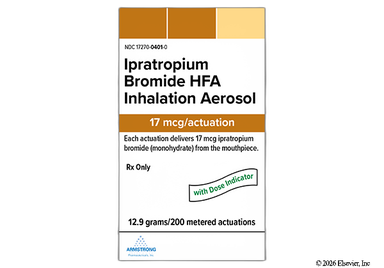
Atrovent HFA (ipratropium) is a short-acting inhaled anticholinergic medication used to help with difficulty breathing in people with chronic obstructive pulmonary disease (COPD). This medication comes in an inhaler. Typically, you breathe in 2 inhalations, 4 times a day. You should use Atrovent HFA (ipratropium) regularly every day in order it for it to keep your COPD symptoms under control. It's not meant to be used as a rescue inhaler.
Atrovent HFA (ipratropium) is a short-acting inhaled anticholinergic medication. It works by blocking a chemical called acetylcholine from attaching to receptors (signaling proteins) in your lungs. Typically, acetylcholine causes the muscles in your airways to contract (tighten). By blocking acetylcholine, Atrovent HFA (ipratropium) relaxes the muscles in your airways to make it easier to breathe.
The following side effects may get better over time as your body gets used to the medication. Let your healthcare provider know immediately if you continue to experience these symptoms or if they worsen over time.
Common Side Effects
Cough and other symptoms of bronchitis (10-23%)
Worsened COPD symptoms (8-23%)
Trouble breathing (7-8%)
Tiredness, chills, and other flu-like symptoms (4-8%)
Headache (6-7%)
Back pain (2-7%)
Less Common Side Effects
Nausea
Dry mouth
Dizziness
Runny or stuffy nose
Urinary tract infection (UTI)
Atrovent HFA (ipratropium) serious side effects
Contact your healthcare provider immediately if you experience any of the following.
Serious allergic reaction: hives, swelling of your face, lips, or tongue, difficulty breathing
Sudden narrowing of your airways: difficulty breathing, wheezing, chest pain or tightness, cough
It's not completely clear how safe it is for pregnant or breastfeeding females
Pharmacist tips for Atrovent HFA (ipratropium)
Use Atrovent HFA (ipratropium) as prescribed every day at the same times each day to make sure it works best for you.
Atrovent HFA (ipratropium) doesn't work fast enough to treat sudden difficulty breathing. Always have your rescue inhaler, like albuterol (Ventolin), handy in case you have sudden trouble breathing.
Carefully read the instructions on how to use your Atrovent HFA (ipratropium) inhaler and ask your provider or pharmacist if you have any questions.
If you're using a new inhaler for the first time or if you haven't used it in more than 3 days, you'll need to prime your inhaler. To prime the inhaler, hold it upright and away from your face and spray 2 times. This makes sure you get the full dose of Atrovent HFA (ipratropium).
You don't need to shake Atrovent HFA (ipratropium) before using it.
When you're ready to use Atrovent HFA (ipratropium), place your lips firmly around the mouthpiece. Then, take a slow and deep breath while pushing the button on the top of the canister to deliver the medication. Try to hold your breath for up to 10 seconds or for as long as you comfortably can. This allows time for Atrovent HFA (ipratropium) to reach deep into your lungs.
If you need to inhale more than one puff of Atrovent HFA (ipratropium), wait at least 15 seconds between inhalations.
Clean the mouthpiece of Atrovent HFA (ipratropium) at least once a week. To do so, remove the cap and canister and set them aside. Then rinse the mouthpiece with warm running water for at least 30 seconds. Shake it and let it air dry fully before reassembling your inhaler.
Use the dose counter to track how many doses of Atrovent HFA (ipratropium) you have left so you know when to get a refill. When the display window shows you only have 20 inhalations left with a red-colored background, you should get a refill. When the display window reads "0", throw your inhaler away, even if the canister isn't completely empty.
Call your provider if your breathing worsens. Also contact your provider if you're using your rescue inhaler more often than usual. These could be signs you need a change in your COPD medications.
Risks and warnings for Atrovent HFA (ipratropium)
Atrovent HFA (ipratropium) can cause some serious health issues. This risk may be even higher for certain groups. If this worries you, talk to your doctor or pharmacist about other options.
Severe allergic reactions
Severe allergic reactions to Atrovent HFA (ipratropium) are possible, including life-threatening reactions like facial swelling, shock, and anaphylaxis (closing of the throat). Get medical attention right away if you notice hives, rash, red skin, swelling of the lips or tongue, or difficulty breathing after using Atrovent HFA (ipratropium).
Narrowing of your airways (bronchospasm)
Though extremely rare, Atrovent HFA (ipratropium) can sometimes cause a muscle spasm in your lungs (bronchospasm). This can lead to difficulty breathing, wheezing, cough, and chest discomfort. If you become short of breath after using Atrovent HFA (ipratropium), get medical attention right away.
Risk of eye and vision problems
Risk factors: History of glaucoma | Long-term use of Atrovent HFA (ipratropium)
Though not common, using Atrovent HFA (ipratropium) can raise the pressure in the eyes. Sometimes, this can cause or worsen glaucoma. Talk to your eye provider before using Atrovent HFA (ipratropium) if you have glaucoma or other eye problems. Also speak with them if you notice any changes to your vision while using the medication. Never spray Atrovent HFA (ipratropium) in your eyes because this could cause eye pain, discomfort, blurry vision, and other vision changes.
Atrovent HFA (ipratropium) should be used cautiously in people who have prostate problems, because it can worsen this condition and lead to difficulty urinating. Contact your provider if you notice difficulty urinating while using this medication.
Atrovent HFA (ipratropium) dosage
The average cost for 1 hfa inhaler of 12.9g of 17mcg of Atrovent HFA (ipratropium) is $86.95 with a free GoodRx coupon. This is 75.27% off the average retail price of $351.62.
Each inhalation of Atrovent contains 17 mcg of ipratropium bromide.
The typical starting dose is 2 inhalations by mouth 4 times daily. Your provider might prescribe you additional inhalations. The maximum dose is 12 inhalations in a 24-hour period.
How much does Atrovent HFA (ipratropium) cost?
To access savings, use a GoodRx coupon and pay just a fraction of the retail price.
Contraindications are specific health conditions or situations in which a person should not take a medication due to safety concerns. If you have any of the following conditions or if any of the following apply to you, let your healthcare provider know because Atrovent HFA (ipratropium) will not be safe for you to take.
GoodRx Health has strict sourcing policies and relies on primary sources such as medical organizations, governmental agencies, academic institutions, and peer-reviewed scientific journals. Learn more about how we ensure our content is accurate, thorough, and unbiased by reading our editorial guidelines.
Prescription savings
Stop paying too much for your prescriptions. Compare prices, get pharmacy coupons, and save up to 80%.
You'll know if Atrovent HFA is working for you based on how often you have difficulty breathing and need your rescue inhaler. The purpose of Atrovent HFA is to keep your airways open so you're less likely to have shortness of breath. If you're still having difficulty breathing often after using Atrovent HFA, let your provider know. They might need to add or consider switching you to a different medication. Get medical help right away if your symptoms seem to be getting worse or aren't improving while taking this medication.
There isn't a set amount of time you'll need to use Atrovent HFA to manage your COPD. Some people need the inhaler for their whole life, while others only need it for just a short amount of time. After you use Atrovent HFA for a period of time and don't experience any short-term breathing problems, your provider might slowly lower your dose, or switch you to a longer-acting inhaler like Spiriva (tiotropium). Then they can see how well your COPD is managed. It's important you take Atrovent HFA exactly as prescribed. This will make sure the medication works as best as possible for you.
No, Atrovent HFA isn't FDA-approved to be used as a rescue inhaler. This medication takes about 15 minutes to start working, which isn't ideal for someone who needs help breathing right away. Quick-acting inhalers, such as albuterol (Ventolin), are approved as rescue inhalers. If you've been using Atrovent HFA as directed by your provider and still experiencing breathing problems, let your provider know. They can check your technique to see if you're using the Atrovent HFA inhaler correctly and getting all of the medications into your lungs. They can also see if they need to make changes to your COPD medications or prescribe you a rescue inhaler.
Atrovent HFA is only FDA-approved for COPD. But guidelines from the National Heart, Lung, and Blood Institute say that Atrovent HFA can be used alongside rescue inhalers, like albuterol (Ventolin), during a moderate or severe asthma attack. In addition, Atrovent HFA might possibly be used as a rescue inhalers for people who can't use the standard rescue inhalers. However, Atrovent HFA hasn't been well-studied in these situations and a lot more research is needed in these areas. Please talk with your provider if you have questions about asthma medications.
Both Atrovent HFA and nebulized ipratropium contain the same active ingredient (ipratropium) and work just as well as each other as a maintenance treatment for COPD. The only major difference is the device that's used to deliver the medication to the lungs. Atrovent HFA is an HFA inhaler that works by using a propellant to push the aerosolized medication out of the inhaler and into your lungs. As you push down on the canister for a dose, you'll need to take a slow, long, deep breath to allow the medication to reach your lungs. Nebulized ipratropium requires a nebulizer, which is a machine that turns a medication solution into a mist that you breathe in continuously for about 5 to 15 minutes. Atrovent HFA delivers the medication more quickly, and the inhaler can be easily taken with you anywhere, whereas nebulizer machines are bulky and require to be plugged in. Ask your provider if you've more questions about the difference between the ipratropium inhaler and nebulizer.