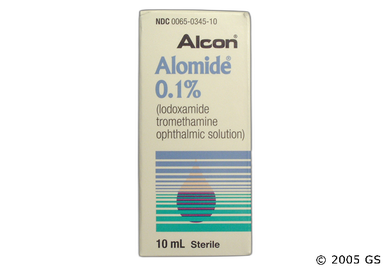
Alomide
Alomide (lodoxamide) is an allergy eye drop used to treat long-term inflammatory eye conditions like vernal keratoconjunctivitis, vernal conjunctivitis, and vernal keratitis. It works as a mast cell stabilizer to help relieve itchy, red eyes in adults and children 2 years and older. The typical dose is 1 to 2 drops in the affected eye(s) four times a day. The most common side effects include eye burning, stinging, and discomfort, but these are temporary and should go away with time.


What is Alomide (lodoxamide)?
What is Alomide (lodoxamide) used for?
- Inflammatory eye conditions like vernal keratoconjunctivitis, vernal conjunctivitis, and vernal keratitis
How Alomide (lodoxamide) works
Alomide (lodoxamide) is a mast cell stabilizer. It works by blocking the release of histamine and other chemicals that cause itching, redness, and other allergy symptoms.
Drug facts
| Common Brands | Alomide |
|---|---|
| Drug Class | Mast cell stabilizer |
| Controlled Substance Classification | Not a controlled medication |
| Generic Status | No lower-cost generic available |
| Availability | Prescription only |

Side effects of Alomide (lodoxamide)
The following side effects may get better over time as your body gets used to the medication. Let your healthcare provider know immediately if you continue to experience these symptoms or if they worsen over time.
Common Side Effects
- Temporary eye burning, stinging, or discomfort (15%)
Less Common Side Effects
- Eye itching
- Blurred vision
- Dry eye
- Tearing
- Feeling like there's something in the eye
- Eye pain
- Eye swelling
- Eye fatigue
- Headache
- Dizziness
- Nausea
The following Alomide (lodoxamide) side effects have also been reported
Side Effects of This Medicine
Along with its needed effects, a medicine may cause some unwanted effects. Although not all of these side effects may occur, if they do occur they may need medical attention.
Check with your doctor as soon as possible if any of the following side effects occur:
Less common
Blurred vision
feeling of something in eye, itching, discomfort, redness, tearing or discharge, or other eye or eyelid irritation (not present before you started using this medicine or becoming worse while you are using this medicine)
Rare
Dizziness
mucus from eye, eye pain, or swelling of eye or eyelid (not present before you started using this medicine or becoming worse while you are using this medicine)
headache
sensitivity of eyes to light
skin rash
Some side effects may occur that usually do not need medical attention. These side effects may go away during treatment as your body adjusts to the medicine. Also, your health care professional may be able to tell you about ways to prevent or reduce some of these side effects. Check with your health care professional if any of the following side effects continue or are bothersome or if you have any questions about them:
More common
Burning or stinging (when medicine is applied)
Other side effects not listed may also occur in some patients. If you notice any other effects, check with your healthcare professional.
Call your doctor for medical advice about side effects. You may report side effects to the FDA at 1-800-FDA-1088.

Get your GoodRx coupon

Pros and cons of Alomide (lodoxamide)
Pros
- Helps treat long-term allergic eye conditions
- Non-steroid option to treat eye inflammation
- Approved for use in children as young as 2 years old
Cons
- Must use four times a day
- Can take days to weeks to work
- Can cause eye irritation after application

Pharmacist tips for Alomide (lodoxamide)

- Don't let the Alomide (lodoxamide) dropper tip touch any surface, including your eye or hands. This can contaminate the solution and raise the risk of infection.
- Don't wear soft contact lenses while using Alomide (lodoxamide). This medication contains benzalkonium chloride, which can stick to your lenses and cause damage.
- You might feel temporary burning or stinging in your eyes after using Alomide (lodoxamide). This is normal and should go away quickly, but if it lasts too long or gets worse, contact your prescriber.
- Alomide (lodoxamide) shouldn't be used for more than three months. If you think you or your child needs to continue this medication longer, talk to your prescriber.

Risks and warnings for Alomide (lodoxamide)
Alomide (lodoxamide) can cause some serious health issues. This risk may be even higher for certain groups. If this worries you, talk to your doctor or pharmacist about other options.
For eyes only
Alomide (lodoxamide) is an eye drop medication and should only be used on the eye(s). Don't inject this medication.
Contact lens use
The preservative benzalkonium chloride in Alomide (lodoxamide) can stick to soft contact lenses and cause damage. Don't wear contacts while using this medication.
Temporary burning or stinging
It's normal for Alomide (lodoxamide) to cause temporary burning or stinging in your eyes. If it doesn't go away or gets worse, contact your prescriber.

Alomide (lodoxamide) dosage
 Eye dropper
| Dosage | Quantity | Price as low as | Price per unit |
|---|---|---|---|
| 10ml of 0.1% | 1 eye dropper | $195.75 | $195.75 |
Typical dosage for Alomide (lodoxamide)
The typical dose is 1 to 2 drops in the affected eye(s) four times a day for up to three months.

Interactions between Alomide (lodoxamide) and other drugs
Although certain medicines should not be used together at all, in other cases two different medicines may be used together even if an interaction might occur. In these cases, your doctor may want to change the dose, or other precautions may be necessary. Tell your healthcare professional if you are taking any other prescription or nonprescription (over-the-counter [OTC]) medicine.

How much does Alomide (lodoxamide) cost?
$195.75




