



What Does an Abnormal Absolute Neutrophil Count (ANC) Mean?
An absolute neutrophil count tells your healthcare team how many neutrophils are in your blood. This can help diagnose certain health issues, such as cancer.
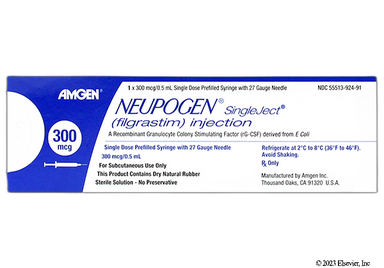
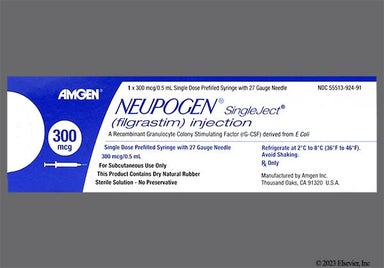
Neupogen (filgrastim) is an injectable medication that can lower your risk of an infection when you have a low white blood cell count. It's usually used in people being treated for cancer, but can also be used in other situations. There are currently three biosimilars to Neupogen (filgrastim) available on the market, but they can't be swapped for one another without a new prescription.

Prevention of low neutrophil-related complications in:
Preparation for blood collection for your own stem cell transplant (Neupogen, Nivestym, and Zarxio only)
Increase survival in people exposed to bone marrow-suppressing radiation (Neupogen only)
Neupogen (filgrastim) is a granulocyte colony-stimulating factor (G-CSF). It works like the G-CSF protein that you naturally have in your body. G-CSF stimulates (triggers) your bone marrow to make neutrophils, a type of white blood cell that helps your body fight infections.
| Common Brands | Neupogen, Nivestym, Releuko, Zarxio |
|---|---|
| Drug Class | Colony-stimulating factor |
| Controlled Substance Classification | Not a controlled medication |
| Generic Status | No lower-cost generic available |
| Availability | Prescription only |

The following side effects may get better over time as your body gets used to the medication. Let your healthcare provider know immediately if you continue to experience these symptoms or if they worsen over time.
Side effects and percentages are listed for Neupogen (filgrastim) in people with cancer receiving bone marrow-suppressing chemotherapy. They might differ with other uses of Neupogen (filgrastim).
Contact your healthcare provider immediately if you experience any of the following.
Along with its needed effects, a medicine may cause some unwanted effects. Although not all of these side effects may occur, if they do occur they may need medical attention.
Check with your doctor immediately if any of the following side effects occur:
More common
Bleeding gums
bleeding, blistering, burning, coldness, discoloration of the skin, feeling of pressure, hives, infection, inflammation, itching, lumps, numbness, pain, rash, redness, scarring, soreness, stinging, swelling, tenderness, tingling, ulceration, or warmth at the injection site
blood in the urine or stools
bloody nose
chills
coughing up blood
difficult or labored breathing
difficulty with swallowing
dizziness
facial swelling
feeling of fullness
headache
increased menstrual flow or vaginal bleeding
lower back or side pain
nosebleeds
pain in the back, ribs, arms, or legs
pain spreading to the left shoulder
painful or difficult urination
pale skin
paralysis
pinpoint red or purple spots on the skin
prolonged bleeding from cuts
red or black, tarry stools
red or dark brown urine
skin rash
sores, ulcers, or white spots on the lips, tongue, or inside the mouth
stomach pain
tightness in the chest
trouble breathing
unusual bleeding or bruising
unusual tiredness or weakness
vomiting
Incidence not known
Blisters on the skin
blue lips, fingernails, or skin
difficult or fast breathing
sores on the skin
swollen glands
Some side effects may occur that usually do not need medical attention. These side effects may go away during treatment as your body adjusts to the medicine. Also, your health care professional may be able to tell you about ways to prevent or reduce some of these side effects. Check with your health care professional if any of the following side effects continue or are bothersome or if you have any questions about them:
Less common
Cracked lips
difficulty having a bowel movement
swelling or inflammation of the mouth
Other side effects not listed may also occur in some patients. If you notice any other effects, check with your healthcare professional.
Call your doctor for medical advice about side effects. You may report side effects to the FDA at 1-800-FDA-1088.




Neupogen (filgrastim) can cause some serious health issues. This risk may be even higher for certain groups. If this worries you, talk to your doctor or pharmacist about other options.
There have been rare cases of people having enlarged (larger than normal) spleens while taking Neupogen (filgrastim). In serious cases, the spleen can rupture (break open), which can be deadly. Contact your provider if you notice any pain in the upper left stomach area or in your shoulder.
Neupogen (filgrastim) can cause a serious breathing condition called acute respiratory distress syndrome (ARDS). It causes fluid to leak in your lungs, blocking the space in your lungs for oxygen. This prevents enough oxygen from getting into your blood and to your organs. Get medical help right away if you have shortness of breath, fast breathing, or fever.
Neupogen (filgrastim) can cause serious allergic reactions, which can be life-threatening if untreated. Don't take Neupogen (filgrastim) if you've ever had an allergic reaction to it or a similar medication, like Neulasta (pegfilgrastim). Make sure your healthcare team always has an up-to-date list of your allergies. Get medical help right away if you experience rash, shortness of breath, or swelling of your lips, tongue, or throat.
Sickle cell crisis (painful episode) can happen in people with sickle cell anemia while receiving Neupogen (filgrastim). If this happens, your healthcare provider will stop the medication.
Kidney damage can happen in people taking Neupogen (filgrastim). If your provider suspects that you have kidney problems, you might need to get blood work done so they can check for signs of kidney damage. Then, they can decide if they need to lower your dose or pause the medication. The kidney damage will usually get better if it's the medication causing the problem.
Colony-stimulating factor medications like Neupogen (filgrastim) can cause capillary leak syndrome (CLS). CLS is a serious condition where fluid leaks out of your small blood vessels. Low blood pressure is a common sign, but certain lab results can also suggest CLS. Talk to your provider if you notice any early symptoms of CLS, including low blood pressure (e.g., dizziness, fainting), tiredness, stomach pain, extreme thirst, or sudden weight gain. Your provider will need to examine you further.
Some people using filgrastim products have reported skin lesions caused by inflammation and tissue damage of blood vessels. This condition is called cutaneous vasculitis. Most cases were moderate to severe and occurred in people taking the medication for a long time. Let your provider know if you notice itchy, red spots or bumps on your skin, feel unwell, or muscle or joint pain. Your provider might pause your treatment until your symptoms of cutaneous vasculitis goes away.
In addition, other people receiving filgrastim products have reported developing another condition caused by inflammation of blood vessels called aortitis. This condition could happen as early as the first week after starting treatment. Let your provider know if you experience fever, stomach pain, back pain, or feel unwell so you can be checked out.
Neupogen (filgrastim) is a growth factor that primarily triggers the production of neutrophils in the body. But there's also a possibility for it to promote the growth of tumors. Some people using Neupogen (filgrastim) for severe chronic neutropenia reported developing blood-related cancers. Others reported developing these cancers when they used Neupogen (filgrastim) as part of their treatment plan for breast or lung cancer along with chemotherapy or radiation. Your providers will check your labs closely and might stop Neupogen (filgrastim) if the risks become greater than the benefits.


Although certain medicines should not be used together at all, in other cases two different medicines may be used together even if an interaction might occur. In these cases, your doctor may want to change the dose, or other precautions may be necessary. When you are taking this medicine, it is especially important that your healthcare professional know if you are taking any of the medicines listed below. The following interactions have been selected on the basis of their potential significance and are not necessarily all-inclusive.
Using this medicine with any of the following medicines is usually not recommended, but may be required in some cases. If both medicines are prescribed together, your doctor may change the dose or how often you use one or both of the medicines.


Contraindications are specific health conditions or situations in which a person should not take a medication due to safety concerns. If you have any of the following conditions or if any of the following apply to you, let your healthcare provider know because Neupogen (filgrastim) will not be safe for you to take.

Prevention of low neutrophil-related complications in:
Preparation for blood collection for your own stem cell transplant (Neupogen, Nivestym, and Zarxio only)
Increase survival in people exposed to bone marrow-suppressing radiation (Neupogen only)







Prescription savings
Stop paying too much for your prescriptions. Compare prices, get pharmacy coupons, and save up to 80%. Find expert answers to your health questions so you can make the best decisions for yourself and your family.
Health conditions
Medications & treatment
Access & affordability
Medication discounts

No, Neupogen isn't a blood product, because it's not made from human blood. While it may look and act like a protein we have in our bodies, the G-CSF in the medication is actually made by bacteria called Escherichia coli (E. coli).
If you're injecting Neupogen under the skin, it can be injected into the outer area of your upper arm, belly (2 inches away from your belly button), thigh, or upper outer buttocks. Make sure to inject the medication into your fatty tissue (not your muscle) so it works properly. Ask your provider if you have any questions during or after training. Also, be sure to check out the instructions for use that come with your prescription for more details on how to inject Neupogen safely.
Nivestym, Releuko, and Zarxio are known as biosimilars to Neupogen. A biosimilar is a biologic medication with a comparable structure and works similarly to the original biologic that was first approved by the FDA. Biosimilars are sort of like generics, but they aren't identical to the original biologic. Biologics are made from living organisms (e.g., animal cells, bacteria), and because of the complex way they're made, exact copies of the original medication can't be made.
Nivestym, Releuko, and Zarxio are biosimilars to Neupogen. All four brands are used to raise white blood cell counts to help reduce the risk of infection, and they all have similar side effects. One difference is that Neupogen, Nivestym, and Zarxio can be used to collect blood stem cells for transplant, but Releuko isn't approved for this use. Another difference is that Neupogen is approved to raise the chance of survival in people who've been exposed to certain doses of radiation, but not its biosimilars.
Neupogen and other similar medications are started 24 hours after chemotherapy to prevent interactions between the two medications. Chemotherapy is helpful for treating tumors since it blocks new cells from being made and the tumor from growing. But it's also possible for chemotherapy to stop Neupogen from making new, healthy white blood cells in your bone marrow. Neupogen shouldn't be used in the 24 hours before through 24 hours after chemotherapy to give it the best chance to work well for you.
Neupogen can last in the refrigerator up until its expiration date. Sometimes, the expiration date is easier to see on the box than each individual vial or syringe, so you might want to keep the original box until all the medication has been used. Once Neupogen has been taken out of the refrigerator, it's good for 24 hours.
