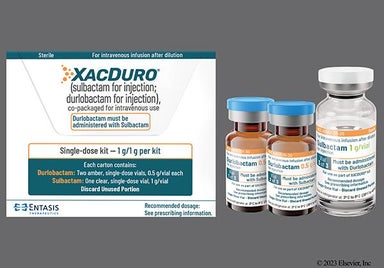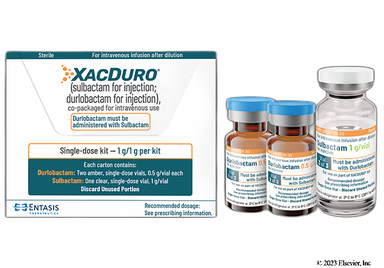
Xacduro
Xacduro (sulbactam / durlobactam) is a combination medication that works to treat certain types of pneumonia that's caused by bacteria called Acinetobacter baumanii-calcoaceticus complex. It's typically used for adults who are in the hospital. Xacduro (sulbactam / durlobactam) is usually given as a 3-hour infusion into the veins every 6 hours for 1 to 2 weeks. Side effects can include diarrhea and changes to liver enzyme levels in the blood.


What is Xacduro (sulbactam / durlobactam)?
What is Xacduro (sulbactam / durlobactam) used for?
- Pneumonia caused by bacteria called Acinetobacter baumanii-calcoaceticus complex that develops when you're in the hospital or on a ventilator (breathing machine)
How Xacduro (sulbactam / durlobactam) works
Xacduro (sulbactam / durlobactam) is a combination of two medications that work together to treat infections caused by certain bacteria.
- Sulbactam is a beta-lactam antibiotic. It kills bacteria by preventing them from making a covering around themselves for protection.
- Durlobactam is a beta-lactamase inhibitor. Beta-lactamases are proteins that bacteria use to break down antibiotics, like sulbactam, so that the antibiotics don't work well to kill the bacteria. Durlobactam protects sulbactam from being broken down. This allows sulbactam to work to fight the bacteria and treat the infection.
Drug facts
| Common Brands | Xacduro |
|---|---|
| Drug Class | Beta-lactam / beta-lactamase inhibitor |
| Controlled Substance Classification | Not a controlled medication |
| Generic Status | No lower-cost generic available |
| Availability | Prescription only |

Side effects of Xacduro (sulbactam / durlobactam)
The following side effects may get better over time as your body gets used to the medication. Let your healthcare provider know immediately if you continue to experience these symptoms or if they worsen over time.
Common Side Effects
- Changes in liver enzyme levels in the blood (19%)
- Diarrhea (17%)
- Anemia (low red blood cell count, 13%)
- Low potassium levels (12%)
- Heart rhythm problems (9%)
Less Common Side Effects
- Constipation
- Kidney problems
- Low platelet count
Xacduro (sulbactam / durlobactam) serious side effects
Contact your healthcare provider immediately if you experience any of the following.
- Serious allergic reaction: hives, rash, blisters, skin reddening, swelling of the lips or tongue, difficulty breathing
- C. difficile-related diarrhea: foul-smelling diarrhea, frequent bowel movements (up to 15 times per day), fever, stomach pain or cramps
The following Xacduro (sulbactam / durlobactam) side effects have also been reported
Side effects that you should report to your care team as soon as possible:
- Allergic reactions—skin rash, itching, hives, swelling of the face, lips, tongue, or throat
- Severe diarrhea, fever
- Unusual vaginal discharge, itching, or odor
Side effects that usually do not require medical attention (report these to your care team if they continue or are bothersome):

Pros and cons of Xacduro (sulbactam / durlobactam)
Pros
- Works well to fight against a resistant and hard-to-treat form of Acinetobacter
- Can use in people with kidney or liver problems
- Safe to use in people with a latex allergy because the rubber stopper isn't made with latex
Cons
- Only approved for pneumonia caused by Acinetobacter
- Given as often as every 6 hours for most people
- Each infusion lasts for 3 hours
- Hasn't been studied in children

Pharmacist tips for Xacduro (sulbactam / durlobactam)

- Your provider might order blood tests to make sure you're not having side effects during your treatment with Xacduro (sulbactam / durlobactam). Examples of some tests include those that check your liver health, kidney health, blood potassium level, and blood cell counts. Based on your results, your provider will decide whether it's safe for you to continue Xacduro (sulbactam / durlobactam) or not.
- Xacduro (sulbactam / durlobactam) can cause diarrhea. In general, it should go away when you stop taking the antibiotic. But tell your provider if you start having watery or bloody diarrhea, fever, fatigue, or stomach cramps anytime during treatment or after stopping Xacduro (sulbactam / durlobactam). These can be signs of infectious diarrhea that can be serious and needs to be treated right away.
- Make sure your provider is aware of all the medications you're taking, especially if you're taking probenecid. Probenecid can raise the levels of Xacduro (sulbactam / durlobactam) in your blood, which can cause side effects. For this reason, Xacduro (sulbactam / durlobactam) and probenecid shouldn't be used together.
- Tell your provider if you develop other symptoms of an illness or if your symptoms become worse. You might need to be tested for an infection caused by a virus or fungus and get appropriate treatment.

Risks and warnings for Xacduro (sulbactam / durlobactam)
Xacduro (sulbactam / durlobactam) can cause some serious health issues. This risk may be even higher for certain groups. If this worries you, talk to your doctor or pharmacist about other options.
Allergic reactions
- Risk factors: Allergy to other beta-lactam antibiotics (e.g., penicillins, cephalosporins, carbapenems)
Allergic reactions to Xacduro (sulbactam / durlobactam) are possible. These reactions can include serious skin reactions and life-threatening reactions like facial swelling, shock, and anaphylaxis (closing of the throat). Let your provider know if you have an allergy to antibiotics. Get medical attention right away if you notice hives, rash, red skin, swelling of the lips or tongue, or difficulty breathing during or after treatment with Xacduro (sulbactam / durlobactam).
Diarrhea from Clostridioides difficile infection
Antibiotics, including Xacduro (sulbactam / durlobactam), raise your risk of getting infected with a bacteria called Clostridioides difficile (C. diff). This infection can cause diarrhea that can sometimes be life-threatening. Antibiotics change the amount of normal bacteria in your stomach and intestines. This can cause C. diff to overgrow in your gut and lead to an infection. This type of infectious diarrhea is different from the diarrhea you might have as a possible side effect of Xacduro (sulbactam / durlobactam). C. diff-related diarrhea can cause rapid heart rate, fever, nausea, foul-smelling diarrhea, bloody stools, or frequent bowel movements (even up to 15 times per day). This type of diarrhea is a medical emergency, so call for help as soon as possible if you experience any of these symptoms. You'll get tested for C. diff infection and receive treatment, if needed.
Low blood cell counts
Xacduro (sulbactam / durlobactam) can lower the number of red blood cells and platelets in your body. This can put you at risk for anemia and bleeding. During treatment, your provider might order blood draws to check your blood cell counts. Tell your provider if you experience symptoms of anemia (e.g., tiredness, headache, pale skin, fast heart rate) or bleeding (e.g., dizziness, feeling faint, bruising, bleeding that lasts a long time).

Xacduro (sulbactam / durlobactam) dosage
Typical dosage for Xacduro (sulbactam / durlobactam)
The typical dose is 1 gram of sulbactam and 1 gram of durlobactam given as an intravenous (IV) infusion into the veins every 6 hours for 7 to 14 days.
The dose might differ based on whether you have kidney problems. And the length of your treatment depends on how serious your infection is and how well Xacduro (sulbactam / durlobactam) is working to fight the infection. Your provider will determine the right dose and length of treatment for you.

Xacduro (sulbactam / durlobactam) contraindications
Contraindications are specific health conditions or situations in which a person should not take a medication due to safety concerns. If you have any of the following conditions or if any of the following apply to you, let your healthcare provider know because Xacduro (sulbactam / durlobactam) will not be safe for you to take.
- Allergy to other beta-lactam antibiotics (e.g., penicillins, cephalosporins, carbapenems)

What are alternatives to Xacduro (sulbactam / durlobactam)?

Xacduro (sulbactam / durlobactam) images