Key takeaways:
Laughter yoga, or laughing yoga, uses playful movement and breathing exercises to encourage laughter.
It’s designed to bring out your inner child and promote joy.
Research is limited, given that this is a relatively new practice. But initial data suggests laughter yoga may provide mental and physical benefits like reduced stress and improved sleep.
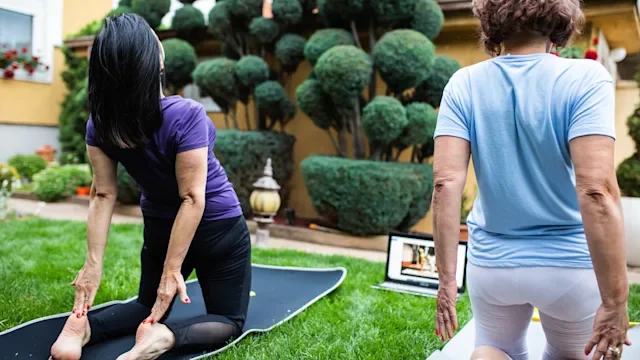
You’ve probably heard the saying that “laughter is the best medicine.” Practitioners of laughter yoga, also known as laughing yoga, have put that idea to the test. The practice uses movement and breathing patterns to encourage intentional laughter and relieve stress.
But does it leave you feeling a little lighter? Here’s what the data says.
What is laughter yoga?
The goal of laughter yoga, or Hasya yoga, is to make you laugh and bring out your inner child. It combines playful movement and breathing techniques to promote laughter.
Search and compare options
Madan Kataria, a family medicine physician in India, developed the practice in 1995. The modern discipline is based on Kataria’s belief that voluntary laughter offers the same health benefits as spontaneous laughter. And, since laughter is universal, laughter yoga is accessible to many people.
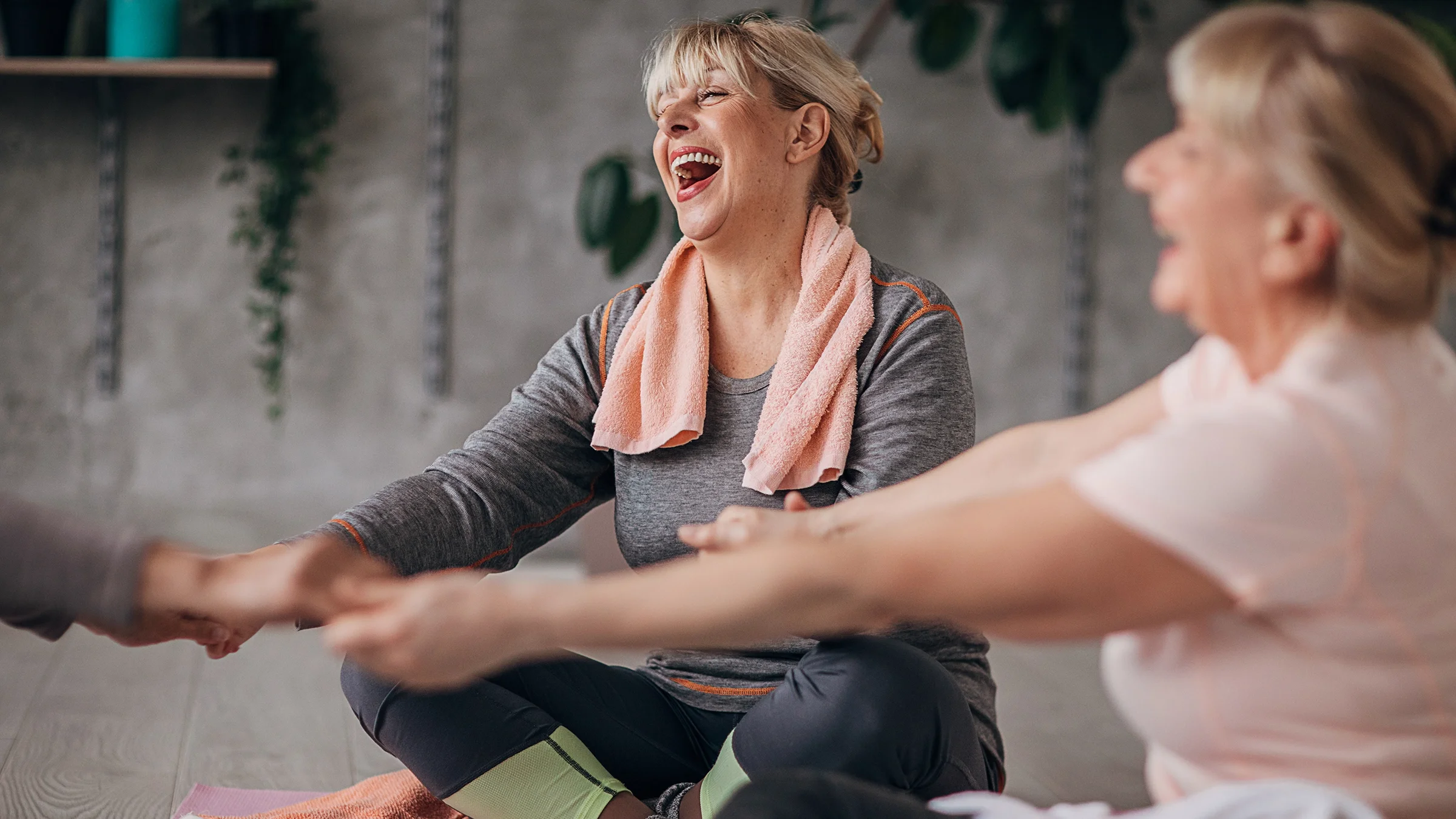
Today, people around the world practice this type of yoga in laughter clubs. In these groups, people meet in person or online for laughter yoga sessions.
How do you practice laughter yoga exercises?
Laughter yoga classes typically don't include the traditional poses you may be familiar with, like downward dog and proud warrior. Instead, your class might include laughing yoga exercises, such as:
Clapping and chanting: Participants might warm up by clapping and chanting, "Ho, ho, ha, ha, ha."
Controlled breathing and stretching: In between laughter exercises, participants practice deep breathing while stretching.
Playful movement: Carefree movements like skipping are combined with childlike cheers. This is designed to make voluntary laughter become genuine, involuntary laughter.
Voluntary laughing: Laughter yoga exercises include voluntary laughing and lighthearted movement. Examples include:
Greeting laughter: You walk around with your palms pressed together at the center of your chest and greet fellow participants with a high five and a laugh.
Argument laughter: Despite its name, argument laughter does not involve any conflict. Instead, you laugh while you wag your finger (as if you're admonishing someone).
Lion laughter: During this laughter yoga exercise, you hold your hands up like a lion's paws, stick your tongue out, and laugh loudly from your belly.
Meditation: Class ends with laughter meditation. It involves voluntary laughing that often leads to genuine laughing.
Many laughing yoga classes last between 30 to 60 minutes. But, like more traditional yoga classes, the specifics of a laughter yoga class depend on the instructor.
What are the benefits of laughter yoga?
Laughter yoga is a relatively new practice. But the proven health benefits of laughter may shed some light on its effectiveness. For example, when you laugh with other people –– as you would in a laughter yoga class –– it may increase feel-good chemicals in the brain and improve bonding.
In a review of laughter therapy, researchers found that spontaneous and simulated laughter can improve mental and physical health. This finding supports a critical theory in laughter yoga: Your body can't distinguish between voluntary and involuntary laughter.

Read more like this
Explore these related articles, suggested for readers like you.


Research on the specific effects of laughter yoga is still in the early stages. But initial studies point to these potential benefits.
Stress relief
If you're feeling stressed, laughter yoga might be a solution. In a small study, a 30-minute laughter yoga session decreased stress hormones in healthy adults. According to another study, just hearing laughter –– something else you would do in a laughter yoga class –– helps people relax.
Less depression and anxiety
Research suggests that using laughter as a complementary therapy may reduce depression and anxiety. One study found that, when combined with traditional mental health care, laughter yoga temporarily reduced symptoms of depression.
Better sleep quality
Less stress and anxiety as a result of laughter yoga could mean better sleep for some. Researchers tested this with a laughter yoga program for people with Parkinson's disease. After 8 weeks, the participants had less anxiety and improved sleep quality.
Higher pain tolerance
The mood-boosting effects of spontaneous laughter may even increase your pain tolerance. That's good news for laughter yoga enthusiasts, as voluntary laughter often turns into genuine laughter in classes.
Lower blood pressure
Practicing laughter yoga may be one way to reap the heart-healthy benefits of laughter. For example, in one study, older adults who did laughter yoga for 6 weeks had lower blood pressure and improved mood.
And there are plenty of other reasons to get a good laugh. According to research, laughing often and having a sense of humor may reduce your risk of cardiovascular disease and help you live longer.
Can you practice laughter yoga on your own?
Yes, you can practice laughter yoga alone, outside of a class setting. There are several resources to help guide your solo practice.
To start your solo session, you can follow these seven steps:
Stand in front of a mirror, if you can.
Chant “ho ho” and extend your hands away from your chest.
Chant “ha ha” and lower your hands toward the floor.
Sway from side to side as you repeat “ho ho” and “ha ha ha.”
Take several deep breaths with full exhales.
Raise your arms over your head and inhale deeply.
Exhale and chant “ha ha ha.”
During your session, you can practice different laughter sounds, such as “ha ha” or “he he.” Then, alternate between taking a deep breath, holding it in, and laughing it out.
Although it might feel strange at first, you can also try faking a laugh to see how it feels. It can be a soft laugh or a giggle, which is sometimes easier when practicing alone. You might also try different body positions. For instance, you could sit and hold your knees while laughing.
Who is laughter yoga good for?
Laughter yoga is an option for people of various ages and abilities who want more joy and laughter in their lives. The whimsical practice may be particularly helpful for older adults who are looking to improve their physical, mental, and social well-being.
A review found that complementary laughter therapies may be effective for several populations, including people with limited mobility, cognitive disorders, and depression. But the research into who benefits the most from laughter yoga is still in the early stages.
It’s always a good idea to check with your healthcare provider if you have specific health concerns.
The bottom line
Laughter yoga uses lighthearted movement and deep breathing to encourage intentional laughter. More research is needed on this recently developed practice. But early studies suggest it may improve mood, sleep, and overall well-being. So if you’re looking for a reason to laugh, this might be a good one.

Why trust our experts?




References
Akimbekov, N. S., et al. (2021). Laughter therapy: A humor-induced hormonal intervention to reduce stress and anxiety. Current Research in Physiology.
Alici, N. K., et al. (2020). A systematic review of the effect of laughter yoga on physical function and psychosocial outcomes in older adults. Complementary Therapies in Clinical Practice.
Bressington, D., et al. (2019). Feasibility of a group-based laughter yoga intervention as an adjunctive treatment for residual symptoms of depression, anxiety and stress in people with depression. Journal of Affective Disorders.
Dunbar, R. I. M., et al. (2012). Social laughter is correlated with an elevated pain threshold. Proceedings of the Royal Society B: Biological Sciences.
Fujiwara, Y., et al. (2018). Hearing laughter improves the recovery process of the autonomic nervous system after a stress-loading task: A randomized controlled trial. BioPsychoSocial Medicine.
Laughter Yoga. (2015). What happens in a laughter yoga session (4 steps). [Video]. YouTube.
Laughter Yoga International. (n.d.). Laughter yoga training.
Manninen, S., et al. (2017). Social laughter triggers endogenous opioid release in humans. The Journal of Neuroscience.
Meier, M., et al. (2020). Laughter yoga reduces the cortisol response to acute stress in healthy individuals. Stress.
Memarian, A., et al. (2017). The effect of laughter yoga exercises on anxiety and sleep quality in patients suffering from Parkinson’s disease. Biomedical Research and Therapy.
Miller, M., et al. (2010). The effect of mirthful laughter on the human cardiovascular system. Medical Hypotheses.
Mora-Ripoll, R. (2017). Simulated laughter techniques for therapeutic use in mental health. Journal of Psychology and Clinical Psychiatry.
Romundstad, S., et al. (2016). A 15-year follow-up study of sense of humor and causes of mortality – The Nord-Trøndelag Health Study. Psychosomatic Medicine.
Sauter, D. A., et al. (2010). Cross-cultural recognition of basic emotions through nonverbal emotional vocalizations. Proceedings of the National Academy of Sciences of the United States of America.
Stiwi, K., et al. (2022). Efficacy of laughter-inducing interventions in patients with somatic or mental health problems: A systematic review and meta-analysis of randomized-controlled trials. Complementary Therapies in Clinical Practice.
Van der Wal, C. N., et al. (2019). Laughter-inducing therapies: Systematic review and meta-analysis. Social Science & Medicine.
Woodbury, M. (2015). Laughter yoga: Benefits of mixing laughter and yoga. Journal of Yoga & Physical Therapy.
Yazdani, M., et al. (2014). The effect of laughter yoga on general health among nursing students. Iranian Journal of Nursing and Midwifery Research.
Yim, J. (2016). Therapeutic benefits of laughter in mental health: A theoretical review. The Tohoku Journal of Experimental Medicine.