Key takeaways:
High blood pressure increases your risk of heart disease, heart attack, and stroke.
Regular exercise can be an effective way to lower blood pressure.
The best exercises to lower your blood pressure include aerobic and strength-training activities. Examples include walking, running, planks, and wall squats.
High blood pressure, or hypertension, is a risk factor for heart disease and stroke. It’s defined as having a systolic pressure (the top number) greater than 130 mmHg or a diastolic pressure (bottom number) greater than 80 mmHg. Nearly half of adults in the U.S. have high blood pressure or are taking medication for it, according to the CDC.
Fortunately, there are many ways to manage or prevent it. Exercise is one of the best ways to lower blood pressure naturally. Some studies suggest that it can be as effective as medications. The key is to exercise regularly and practice other healthy lifestyle habits.
What are the best exercises to lower blood pressure?
Research shows that many types of exercise can reduce your blood pressure or keep it in a healthy range. Examples include:
Aerobics
Search and compare options
Include aerobics, strength training, and flexibility exercises in your fitness plan. Talk to your primary care provider before trying new workouts, especially if you’re exercising with high blood pressure. People who have complications from high blood pressure, such as active heart disease, may need to avoid or limit certain activities, such as high-intensity exercises.
Here are some of the ways that exercise can help lower blood pressure:
Increases blood vessel flexibility and function
Boosts blood flow
Increases insulin sensitivity
Strengthens the heart
Reduces inflammation
Decreases oxidative stress
Helps prevent obesity and lower body weight
Lowers mental stress
Aerobic exercises to lower blood pressure
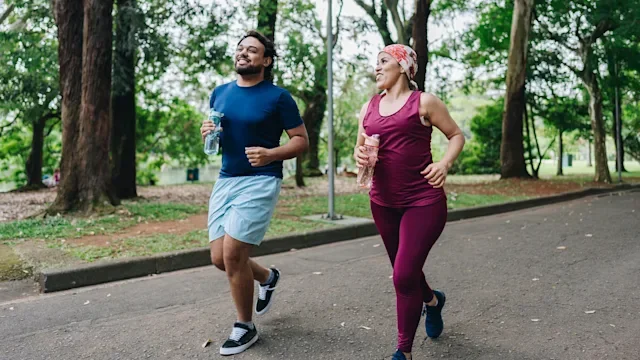
Aerobic or cardio exercise strengthens the cardiovascular system. It’s a great way to manage your blood pressure and boost your fitness.
The U.S. Department of Health and Human Services provides guidelines for how much aerobic exercise you should get each week. Adults should aim for 150 minutes of moderate-intensity aerobic activity or 75 minutes of vigorous physical activity per week. This works out to 30 minutes of moderate aerobics 5 days a week. You can also do 25 minutes of vigorous aerobics 3 days a week. A combination will also work.
Beginners should ease into exercise. Start with lower-intensity aerobics and gradually build up from there. There’s no shortage of options when it comes to cardio workouts. Try different exercises to find what works best for you. Variety can help prevent boredom, overtraining, and injuries.

Read more like this
Explore these related articles, suggested for readers like you.
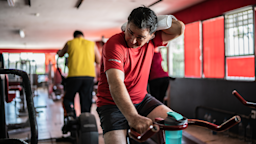
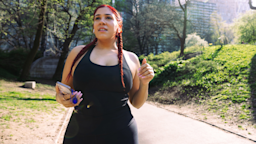

Consider the following aerobic exercises to lower blood pressure.
1. Walking
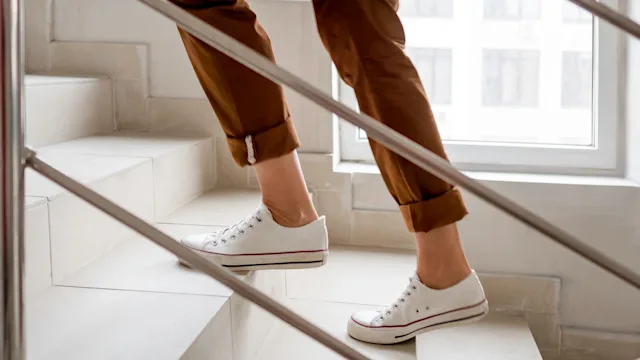
Walking is one of the most accessible forms of aerobic exercise for beginners. It offers numerous health benefits, from lower blood pressure to improved mood. And all you need is a good pair of walking or running shoes.
Start with 10- to 15-minute walks 5 days per week. For example, you could go for a short walk after dinner. Walking after eating may help lower blood pressure and blood sugar. Add 5 minutes to your walking sessions each week until you can walk for 30 minutes a day, 5 days per week.
Here are some tips to increase walking workout intensity as your fitness improves:
Add power walking or jogging intervals.
Wear a weighted vest.
Walk uphill or on an incline treadmill.
2. Biking
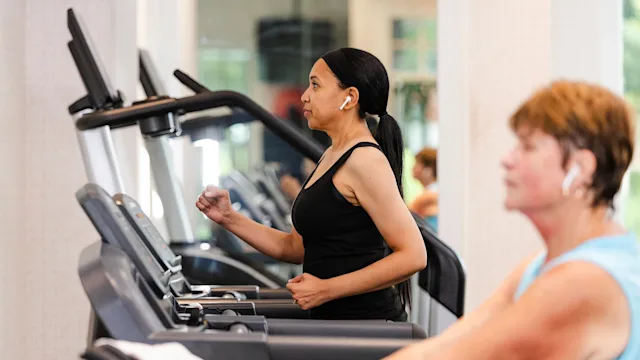
Biking can help you meet aerobic exercise goals. When combined with a healthy diet, indoor cycling has been shown to improve blood pressure, aerobic capacity, and body composition.
There are several types of indoor bikes, including:
Spin bikes: Spin bikes are often used in cycling classes. They are ideal for high-intensity interval training workouts because you can stand on the pedals to replicate climbing hills. They have various resistance levels, so you can get a challenging workout at any fitness level.
Recumbent bikes: These bikes have a reclined seat. You may work fewer muscles on a recumbent bike than you would on an upright stationary bike. But it’s a great option for older adults and people with back pain.
Biking is also a good option for people with joint pain because it’s low impact. And it doubles as transportation if you bike outside. Plus, outdoor workouts have been linked to better mood.
3. Hiking
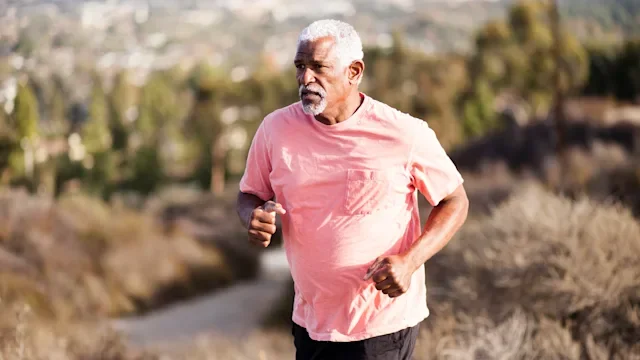
Hiking is another way to boost heart health while enjoying nature. It’s been shown to reduce blood pressure and strengthen lower-body muscles. In fact, hiking may work more muscle groups –– like the glutes and calves –– than walking on flat surfaces.
You can use hiking poles to engage your upper-body muscles and provide stability on uneven terrain. Or try rucking, which challenges you to carry a weighted backpack while hiking. Both practices will engage more muscle groups, increase exercise intensity, and help you burn more calories.
Make sure to plan your route, bring a map, and pack essentials –– like water and snacks –– before you hit a hiking trail. Enjoy the fresh air and scenery along the way. Exercising in green spaces can lower stress and lift your spirits.
4. Dancing
Dancing is a fun recreational activity, but it can also be an effective workout that helps you achieve health and fitness goals. Moderate-intensity dance workouts may increase aerobic capacity and lower the risk of heart disease. A review found that aerobic exercise, including dancing, reduced systolic and diastolic blood pressure in adults with hypertension.
From hip-hop to modern dancing, there are many styles to choose from. Zumba, for example, is a popular Latin-inspired cardio dance workout. It’s been linked to lower blood pressure and triglycerides. Triglycerides are a type of fat in the bloodstream. Zumba classes might be a good place to start if you don’t enjoy more traditional cardio workouts.
No matter which cardio dance style you choose, be sure to move your body at moderate intensity to reap the benefits.
5. Swimming
Consider taking your workouts to the water for a change of pace. Swimming is a total-body workout that can strengthen your heart and lungs. It may reduce arterial stiffness, lower blood pressure, and help with weight management.
Water is buoyant, so it helps support your body weight and exerts little to no pressure on your joints. People with chronic pain –– from conditions such as arthritis or fibromyalgia –– might find exercising in water easier or more comfortable.
Each swimming stroke engages your muscles differently. So try mixing different strokes into your swim workouts.
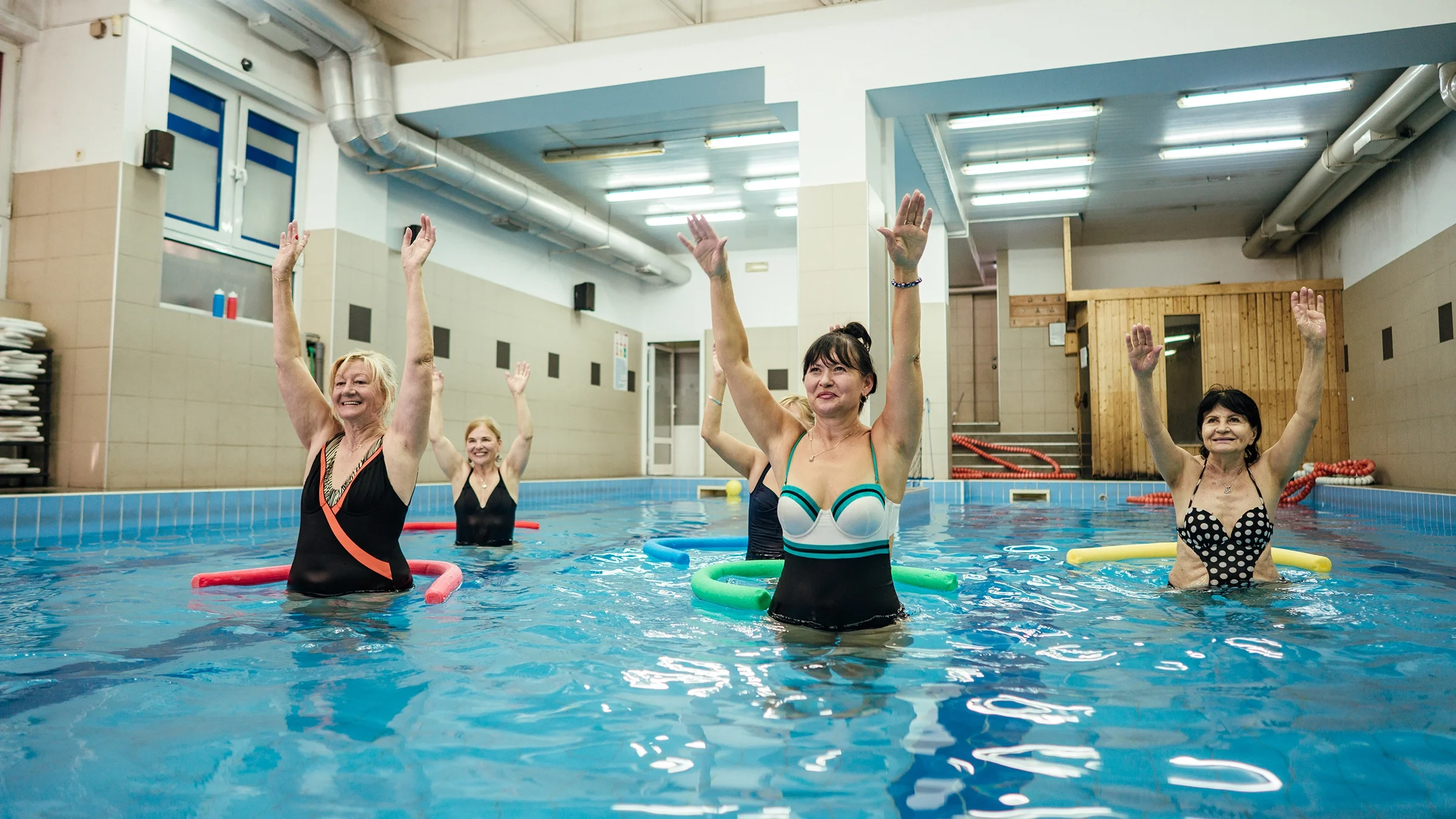
Other water-based exercises have also been shown to lower blood pressure. Water aerobics and aqua jogging are fantastic alternatives to swimming. The water provides resistance to strengthen your muscles and increase your heart rate while reducing joint impact. Use a flotation belt or vest while doing water exercises, especially if you’re not a strong swimmer.
Isometric exercises to lower blood pressure
Experts recommend doing muscle-strengthening activities at least 2 days a week. Examples include lifting weights and doing body-weight exercises.
Strength training has been shown to reduce blood pressure in people with hypertension and prehypertension. Studies have found that isometrics may be the best type of exercise to lower blood pressure. Isometric exercises are static strength-training activities. When you do an isometric exercise, like a glute bridge or a triceps dip hold, you contract your muscles without moving your joints. You hold a position, and your muscles support your body weight against gravity.
Here are a few of the best isometric exercises to add to your strength-training routine for lower blood pressure and better fitness.
6. Wall sits
The wall sit exercise engages the glutes and quadriceps. Practicing this move can help you learn proper form for squats.
Step 1: Stand with your back against a wall and your feet a few inches away from the wall.
Step 2: Engage your core, and lower down until your body forms a chair position with your back flat against the wall, knees bent at a 90-degree angle, and thighs parallel to the floor. Make sure your knees don’t extend past your toes.
Step 3: Hold the position for 10-15 seconds. Keep your core tight and your back pressed against the wall. You can increase the hold time as you get stronger.
7. Planks
A plank is a total-body exercise that can strengthen the core. Beginners can start with a forearm plank to learn proper form and build strength.
Step 1: Start facedown on the floor in a modified plank position, supporting your weight on your forearms. Keep your elbows under your shoulders, and curl your toes.
Step 2: Draw your belly button up toward your spine to engage your core. Squeeze your glutes to ease any strain on your lower back. Your body should form a straight line from your head to your heels.
Step 3: Hold the plan for 10-30 seconds before relaxing and lowering to the floor. Remember to breathe.
8. Stress ball squeeze
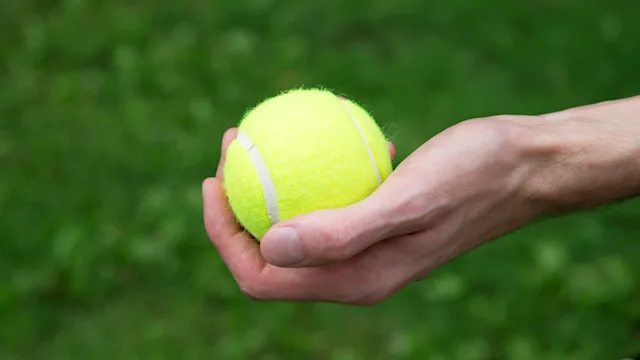
Poor grip strength has been linked to an increased risk of heart disease, stroke, and death. This seemingly simple exercise is a great way to improve grip strength. All you need is a foam stress ball or tennis ball.
Step 1: Hold a stress ball, and bend your elbow to a 90-degree angle with your palm facing up.
Step 2: Squeeze the ball as hard as you can for 5-10 seconds.
Step 3: Repeat 10-15 times, then switch to the other hand.
The bottom line
Regular exercise is critical for your overall health and fitness. And it can be an effective way to lower blood pressure. Include aerobics, isometrics, and other strength-training exercises into your workout routine. But talk to your primary care provider before starting a new fitness plan, especially if you have high blood pressure.

Why trust our experts?




References
American Heart Association. (2023). Understanding blood pressure readings.
Araneta, M. R. G., et al. (2015). Benefits of Zumba fitness among sedentary adults with components of the metabolic syndrome: A pilot study. The Journal of Sports Medicine and Physical Fitness.
Buffey, A. J., et al. (2023). The acute effects of interrupting prolonged sitting time in adults with standing and light-intensity walking on biomarkers of cardiometabolic health in adults: A systematic review and meta-analysis. Sports Medicine.
Centers for Disease Control and Prevention. (n.d.). General physical activities defined by level of intensity.
Centers for Disease Control and Prevention. (2022). How much physical activity do adults need?
Centers for Disease Control and Prevention. (2023). Facts about hypertension.
Chavarrias, M., et al. (2019). Health benefits of indoor cycling: A systematic review. Medicina.
Correia, R. R., et al. (2023). Strength training for arterial hypertension treatment: A systematic review and meta-analysis of randomized clinical trials. Scientific Reports.
de Barcelos, G. T., et al. (2022). Effects of aerobic training progression on blood pressure in individuals with hypertension: A systematic review with meta-analysis and meta-regression. Frontiers in Sports and Active Living.
de Sousa, E. C., et al. (2017). Resistance training alone reduces systolic and diastolic blood pressure in prehypertensive and hypertensive individuals: Meta-analysis. Hypertension Research.
Diaz, K. M., et al. (2013). Physical activity and the prevention of hypertension. Current Hypertension Reports.
Edwards, J. J., et al. (2023). Exercise training and resting blood pressure: A large-scale pairwise and network meta-analysis of randomised controlled trials. British Journal of Sports Medicine.
FitnessBlender. (2011). Wall sit [video]. YouTube.
Fuchs, F. D., et al. (2020). High blood pressure and cardiovascular disease. Hypertension.
Gladwell, V. F., et al. (2013). The great outdoors: How a green exercise environment can benefit all. Extreme Physiology & Medicine.
Igarashi, Y., et al. (2018). The effect of regular aquatic exercise on blood pressure: A meta-analysis of randomized controlled trials. European Journal of Preventive Cardiology.
Lahart, I. M., et al. (2018). Chronic physiological effects of swim training interventions in non-elite swimmers: A systematic review and meta-analysis. Sports Medicine.
Leong, D. P., et al. (2015). Prognostic value of grip strength: Findings from the Prospective Urban Rural Epidemiology (PURE) study. The Lancet.
Li, X., et al. (2024). Effect of tai chi vs aerobic exercise on blood pressure in patients with prehypertension: A randomized clinical trial. JAMA Network Open.
Merom, D., et al. (2016). Dancing participation and cardiovascular disease mortality: A pooled analysis of 11 population-based British cohorts. American Journal of Preventive Medicine.
Mitten, D., et al. (2016). Hiking: A low-cost, accessible intervention to promote health benefits. American Journal of Lifestyle Medicine.
Naci, H., et al. (2018). How does exercise treatment compare with antihypertensive medications? A network meta-analysis of 391 randomised controlled trials assessing exercise and medication effects on systolic blood pressure. British Journal of Sports Medicine.
National Institute on Aging. (2012). Hand grip strength exercise for older adults [video]. YouTube.
Nystoriak, M. A., et al. (2018). Cardiovascular effects and benefits of exercise. Frontiers in Cardiovascular Medicine.
Penrod, N. M., et al. (2022). Antihypertensive effects of yoga in a general patient population: Real-world evidence from electronic health records, a retrospective case-control study. BMC Public Health.
Physique 57. (2016). How to do a forearm plank [video]. YouTube.
Rodrigues-Krause, J., et al. (2018). Effects of dancing compared to walking on cardiovascular risk and functional capacity of older women: A randomized controlled trial. Experimental Gerontology.
Saunders, M. J., et al. (2008). Trekking poles increase physiological responses to hiking without increased perceived exertion. Journal of Strength and Conditioning Research.
U. S. Department of Health and Human Services. (2019). Executive summary: Physical activity guidelines for Americans, 2nd edition.
Voloshina, A. S., et al. (2013). Biomechanics and energetics of walking on uneven terrain. The Journal of Experimental Biology.
Yuan, W. X., et al. (2016). Effects of 8-week swimming training on carotid arterial stiffness and hemodynamics in young overweight adults. BioMedical Engineering OnLine.