Key takeaways:
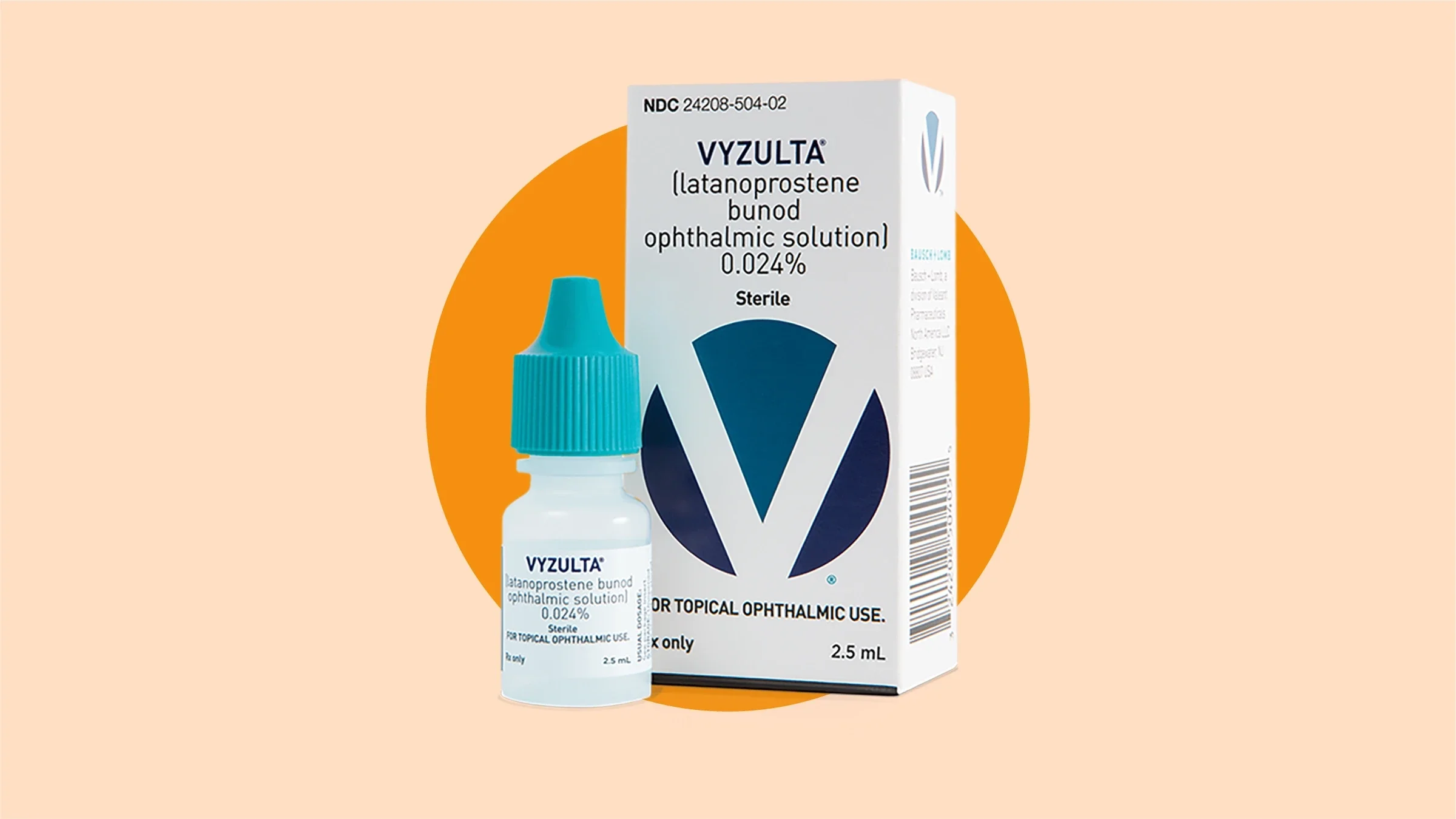
Vyzulta (latanoprostene bunod) is a brand-name prescription eye drop. It’s used to lower eye pressure in people with open-angle glaucoma and ocular hypertension (high pressure in the eye).
Most commercial insurance and Medicaid plans, and many Affordable Care Act marketplace plans, cover Vyzulta. But prior authorization or step therapy are often required. Coverage under Medicare plans is limited.
Without insurance or discounts, one 2.5 mL bottle of Vyzulta costs an average of $322.64. GoodRx coupons, manufacturer copay savings cards, and patient assistance programs can help make your prescription more affordable.
Save on related medications
Vyzulta (latanoprostene bunod) is an effective prescription eye drop for managing eye pressure if you have open-angle glaucoma or ocular hypertension (high pressure in the eye). But it can be costly, especially if you’re paying out of pocket.
If you don’t have insurance, or your plan doesn’t cover Vyzulta, the price may come as a surprise. But there are options to help lower your cost. Here’s what to know about how much Vyzulta costs without insurance and ways to save.
How much does Vyzulta cost?
Without insurance or discounts, one 2.5 mL bottle of Vyzulta costs an average of $322.64. The 5 mL bottle of Vyzulta costs an average of $629.37.
The typical Vyzulta dosage is one drop in the affected eye(s) once daily. Once opened, a Vyzulta bottle is good for up to 8 weeks. But how long it lasts depends on the size and whether you’re treating one or both eyes. For example, a 2.5 mL bottle contains about 50 drops, while the 5 mL bottle contains about 100 drops.
Which factors affect the cost of Vyzulta?
Several factors can influence how much you pay for Vyzulta, including:
Insurance coverage: Some plans cover Vyzulta, while others may require prior authorization or prefer lower-cost alternatives.
Pharmacy choice: Prices can vary widely between pharmacies, even for the same medication.
Prescription quantity: The bottle size and whether you fill a 30-, 60-, or 90-day supply can affect how much you pay for Vyzulta.
Usage: If you’re treating one eye, a bottle of Vyzulta will last longer than if you’re treating both eyes, which can affect your overall cost.
Savings programs: If you’re eligible, a manufacturer copay savings card or a patient assistance program could help you pay less for Vyzulta.
Does insurance cover Vyzulta?
Most commercial insurance and Medicaid plans, and many Affordable Care Act (ACA) marketplace plans, cover Vyzulta. Coverage under Medicare plans is limited.
Before your plan covers Vyzulta, you may need prior authorization, which means your prescriber must submit documentation explaining why Vyzulta is necessary for you. Some plans may also require step therapy, meaning you’ll need to try other medications, such as latanoprost (Xalatan), before Vyzulta is approved.
How different insurance plans cover Vyzulta
The table below breaks down the percentage of enrollees who have coverage for Vyzulta by insurance type. It also shows the likelihood of having prior authorization and step therapy requirements.
Insurance type | Enrollees covered for Vyzulta | Enrollees required to get prior authorization | Enrollees required to do step therapy |
|---|---|---|---|
63.7% | 49.1% | 42.1% | |
Commercial plans (excluding ACA plans) | 84.4% | 30.7% | 52.3% |
Medicare (Medicare Advantage and Part D plans) | 3.5% | 0% | 1.3% |
Medicaid, including state-run and managed care plans | 99.6% | 97% | 39% |
Source: Managed Markets Insight & Technology, LLC™, as of January 10, 2026 (See methodology below.)
If your insurance doesn’t cover Vyzulta, try these options:
Check if you’re eligible for the manufacturer copay savings card. You may qualify for reduced out-of-pocket costs if you have commercial insurance (details below).
Talk to your prescriber about alternatives. Vyzulta works differently from other pressure-lowering eye drops. But your prescriber may still recommend a lower-cost option, such as latanoprost, if cost or coverage is a concern.
Request a formulary exception. Your prescriber can submit a letter of medical necessity explaining why Vyzulta is the best option for you. If your request is denied, you have the right to file an appeal.
Compare plans during open enrollment. You may be able to switch to a plan that offers better coverage for Vyzulta, with lower out-of-pocket costs.
Ways to save on Vyzulta
Without insurance, Vyzulta can cost hundreds of dollars per month. But there are savings strategies that can help reduce how much you pay for Vyzulta. Here are five options to consider.
1. Use a GoodRx coupon
GoodRx coupons can help reduce the cost of Vyzulta at participating pharmacies. Prices vary by location, so comparing pharmacies may help you find the lowest price near you.
To access a coupon, simply search for Vyzulta and select the prescribed bottle size and quantity. Show the coupon to pharmacy staff when dropping off your prescription. By using GoodRx, you could pay the following price for your prescription.
2. See if you qualify for a copay savings card
Bausch + Lomb, Vyzulta’s manufacturer, offers a copay program that can help lower your out-of-pocket cost. You may be eligible if you:
Have commercial insurance or are uninsured
Are at least 18 years old
Don’t have government-funded insurance through Medicare, Medicaid, or any other federal or state health care program
How much you pay for Vyzulta can depend on your insurance coverage and whether you fill your prescription at a participating pharmacy.
If you have commercial insurance that covers Vyzulta: Pay as little as $25 for a 2.5 mL bottle, a 5 mL bottle, or three 2.5 mL bottles (as a 90-day supply) at participating pharmacies. Pay as little as $35 at nonparticipating pharmacies.
If you’re uninsured or your commercial insurance plan doesn’t cover Vyzulta: You could pay as little as $70 for a 2.5 mL bottle, $100 for a 5 mL bottle, or $130 for three 2.5 mL bottles. These prices may be higher at nonparticipating pharmacies.
You can see if you’re eligible and enroll in the program online. If you have questions about the program, you can call the manufacturer at 1-877-494-4372.
3. Check if you’re eligible for a patient assistance program
Bausch + Lomb also offers a patient assistance program that provides Vyzulta at no cost. To be eligible for the program, you must:
Have a prescription for Vyzulta and are being treated by a licensed U.S. healthcare professional
Be a legal U.S. resident
Meet household income criteria
Be uninsured, have commercial insurance that doesn’t cover Vyzulta (and you’ve exhausted all appeal options), or have government-funded insurance that doesn’t cover Vyzulta
An eligibility questionnaire is available online. If you may be eligible, you’ll be provided an application after completing the questionnaire.
4. Ask about 90-day supplies
If Vyzulta is working well for you, talk to your prescriber and insurance about filling a 90-day supply instead of monthly refills. This may help lower your total cost and reduce trips to the pharmacy.
5. Tap into your HSA, FSA, or HRA
If you have a health savings account (HSA), a flexible savings account (FSA), or a health reimbursement arrangement (HRA), you can use pretax dollars to pay for Vyzulta and related eye-care expenses. Be sure to keep your receipts for documentation purposes.
The bottom line
Vyzulta (latanoprostene bunod) is a prescription eye drop that helps lower eye pressure. Without insurance or discounts, one 2.5 mL bottle of Vyzulta can cost an average of $322.64.
GoodRx coupons, manufacturer copay savings programs, and patient assistance programs can help lower the cost of Vyzulta. If affordability is in issue, your eye specialist or pharmacist can help you explore the best options.

Why trust our experts?



Methodology
We obtained national prescription coverage data for each medication from Managed Markets Insight & Technology (MMIT). The data reflects health insurance coverage as of January 10, 2026.
We calculated the percentage of enrollees in plans that cover each medication by dividing the number of enrollees covered for the medication within a specific insurance channel (e.g., ACA, Medicare, Medicaid) by the total number of enrollees in all plans within that channel.
We determined the percentage of enrollees in plans with a prior authorization requirement by calculating the proportion of enrollees in plans that required prior authorization for the medication within each channel.
Finally, we measured the percentage of enrollees in plans with a step therapy requirement by calculating the proportion of enrollees in plans that imposed step therapy requirements for the medication in each channel.
These estimates, derived from national MMIT coverage data, provide insight into health insurance coverage for each medication. They take into account restrictions such as prior authorization, step therapy, and quantity limits. The percentages are expressed relative to the total number of enrollees covered by various insurance channels, including ACA plans, commercial (excluding ACA) plans, Medicare, and Medicaid (both state-run and managed care plans).
References
Bausch + Lomb. (2024). Vyzulta- latanoprostene bunod solution/drops [package insert]. DailyMed.
Bausch + Lomb Copay Program. (n.d.). Activation site.
Bausch + Lomb Copay Program. (n.d.). Patient copay savings made easy.
Bausch + Lomb Patient Assistance Program. (n.d.). Eligibility requirements & terms and conditions.
Bausch + Lomb Patient Assistance Program. (n.d.). Find out if you may be eligible to apply to the Bausch + Lomb Patient Assistance Program.
Bausch + Lomb Patient Assistance Program. (n.d.). Helping eligible patients in financial need obtain prescription products.
Medicaid.gov. (n.d.). Managed care. Centers for Medicare & Medicaid Services.