Key takeaways:
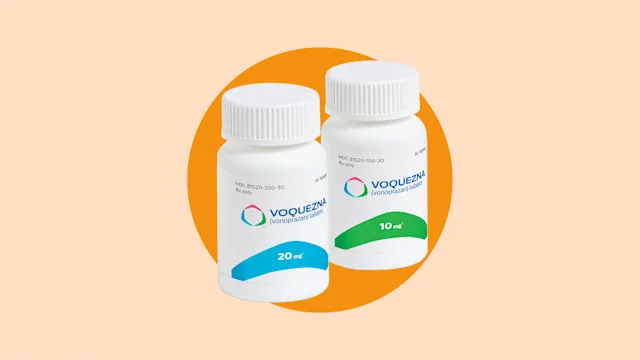
Voquezna (vonoprazan) treats heartburn related to gastroesophageal reflux disease (GERD) and similar conditions. Voquezna can lower the absorption of some antivirals, oral antifungals, and certain cancer medications.
Voquezna can raise levels of benzodiazepines and calcium channel blockers — making side effects from these medications more likely. Other medications and supplements, such as carbamazepine (Tegretol) and St. John’s wort, can make Voquezna less effective.
Review your full medication list with your healthcare team before starting Voquezna. They can help identify and manage any potential interactions.
Save on related medications
Voquezna (vonoprazan) is a new type of medication that treats heartburn related to gastroesophageal reflux disease (GERD) and other conditions. Some medications and supplements can make Voquezna less effective or raise your risk of side effects. Understanding which combinations to avoid — or when you may need extra monitoring — can help you get the most out of your treatment while staying safe.
Voquezna interactions at a glance
Voquezna interactions can change the effectiveness of your medications or raise the risk of side effects. Below are general lists of Voquezna interactions to be aware of, separated by type. Keep in mind that other interactions are possible. So it’s best to review your current medication list, which should include your over-the-counter medications and supplements, with your healthcare team prior to starting Voquezna.
Voquezna may reduce levels of the following medications and supplements, which may make them less effective:
Certain antiviral medications, such as atazanavir (Reyataz)
Some oral antifungals, such as ketoconazole
Clopidogrel (Plavix)
Mycophenolate mofetil (CellCept)
Tyrosine kinase inhibitors, such as erlotinib (Tarceva), that treat certain cancers
Iron supplements
Voquenza may increase levels of the following medications, which can raise the risk of their side effects:
Benzodiazepines, such as alprazolam (Xanax)
Calcium channel blockers, such as amlodipine (Norvasc)
Quetiapine (Seroquel)
Zolpidem (Ambien)
Citalopram (Celexa)
Cilostazol
The following medications and supplements may reduce Voquezna levels, making it less effective:
St. John’s wort
Carbamazepine (Tegretol)
Phenytoin (Dilantin)
Rifampin (Rifadin)
Barbiturates, such as phenobarbital (Sezaby)
Let’s take a look at eight Voquezna interactions in more detail.
1. Some antiretroviral medications
Voquezna reduces stomach acid, which is helpful for treating heartburn. But some medications require stomach acid in order for your body to absorb them properly. This includes some antiviral medications for HIV, such as:
Atazanavir
Nelfinavir (Viracept)
Rilpivirine (Edurant)
Reduced levels of an antiviral can leave you unprotected against HIV. So it’s best to avoid taking Voquezna with these medications. Talk to your prescriber about a safer treatment option for your heartburn-related condition.
2. Some oral antifungal medications
Some oral antifungal medications also require stomach acid for absorption. This includes ketoconazole and itraconazole (Sporanox). If you take Voquezna, it can reduce the absorption of these antifungals and make them less effective.
If you need an oral antifungal treatment, let your prescriber know that you’re taking Voquezna. They may need to adjust your dosage or choose a treatment that isn’t affected by changes in stomach acid.
3. Certain organ transplant and cancer medications
Certain medications that are used to prevent organ transplant rejection or treat certain cancers interact with Voquezna. Examples include:
Mycophenolate mofetil
Erlotinib
Dasatinib (Sprycel)
Nilotinib (Tasigna)
These medications require stomach acid for absorption, so taking them with Voquezna can prevent them from reaching effective levels in the body. Your prescriber can determine whether a dosage adjustment or different treatment is needed to avoid this issue.
4. Clopidogrel (Plavix)
Voquezna may reduce clopidogrel levels in the body if they’re taken together. This can leave you unprotected against unwanted blood clots.
Voquezna seems less likely than proton pump inhibitors to cause a significant change in clopidogrel levels. So your prescriber may decide to just monitor you closely if you take these medications together. Or they may decide to switch your medications to avoid this interaction altogether.
5. Benzodiazepines
Voquezna blocks an enzyme (protein) that breaks down benzodiazepines in the body. Examples of benzodiazepines include:
Alprazolam
Temazepam (Restoril)
Lorazepam (Ativan)
Voquezna can increase benzodiazepine levels in the body as a result of this interaction. This can raise the risk of side effects, including excessive sedation, dizziness, and falls. You may need a lower benzodiazepine dosage if you’re taking Voquezna. Or your prescriber may ask you to keep a close eye out for bothersome side effects.
6. Calcium channel blockers
Calcium channel blockers can also interact with Voquezna. Examples include:
Amlodipine
Diltiazem (Cardizem)
Verapamil (Verelan)
Voquezna may increase levels of calcium channel blockers in the body. This raises the risk of side effects, such as a dangerously slow heart rate or hypotension (low blood pressure). If your prescriber OKs taking Voquezna and a calcium channel blocker at the same time, be sure to keep an eye out for any changes to your heart rate and symptoms such as dizziness or trouble breathing. Seek emergency care if these side effects occur.
7. St. John’s wort
St. John’s wort is an herbal supplement that interacts with many medications. It can reduce Voquezna levels if they’re taken together. This can make Voquezna less effective and leave your heartburn-related condition undertreated.
It’s best to avoid taking St. John’s wort with Voquezna. Talk to your prescriber about an alternative treatment that won’t interact with your current regimen.
8. Carbamazepine
Similar to St. John’s wort, carbamazepine also interacts with many medications. It can reduce Voquezna levels if they’re taken together, reducing its effectiveness.
It’s best to avoid this combination. If you’re already taking carbamazepine or need to start it, a different acid-reducing medication is likely a better fit for you.
The bottom line
Voquezna (vonoprazan) is a new type of medication that treats heartburn related to gastroesophageal reflux disease (GERD) and other conditions. Voquezna interactions can change the effectiveness of your medications or raise the risk of side effects.
Voquezna’s acid-reducing effects can reduce the absorption of some antivirals, oral antifungals, and targeted cancer medications. Voquezna can also increase the levels of benzodiazepines and calcium channel blockers in the body, raising the risk of side effects. And some medications and supplements, such as carbamazepine (Tegretol) and St. John’s wort, can make Voquezna less effective.
Review your medication list with your healthcare team before starting Voquezna. They can check for interactions and take steps to prevent them if needed.

Why trust our experts?



References
Herrick, E. J., et al. (2024). Antifungal ergosterol synthesis inhibitors. StatPearls.
Horn, J. R., et al. (2011). CCBs and CYP3A4 inhibitors: Watch out for enhanced cardiovascular response. Pharmacy Times.
Panel on Antiretroviral Guidelines for Adults and Adolescents. (2024). Guidelines for the use of antiretroviral agents in adults and adolescents with HIV. Clinicalinfo.HIV.gov.
Phathom Pharmaceuticals. (2025). Voquezna - vonoprazan fumarate tablet [package insert].
Sugano, K. (2108). Vonoprazan fumarate, a novel potassium-competitive acid blocker, in the management of gastroesophageal reflux disease: Safety and clinical evidence to date. Therapeutic Advances in Gastroenterology.