VIDEO CENTER
Multiple Sclerosis
Today, there are many medication options to treat MS. If one medication doesn’t work or causes severe side effects, there’s likely another option that could be a better fit.

Each patient’s experience with multiple sclerosis, or MS, will vary. Both the MS symptoms and the trajectory of the condition can be unpredictable from person to person. Learn more about the symptoms of MS here.
That said, experts have identified four typical “courses” of MS, the most prevalent two being relapsing-remitting MS and primary progressive MS.
“Relapsing-remitting MS is the most common form of MS,” says Michelle Fabian, MD, a Neurologist at The Mount Sinai Hospital in New York City. “Eighty-five percent of people are diagnosed with it at onset.” (Here’s what age multiple sclerosis is usually diagnosed.)
Relapsing-remitting MS, or RRMS, includes clear attacks (relapses) of new or exacerbated symptoms, followed by periods of some or partial recovery (remissions). Some MS symptoms may come and go during remissions, while others may linger, according to the National Multiple Sclerosis Society.
Primary progressive MS, on the other hand, does not fluctuate but develops steadily over time. MS symptoms continue to worsen over the course of months or years. “It might kind of plateau or flatten out,” says Dr. Fabian, “but it doesn’t go away.”
A new symptom on the body has to last for at least 24 hours to be considered a period of relapse. Doctors will also do an MRI, which must show a new lesion on the body that is consistent with MS.
MS symptoms are temporary and may go away or subside during remission. The most common symptoms during RRMS relapses include:
Visual blurring or double vision
Dizziness
Numbness
Weakness
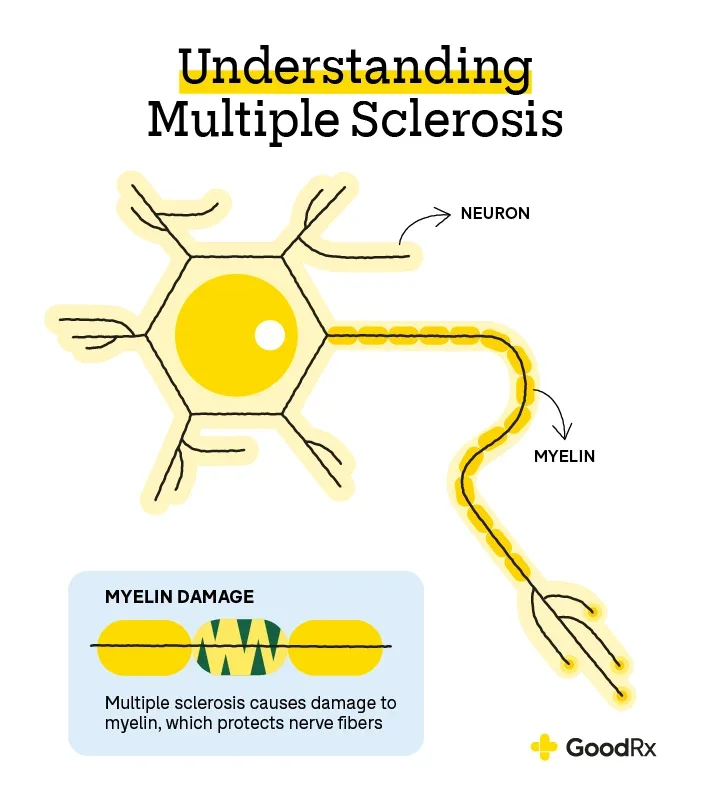
“The reason why a patient has relapses is because they have these episodes of inflammation,” says Dr. Fabian. The inflammation attacks the myelin, or the insulating layers on the nerve fibers of the central nervous system. Most often, these attacks occur on the fibers of the brain, spinal cord, or optic nerve (which connects the brain to the eyes), and the resulting damage is a new lesion that produces or aggravates symptoms.
Thanks to improved treatment for MS, attacks from RRMS are actually fairly infrequent. “In our trials, patients have relapses every one in eight years or less,” says Dr. Fabian. “A relapse should be a signal to a patient and doctor that they need to think about the treatment they’re on.” Here’s what doctors recommend to prevent and treat MS relapses.
Prescription savings
Stop paying too much for your prescriptions. Compare prices, get pharmacy coupons, and save up to 80%. Find expert answers to your health questions so you can make the best decisions for yourself and your family.
Health conditions
Medications & treatment
Access & affordability
Medication discounts


