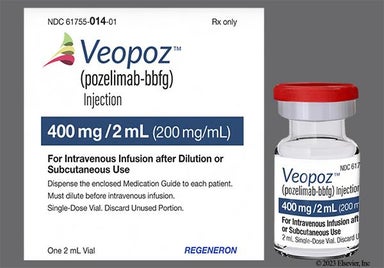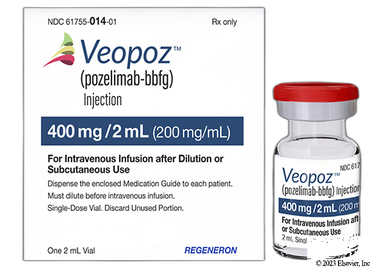
Veopoz
Veopoz (pozelimab) is a monoclonal antibody that's the first and only treatment for a rare genetic problem called CD55-deficient protein-losing enteropathy (CHAPLE disease). It can be used in people over the age of 1 with this genetic condition. Veopoz (pozelimab) is given as an injection under the skin once per week. Possible side effects include upper respiratory infections and hair loss.


What is Veopoz (pozelimab)?
What is Veopoz (pozelimab) used for?
- CD55-deficient protein-losing enteropathy (CHAPLE disease)
How Veopoz (pozelimab) works
CHAPLE disease is an autoimmune condition, which means that the body's immune system becomes overactive and starts attacking itself. This condition causes many problems in the body, including a loss of proteins through the gut and life-threatening complications like blood clots, infections, and malnutrition.
Veopoz (pozelimab) is a monoclonal antibody that works as a complement inhibitor. It blocks proteins that are part of the body's immune system called complement proteins from turning on. Veopoz (pozelimab) stops your immune system from being overactive and attacking your own body.
Drug facts
| Common Brands | Veopoz |
|---|---|
| Drug Class | Complement inhibitor |
| Controlled Substance Classification | Not a controlled medication |
| Generic Status | No lower-cost generic available |
| Availability | Prescription only |

Side effects of Veopoz (pozelimab)
The following side effects may get better over time as your body gets used to the medication. Let your healthcare provider know immediately if you continue to experience these symptoms or if they worsen over time.
Common Side Effects
- Upper respiratory infections (30%)
- Bone fracture (30%)
- Hives (20%)
- Hair loss (20%)
Less Common Side Effects
- Injection-site reactions, like red or irritated skin
Veopoz (pozelimab) serious side effects
Contact your healthcare provider immediately if you experience any of the following.
- Serious infections: fever, weakness, chills, trouble breathing, cough, diarrhea, stomach pain, burning when you urinate, urinating more or less often, neck pain, neck stiffness, confusion, severe headache
- Severe allergic reaction: rash, trouble breathing, feeling faint, swelling of the face or throat
The following Veopoz (pozelimab) side effects have also been reported
Side effects that you should report to your care team as soon as possible:
- Allergic reactions—skin rash, itching, hives, swelling of the face, lips, tongue, or throat
- Fever, neck pain or stiffness, sensitivity to light, headache, nausea, vomiting, confusion, which may be signs of meningitis
- Infection—fever, chills, cough, sore throat, wounds that don't heal, pain or trouble when passing urine, general feeling of discomfort or being unwell
Side effects that usually do not require medical attention (report these to your care team if they continue or are bothersome):

Pros and cons of Veopoz (pozelimab)
Pros
- Can lower the number of hospitalizations and protein transfusions for people with CHAPLE disease
- Given once per week
- Can use in children as young as 1 year old
Cons
- Must be given as an injection by a healthcare provider
- Raises the risk for serious infections
- Doesn't cure CHAPLE disease

Pharmacist tips for Veopoz (pozelimab)

- Before you start Veopoz (pozelimab), you'll need to be fully vaccinated against meningococcal disease (e.g., meningitis). This medication can raise your risk of getting this serious and sometimes life-threatening infection. Getting vaccinated can help lower your risk for serious meningococcal disease during treatment. Ask your provider whether you need to get any vaccinations before and during treatment.
- Carry the Patient Safety Card for Veopoz (pozelimab) about your high risk for serious infections with you at all times during treatment and for 3 months after your last dose. Get medical help right away if you have any signs of infection, like a fever, cough, trouble breathing, weakness, sweating, chills, neck pain or stiffness, or severe headache.
- Mark your appointments on your calendar to see your provider and get your Veopoz (pozelimab) injections. This helps you remember to see your provider on time so you don't miss any doses. It also makes sure your treatment is monitored properly.
- Call your provider if you accidentally miss an appointment for your Veopoz (pozelimab) injection. Depending on when it was originally scheduled for, you might be able to reschedule your appointment or you might just wait for your next weekly injection.
- When you get Veopoz (pozelimab) for the first time, your provider will infuse the medication through your vein over a 1-hour period. For all the rest of your doses, your provider will inject Veopoz (pozelimab) once per week under the skin of your stomach, thigh, or upper arm.
- After each of your first two Veopoz (pozelimab) injections, your healthcare team will observe you for about 30 minutes for any allergic reactions and make sure you're tolerating the medication well. Your providers might ask you to stay for a while after your other Veopoz (pozelimab) injections as well.
- Tell your provider if you're pregnant, thinking of becoming pregnant, or breastfeeding. It's not completely known how safe Veopoz (pozelimab) is for babies and whether it passes into breast milk.

Risks and warnings for Veopoz (pozelimab)
Veopoz (pozelimab) can cause some serious health issues. This risk may be even higher for certain groups. If this worries you, talk to your doctor or pharmacist about other options.
Serious infections
- Risk factors: Current infection | Past infections that keep coming back | Other conditions that raise your risk of infection | Taking medications that weaken your immune system
 Veopoz (pozelimab) can affect the body's ability to fight off infections. This can raise the risk for serious infections, especially meningitis but also pneumonia and Hib disease. Before you start Veopoz (pozelimab), you must be up-to-date on your meningitis vaccinations to help lower your risk for serious infection. Your provider will check whether you need any vaccinations before and during treatment with Veopoz (pozelimab). Your provider will also routinely examine you for infections. Let your provider know right away if you notice any signs of infection like fever, chills, body aches, cough, neck pain or stiffness, or severe headache.
Serious allergic reactions
Serious allergic reactions to medications like Veopoz (pozelimab) are possible, including life-threatening reactions like anaphylaxis (e.g., closing of the throat). Get medical attention right away if you notice dizziness, nausea, a choking sensation, trouble breathing, swelling around your eyes, or swelling of the lips or tongue after you get your Veopoz (pozelimab) injection.

Veopoz (pozelimab) dosage
Typical dosage for Veopoz (pozelimab)
- Day 1: The typical dose is 30 mg/kg of body weight infused into the veins (intravenously or IV) once.
- Day 8 and onwards: The typical dose is 10 mg/kg injected under the skin once per week. The maximum dose is 800 mg once weekly.

Veopoz (pozelimab) contraindications
Contraindications are specific health conditions or situations in which a person should not take a medication due to safety concerns. If you have any of the following conditions or if any of the following apply to you, let your healthcare provider know because Veopoz (pozelimab) will not be safe for you to take.
- Meningococcal disease that hasn't been treated

Veopoz (pozelimab) images