


Can You Take Cold and Flu Medications Like Mucinex to Treat COVID-19?
Cold and flu medications can’t treat COVID-19, but they could help with some of the symptoms. Here’s some of the best OTC medicines to take for COVID.
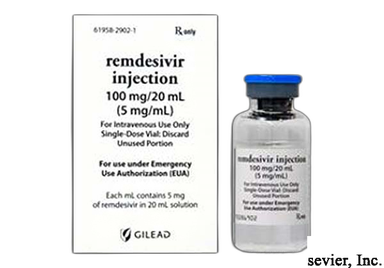
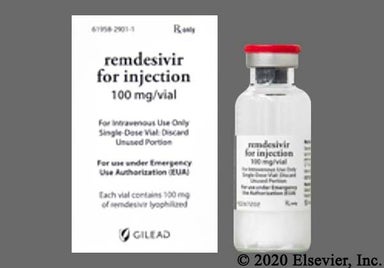
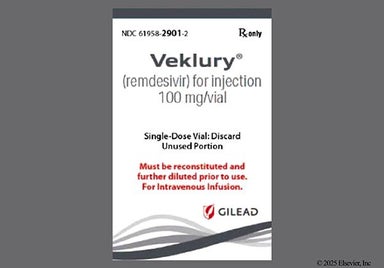
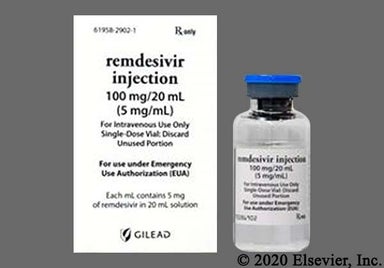
Veklury (remdesivir) is an intravenous (IV) medication used to treat coronavirus disease 2019 (COVID-19) in certain people. It was FDA-approved in October 2020 during the coronavirus pandemic. While the medication was originally only approved for people aged 12 years and older, Veklury (remdesivir) can now be used for people as young as 28 days old. Veklury (remdesivir) is only given in a hospital or a clinic.

Treatment of COVID-19 infection in people aged 28 days or older and weigh at least 3 kg (6.6 lbs), and are either: - Hospitalized or - Not hospitalized but have mild-to-moderate COVID-19 and are at high risk of developing severe COVID-19
Veklury (remdesivir) is a SARS-CoV-2 nucleotide analog RNA polymerase inhibitor. It blocks a protein that the COVID-19 virus needs to make copies of itself and grow.
More specifically, Veklury (remdesivir) looks like one of the building blocks of RNA. RNA is the genetic material of SARS-CoV-2 (the virus that causes COVID-19). When Veklury (remdesivir) is present, it can get pulled into the virus’ RNA when it tries to replicate and spread. This prevents the COVID-19 virus from spreading because it used the wrong building material.
| Common Brands | Veklury |
|---|---|
| Drug Class | Antiviral |
| Controlled Substance Classification | Not a controlled medication |
| Generic Status | No lower-cost generic available |
| Availability | Prescription only |

The following side effects may get better over time as your body gets used to the medication. Let your healthcare provider know immediately if you continue to experience these symptoms or if they worsen over time.
Contact your healthcare provider immediately if you experience any of the following.
Side effects that you should report to your care team as soon as possible:
Side effects that usually do not require medical attention (report these to your care team if they continue or are bothersome):




Veklury (remdesivir) can cause some serious health issues. This risk may be even higher for certain groups. If this worries you, talk to your doctor or pharmacist about other options.
Veklury (remdesivir) can cause serious allergic reactions, such as changes in blood pressure or heart rate, low oxygen levels, trouble breathing, wheezing, sweating, rash, and swelling of your face, lips, tongue, or throat. Most of these reactions have occurred within one hour of receiving the medication. Depending on your risk for these reactions, you might need to receive your Veklury (remdesivir) infusions for a longer period of time. Your provider will monitor you for signs and symptoms during and after your treatment for at least one hour.
Veklury (remdesivir) can cause changes in your liver tests, which can be a sign of liver problems. Because of this risk, your provider will likely have you do blood work to monitor your liver before and during your treatment. If you develop any symptoms of liver damage, such as dark urine, pain in the upper right area of your stomach, jaundice, or loss of appetite, let your provider know right away.
Veklury (remdesivir) can interact with other medications, including chloroquine and hydroxychloroquine (Plaquenil). Taking these medications with Veklury (remdesivir) can affect how well the drug works against the COVID-19 virus. Be sure your provider knows all of the medications you are taking, including vitamins and herbal supplements, before you receive Veklury (remdesivir).

Veklury (remdesivir) is given by a healthcare provider in the hospital or clinic.
The total number of days you receive treatment will depend on if you're in the hospital or clinic, and how severe your condition is.

Treatment of COVID-19 infection in people aged 28 days or older and weigh at least 3 kg (6.6 lbs), and are either: - Hospitalized or - Not hospitalized but have mild-to-moderate COVID-19 and are at high risk of developing severe COVID-19




Prescription savings
Stop paying too much for your prescriptions. Compare prices, get pharmacy coupons, and save up to 80%. Find expert answers to your health questions so you can make the best decisions for yourself and your family.
Health conditions
Medications & treatment
Access & affordability
 Our monthly healthcare membership can help you save thousands on your prescription costs.
Resources

The sooner you receive Veklury the better. In order for it to work properly, the medication needs to be given within the first 7 days after your symptoms start.
Veklury works pretty well to treat COVID-19. In studies with certain people who weren't hospitalized, Veklury lowered the risk of hospitalization or death by about 87%. But for people who are hospitalized, the information is a lot more variable.
There's a chance Veklury won't work against all COVID-19 variants (different versions of the virus due to changes in its genetic material). But the way in which it works can make it more likely to be active against certain COVID-19 variants. In a study, Veklury worked well against the Delta and Omicron variants in particular. It's also expected to work against the Omicron BA.2 subvariant.
It's not known if Veklury is safe to use during pregnancy. If you're pregnant, talk to your provider to see if this medication is right for you. If you use Veklury during your pregnancy, there is a registry available that will collect information about your health and the health of your baby. You or your provider can call 1-800-616-3791 or go to https://covid-pr.pregistry.com to enroll.
It's not known whether Veklury can pass into your breast milk or if it'll affect your milk supply. If you're breastfeeding, speak with your provider. Make sure you follow CDC-recommended practices to avoid exposing your baby to COVID-19.
