Vaxchora
Vaxchora is a vaccine that protects you from getting cholera from a bacteria called Vibrio cholerae (V. cholerae). It's an oral vaccine that you'll need to drink at your healthcare provider's office at least 10 days before you travel to an area affected by cholera. Vaxchora might be hard to find because the manufacturer temporarily paused making this vaccine starting May 2021.


What is Vaxchora?
What is Vaxchora used for?
- Prevention of cholera in people 2 to 64 years old traveling to areas known to have V. cholerae.
How Vaxchora works
Vaxchora is a live, attenuated vaccine that protects you from V. cholerae, which is a bacteria that causes a condition known as cholera. The exact way that this vaccine works is unknown. It's thought that after you drink this vaccine, the weakened version of V. cholerae makes copies of itself in your gut. Your body's immune system then makes antibodies against the weakened bacteria. These antibodies will help you fight against the actual V. cholerae if it infects your body during your travels.
Drug facts
| Common Brands | Vaxchora |
|---|---|
| Drug Class | Vaccine |
| Controlled Substance Classification | Not a controlled medication |
| Generic Status | No lower-cost generic available |
| Availability | Prescription only |

Side effects of Vaxchora
The following side effects may get better over time as your body gets used to the medication. Let your healthcare provider know immediately if you continue to experience these symptoms or if they worsen over time.
Common Side Effects
Side effects seemed to be more common in children between 12 to 17 years old, compared with younger children or adults 18 years and older.
- Headache (up to 45%)
- Tiredness (up to 41%)
- Stomach pain (38%)
- Nausea or vomiting (up to 22%)
- Loss of appetite (up to 29%)
Less Common Side Effects
- Diarrhea (4%)
The following Vaxchora side effects have also been reported
Side effects that you should report to your care team as soon as possible:
- Allergic reactions—skin rash, itching, hives, swelling of the face, lips, tongue, or throat
Side effects that usually do not require medical attention (report these to your care team if they continue or are bothersome):

Get your GoodRx coupon

Pros and cons of Vaxchora
Pros
- Only need to take 1 dose for a full course
- Taken by mouth, so good for people who don't like injections
- Can be given to children as young as 2 years old
Cons
- Need to take it at your provider's office
- Can't eat or drink 1 hour before and after taking this vaccine
- Can't use if you've taken an antibiotics within the past 2 weeks because Vaxchora won't work as well
- Need to take it at least 10 days before traveling to an area with cholera, so not good for last minute travels

Pharmacist tips for Vaxchora

- While Vaxchora lowers your risk for cholera, it won't completely prevent you from getting infected. Please follow the CDC's guidelines to prevent cholera spread and infection when traveling to an area that's known to have cholera
- Don't eat or drink 1 hour before and after receiving Vaxchora.
- You'll take Vaxchora at your provider's office. After your provider mixes and prepares the vaccine for you, you must drink it within 15 minutes. Make sure to drink the whole dose all at once.
- The most common side effects from Vaxchora include tiredness, headache, stomach pain, and nausea. You typically experience them within 7 days after receiving the vaccine. Talk to your provider if you have questions about the side effects of this vaccine.
- Make sure to wash your hands very well after using the bathroom and before cooking or serving food for at least 14 days after you receive Vaxchora. This vaccines is made up of a weaker version of the bacteria that causes cholera. You'll pass this bacteria in your stool for at least 7 days after you've received the vaccine. Even though it's a weakened form, the bacteria from the vaccine might still make some people sick if they get in contact with it, so take care to protect those who live in close contact with you from infection.
- If you're traveling to an area with both cholera and malaria and you plan to also take medication to prevent malaria, talk with your provider first. You'll need to take certain malaria prevention medications at least 10 days before Vaxchora. Taking them too close together might cause Vaxchora to not work well.
- If you're pregnant and have decided to use Vaxchora after talking with your provider, make sure to register in the pregnancy registry by calling 1-800-533-5899.
- Make sure to keep a record of all your immunizations and show it to your provider or pharmacist before receiving any vaccine, including Vaxchora, to make sure you're receiving all your vaccines on schedule.
- Read the vaccine information statement for more information on Vaxchora.
- If you get a severe reaction to Vaxchora, you or your provider can report it to the vaccine adverse event reporting system (VAERS) website or by calling 1-800-822-7967.

Risks and warnings for Vaxchora
Vaxchora can cause some serious health issues. This risk may be even higher for certain groups. If this worries you, talk to your doctor or pharmacist about other options.
Maintain necessary precautions
Taking Vaxchora doesn't guarantee you won't get infected with V. cholerae. For the best protection against cholera, you should take Vaxchora and also take all necessary precautions to avoid getting sick from unclean food and drinks, such as avoiding raw foods, street food, bushmeat (animals not typically eated in the United States), tap water, fountain drinks, ice, and freshly squeezed juice. Get medical help right away if you experience symptoms of cholera, such as watery diarrhea, vomiting, feeling thirsty, leg cramps, restlessness, or feeling irritated.
Risk of spreading cholera to others
- Risk factors: Not washing hands after using the bathroom | Not washing hands before preparing food | Living with people who have a poor immune system | Living in close contact with other people
After taking Vaxchora, you'll pass a weakened version of the bacteria that cause cholera in your stool for at least 7 days. While this weakened bacteria is unlikely to make people sick with cholera, there's still a chance that some people can get sick, especially if they have a poor immune system. That's why it's important to wash your hands very well with soap and water after you use the bathroom, and before you prepare food.

Vaxchora dosage
 Carton
| Dosage | Quantity | Price as low as | Price per unit |
|---|---|---|---|
| 2 packets | 1 carton | $299.99 | $299.99 |

How much does Vaxchora cost?
$299.99

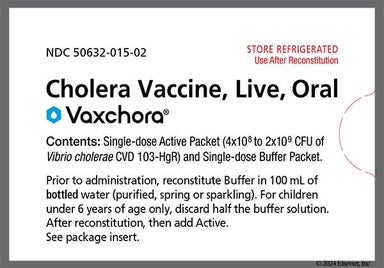
Vaxchora images