Key takeaways:
Topical triamcinolone (Triderm, Triasil) is a prescription corticosteroid that treats skin-related conditions. Topical triamcinolone is generally quite affordable, and it’s typically covered by most prescription insurance plans.
Triamcinolone lotion and topical spray tend to cost more than cream or ointment. Without insurance, a 30 g tube of triamcinolone 0.1% cream costs an average of $13.36.
How much triamcinolone costs without insurance can vary based on where you live and the dose and form you’re prescribed. To save money, consider using a free GoodRx discount, comparing pharmacy prices, or applying funds from a health savings account.
Save on related medications
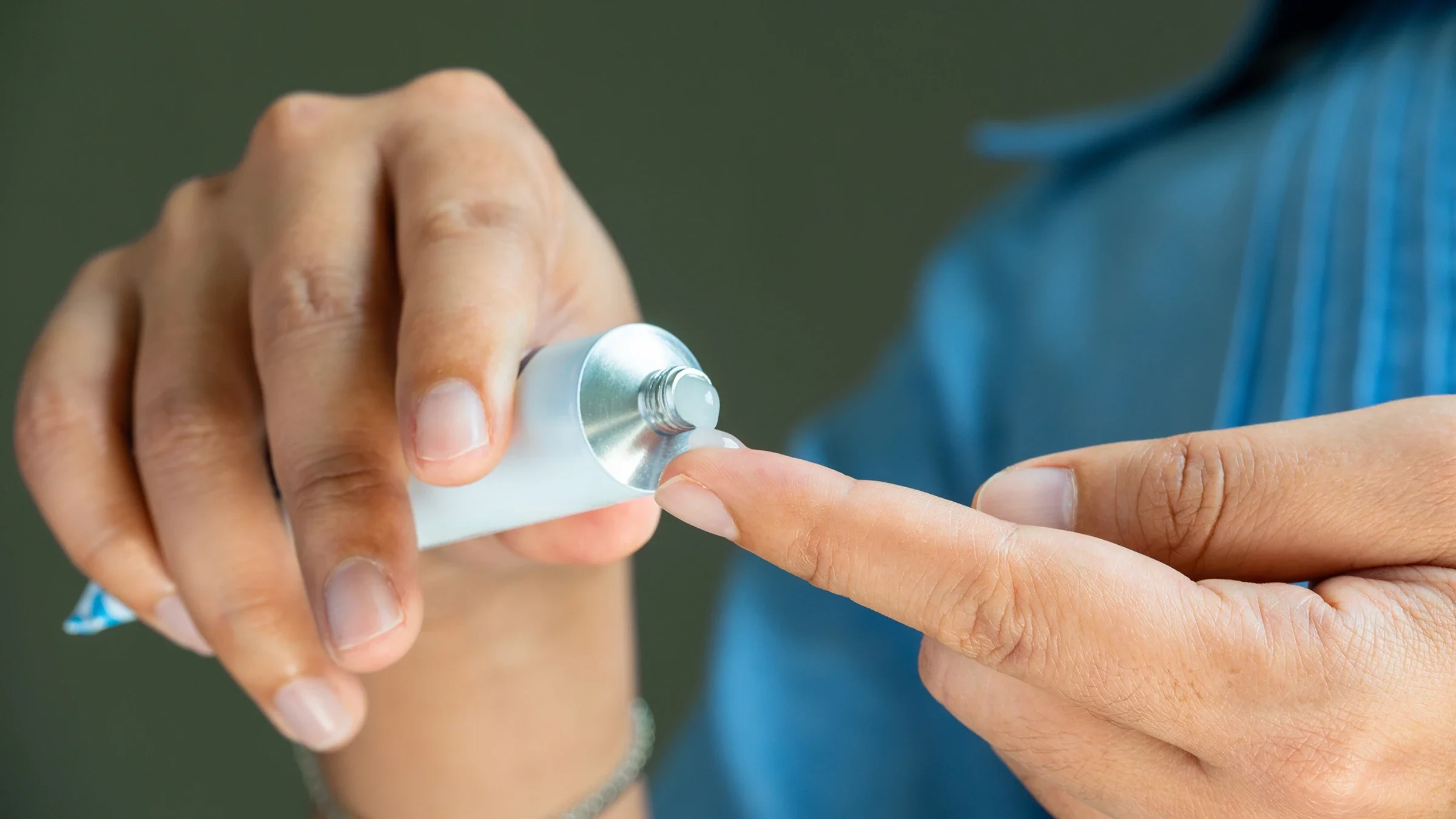
Triamcinolone (Triderm, Triasil) is a prescription corticosteroid. It’s available in a wide variety of topical formulations, such as cream, ointment, and even spray. Topical triamcinolone helps treat inflammatory skin conditions such as eczema and psoriasis in adults and children.
Topical triamcinolone is generally quite affordable, and most insurance plans cover it. Let’s review how much you can expect to pay for different forms of topical triamcinolone without insurance, along with ways to save on the cost of your prescription.
How much does topical triamcinolone cost without insurance?
Triamcinolone’s cost without insurance varies depending on what form and dose you’re prescribed. Generally speaking, triamcinolone topical spray and lotion tend to cost more than cream or ointment.
The chart below lists the average cash price of the most common forms of topical triamcinolone.
Generic triamcinolone product | Average retail price |
|---|---|
0.025% lotion, 60 mL | |
0.025% cream, 454 g (1 lb) jar | |
0.025% ointment, 454 g (1 lb) jar | |
0.025% cream, 15 g | |
0.025% ointment, 15 g | |
0.1% lotion, 60 mL | |
0.1% cream, 454 g (1 lb) jar | |
0.1% ointment, 454 g (1 lb) jar | |
0.1% cream, 30 g | |
0.1% ointment, 30 g | |
0.5% cream, 15 g | |
0.5% ointment, 15 g | |
0.147 mg/g spray, 63 g |
What factors affect the cost of triamcinolone?
What you pay for triamcinolone can vary based on several factors
Location: GoodRx research shows that prescription costs can vary based on where you live. Cities such as New York and Little Rock, Arkansas, often have higher costs, while costs in Atlanta and Houston tend to fall below the national average.
Pharmacy: The cash price of triamcinolone can vary among pharmacies — even in the same city. You can use GoodRx to compare prices among pharmacies in your area.
Insurance: If you have insurance, your plan’s formulary (list of covered medications) will determine if triamcinolone is covered and how much you’ll pay. Deductibles, copays, and coinsurance can also affect your cost.
Generic vs. brand-name: Generic forms of triamcinolone typically cost less than the brand-name versions.
Dose, dosage form, and quantity: As mentioned, triamcinolone spray and lotion tend to cost more than cream or ointment. The potency of the topical triamcinolone product can also affect the cost. And finally, the larger the container size, the more you can expect to pay.
Does insurance cover triamcinolone?
Affordable Care Act (ACA) marketplace plans cover topical triamcinolone for most enrollees, with no prior authorization or step therapy requirements.
About 99% of people with commercial insurance plans have access to triamcinolone. Some people in these plans may need prior authorization, but step therapy isn’t typically required. Prior authorization means that your prescriber must provide clinical information to the insurance company in order for it to approve your coverage for the medication.
Medicare covers triamcinolone for most people, usually with no requirements for prior authorization or step therapy. Nearly all Medicaid enrollees have coverage for triamcinolone, with very few needing prior authorization or step therapy.
You can learn more about your insurance costs and coverage by reviewing your health plan’s formulary and summary of benefits and coverage.
How different insurance plans cover triamcinolone
The following table shows the likelihood of coverage, as well as prior authorization and step therapy requirements, for triamcinolone 0.1% cream based on the type of insurance plan.
Insurance type | Enrollees covered for triamcinolone 0.1% cream | Enrollees required to get a prior authorization | Enrollees required to do step therapy |
|---|---|---|---|
87.4% | 0% | 0% | |
Commercial plans (not including ACA plans) | 98.8% | 2.0% | 0.08% |
Medicare (Medicare Advantage and Part D plans) | 98.7% | 0% | 0% |
Medicaid, including state-run and managed care plans | 99.9% | 0.2% | 0.14% |
Source: Managed Markets Insight & Technology, LLC™, as of December 13, 2024. (See methodology below)
If triamcinolone isn’t covered by your insurance, you have several options:
Request a formulary exception: Ask your insurance company to make an exception and cover triamcinolone for you. If they deny your request, you have the right to file an appeal.
Talk to your prescriber: They can prescribe a different form of triamcinolone or an alternative medication that’s covered by your insurance plan or comes at an affordable cash price.
Consider a different insurance plan: During your next open enrollment period, compare insurance plans to find one that offers better prescription medication coverage and has triamcinolone in its formulary.
Ways to save on triamcinolone
Topical triamcinolone is generally affordable, but there are still several ways to reduce your cost.
1. Use a GoodRx coupon
A GoodRx coupon can help lower the cost of triamcinolone at many pharmacies. Using the price comparison tool, you can find the best deals in your area. Simply visit www.goodrx.com or download the GoodRx app to access your coupon.
Here’s what you might pay for triamcinolone using a GoodRx coupon:
Generic triamcinolone product | Average retail price | GoodRx price |
|---|---|---|
0.025% lotion, 60 mL | ||
0.025% cream, 454 g (1 lb) jar | ||
0.025% ointment, 454 g (1 lb) jar | ||
0.025% cream, 15 g | ||
0.025% ointment, 15 g | ||
0.1% lotion, 60 mL | ||
0.1% cream, 454 g (1 lb) jar | ||
0.1% ointment, 454 g (1 lb) jar | ||
0.1% cream, 30 g | ||
0.1% ointment, 30 g | ||
0.5% cream, 15 g | ||
0.5% ointment, 15 g | ||
0.147 mg/g spray, 63 g |
To get your discount:
Visit www.goodrx.com or download the app.
Search for “triamcinolone” and click on “Find the lowest prices.”
Select your dose, dosage form, and package size.
Choose how you’d like to receive the discount, either by text or email, or you can print it out. If you’re using the app, keep the discount ready on your phone or save it to your digital wallet.
Tell the pharmacist you’ll be using a GoodRx discount before they process your prescription to help avoid delays at checkout.
2. Compare pharmacy prices
Not all pharmacies charge the same price for prescription medications. This is true for triamcinolone, so it pays to shop around. A few phone calls or an online search can help you find the best price in your area.
3. Tap into your HSA, FSA, or HRA
If you have a health savings account (HSA), flexible spending account (FSA), or health reimbursement arrangement (HRA), you can use it to help cover your out-of-pocket costs for triamcinolone. These tax-advantaged healthcare accounts let you pay for eligible expenses with tax-free dollars.
Pay directly with your HSA or FSA card at the pharmacy, or cover the cost yourself and submit a request for reimbursement. The funds in HSAs and HRAs typically roll over annually, but you have to use your FSA dollars before the deadline or they’ll expire.
Frequently asked questions
Topical triamcinolone is considered a medium-potency steroid. It’s only available by prescription, so it’s stronger than an over-the-counter steroid cream, such as hydrocortisone. But it isn’t as potent as other prescription steroids, such as clobetasol (Clobex) or fluocinonide (Vanos).
It depends on what type of rash it is and where it’s located. Hydrocortisone is a lower-potency topical steroid. It’s typically better for mild skin irritation or for treating areas with thin skin (such as your face). Triamcinolone is more potent, so it’s effective for more serious skin conditions or areas where the skin is thicker and harder to penetrate, such as a psoriasis rash. Your best bet is to speak to a healthcare professional, who can determine the cause of your rash and the best treatment option for it.
Topical triamcinolone can have side effects if you use it daily for a long period of time. These can include redness, changes to skin color, and thinning of the skin. More serious side effects can also happen with long-term use — especially if you’re applying triamcinolone to a large area of your body. You should only apply triamcinolone every day if your prescriber recommends it. It’s also a good idea to check in with them about other treatment options that may be safer or more effective for long-term use.
Topical triamcinolone is considered a medium-potency steroid. It’s only available by prescription, so it’s stronger than an over-the-counter steroid cream, such as hydrocortisone. But it isn’t as potent as other prescription steroids, such as clobetasol (Clobex) or fluocinonide (Vanos).
It depends on what type of rash it is and where it’s located. Hydrocortisone is a lower-potency topical steroid. It’s typically better for mild skin irritation or for treating areas with thin skin (such as your face). Triamcinolone is more potent, so it’s effective for more serious skin conditions or areas where the skin is thicker and harder to penetrate, such as a psoriasis rash. Your best bet is to speak to a healthcare professional, who can determine the cause of your rash and the best treatment option for it.
Topical triamcinolone can have side effects if you use it daily for a long period of time. These can include redness, changes to skin color, and thinning of the skin. More serious side effects can also happen with long-term use — especially if you’re applying triamcinolone to a large area of your body. You should only apply triamcinolone every day if your prescriber recommends it. It’s also a good idea to check in with them about other treatment options that may be safer or more effective for long-term use.
The bottom line
Topical triamcinolone (Triderm, Triasil) is a prescription corticosteroid that treats skin-related conditions. Topical triamcinolone is generally quite affordable, and it’s typically covered by most prescription insurance plans.
Triamcinolone lotion and topical spray tend to cost more than cream or ointment. Without insurance, a 30 g tube of triamcinolone 0.1% cream costs an average of $13.36. This can vary based on factors such as where you live, which pharmacy you use, and the dose and form of triamcinolone you’re prescribed. To save money, consider using a free GoodRx discount, comparing pharmacy prices, or applying funds from a health savings account.

Why trust our experts?



Methodology
We obtained national prescription coverage data for each medication from Managed Markets Insight & Technology (MMIT). The data reflects health insurance coverage as of December 2024.
We calculated the percentage of enrollees in plans that cover each medication by dividing the number of enrollees covered for the medication within a specific insurance channel (e.g., ACA, Medicare, Medicaid) by the total number of enrollees in all plans within that channel.
We determined the percentage of enrollees in plans with a prior authorization requirement by calculating the proportion of enrollees in plans that required prior authorization for the medication within each channel.
Finally, we measured the percentage of enrollees in plans with a step therapy requirement by calculating the proportion of enrollees in plans that imposed step therapy requirements for the medication in each channel.
These estimates, derived from national MMIT coverage data, provide insight into health insurance coverage for each medication. They take into account restrictions such as prior authorization, step therapy, and quantity limits. The percentages are expressed relative to the total number of enrollees covered by various insurance channels, including ACA plans, commercial (excluding ACA) plans, Medicare, and Medicaid (both state-run and managed care plans).
References
Medicaid.gov. (n.d.). Managed care. Centers for Medicare & Medicaid Services.