


4 Birth Control Pills That Treat Acne: Recommended Brands and FAQs
Birth control pills Yaz and Ortho Tri-Cyclen are FDA approved to treat acne. Check out the best birth control pill for acne and learn how they work.
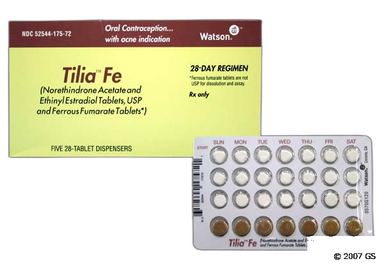
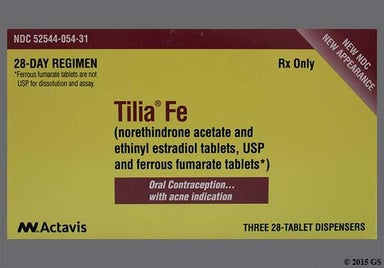
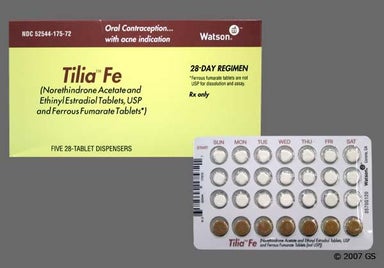
Tilia Fe is a type of combined oral contraceptive (COC), or birth control, that's taken by mouth every day to prevent pregnancy. It's a triphasic birth control, meaning it has three different phases of hormones that try to mimic (are similar to) the rise and fall of hormones in the menstrual cycle. Some people find triphasic birth controls, like Tilia Fe, more complicated to take, especially if they need to make up for a missed dose.

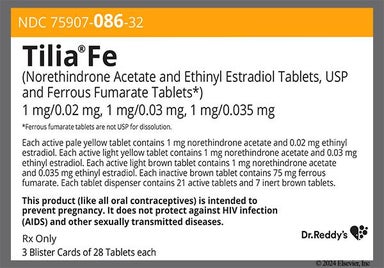
Tilia Fe is a combination medication that contains two hormones, norethindrone (a progestin) and ethinyl estradiol (an estrogen). Both hormones work together to prevent pregnancy by:
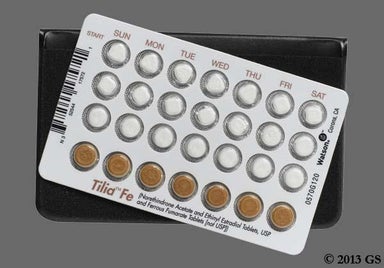
Tilia Fe also contains placebo (hormone-free or inactive) tablets with ferrous fumarate. This is an iron supplement which helps to lower your risk for low iron levels or anemia during the days when you're taking the placebo tablets. The days you're taking the placebo tablets are the days you're most likely to have your period, so supplementing iron during this time can be helpful.
| Common Brands | Tilia Fe, Tri-Legest Fe, Estrostep Fe |
|---|---|
| Drug Class | Estrogen / Progestin combined contraceptive |
| Controlled Substance Classification | Not a controlled medication |
| Generic Status | Lower-cost generic available |
| Availability | Prescription only |

The following side effects may get better over time as your body gets used to the medication. Let your healthcare provider know immediately if you continue to experience these symptoms or if they worsen over time.
Contact your healthcare provider immediately if you experience any of the following.
Side effects that you should report to your care team as soon as possible:
Side effects that usually do not require medical attention (report these to your care team if they continue or are bothersome):




Tilia Fe can cause some serious health issues. This risk may be even higher for certain groups. If this worries you, talk to your doctor or pharmacist about other options.
 If you smoke cigarettes, using combined oral contraceptives (COCs), like Tilia Fe, raises your risk for serious health problems, such as strokes, heart attacks, and blood clots. Females age 35 years and older who smoke are at even higher risk for these problems. If you smoke, talk with your provider about safer birth control alternatives.
Tilia Fe raises your risk of blood clots. These clots can occur anywhere in your body, including your lungs (pulmonary embolism or PE), legs (deep vein thrombosis or DVT), brain (stroke), and heart (heart attack). Get emergency help right away if you have any signs of a blood clot:
If you need to have surgery, tell your provider you're taking Tilia Fe. They might have you stop taking it 4 weeks before until 2 weeks after your surgery to lower your risk of blood clots. If you recently delivered a baby, you shouldn't start Tilia Fe until 4 weeks after delivery if you're not breastfeeding your child.
People who take Tilia Fe can sometimes experience irregular bleeding and spotting, especially during the first 3 months of taking this medication. Irregular bleeding can vary from slight staining to bleeding similar to a regular period. This problem might be temporary, so continue taking your medication as directed. Let your provider know if the bleeding is a problem for you and they can change your birth control. If you missed your period(s), contact your provider or get a pregnancy test to make sure you're not pregnant.
Tilia Fe can raise your blood pressure, so make sure you check your blood pressure while you're taking this medication. The risk is higher in females who are older and have been taking birth control for a long period of time. Tilia Fe can't be taken by females who have high blood pressure that's not under control. Speak to your provider if this medication raises your blood pressure, and they can help you pick a different method of birth control that's safer for you.
Tilia Fe can raise your blood sugar and cholesterol levels. Speak with your provider before starting Tilia Fe if you have diabetes, prediabetes, or high cholesterol. If you choose to take Tilia Fe with those health conditions, your provider will monitor you regularly.
Study results are mixed, but there's a possibility that Tilia Fe and other COCs can raise your risk for breast and cervical cancer.
Don't take Tilia Fe if you currently have or have had breast cancer because some types of breast cancer grow faster in the presence of estrogen, a hormone in this medication. The risk of developing breast cancer might be slightly higher in females who currently take COCs, have taken them within the past 6 months, or are taking them for a long time (8 years or more). You can examine your breasts regularly at home or get yearly breast exams with your healthcare provider to help with early breast cancer detection. Let your provider know if you notice any new or abnormal lumps, pain, or swelling in your breasts.
Make sure you follow up with your provider to get proper screenings for cervical cancer. Report any signs of vaginal bleeding or discharge that's not normal.
Don't take Tilia Fe if you have liver problems, such as sudden liver infection caused by a virus, severe (decompensated) scarring of the liver, or liver tumors. Although rare, Tilia Fe can raise your risk of benign liver tumors. If you experience signs of liver problems, you should stop taking Tilia Fe and ask your provider for a different type of birth control. Signs of liver problems can include jaundice (yellowing of the skin or eyes), along with fever, tiredness, loss of appetite, or dark colored urine. People with liver problems might have trouble breaking down hormones.
Talk to your provider before starting Tilia Fe if you are taking Viekira Pak (dasabuvir / ombitasvir / paritaprevir / ritonavir) to treat hepatitis C. This medication can cause liver problems if you are taking it together with a COC. Stop taking Tilia Fe and discuss other birth control options with your provider if you need to start your treatment for hepatitis C. You can restart Tilia Fe 2 weeks after your Viekira Pak treatment is complete.
Let your provider know if you experience new or worsening migraines or headaches while taking Tilia Fe. You will have to stop your medication if your migraine or headache doesn't go away or becomes severe.
Let your provider know if you experience symptoms of depression or worsening depression while taking Tilia Fe. In cases of serious depression, your provider might have you stop taking it.

 Package
| Dosage | Quantity | Price as low as | Price per unit |
|---|---|---|---|
| 28 tablets | 3 packages | $53.62 | $17.87 |


Contraindications are specific health conditions or situations in which a person should not take a medication due to safety concerns. If you have any of the following conditions or if any of the following apply to you, let your healthcare provider know because Tilia Fe will not be safe for you to take.




Prescription savings
Stop paying too much for your prescriptions. Compare prices, get pharmacy coupons, and save up to 80%. Find expert answers to your health questions so you can make the best decisions for yourself and your family.
Health conditions
Medications & treatment
Access & affordability
Medication discounts

Tilia FE is called a triphasic birth control because it contains three different phases of hormone levels throughout the first three weeks. It tries to mimic your natural hormone levels more closely. Your provider can help you determine if this is the right medication for you based on the amount of hormones that your body might need.
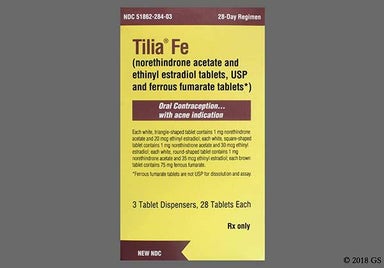
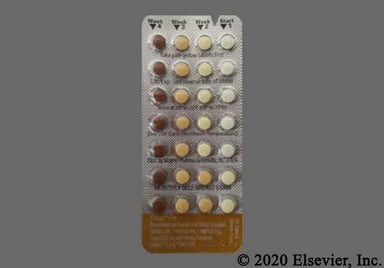
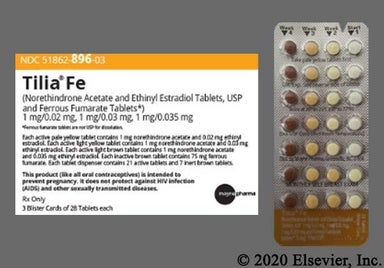
As mentioned above, Tilia FE has three different combinations of hormone levels. The first three weeks are "active" pills, which means that they contain hormones. The fourth week is made up of "inactive" pills, which don't have hormones. Tilia FE is made up of four different sets of colored pills, each with different dosages of hormones (or no hormones in the case of the inactive, placebo pills). It's important for you to take the tablets in the correct order so your body can follow the appropriate hormone levels.
Yes, Tilia FE is FDA-approved to treat moderate acne in certain people. If you're at least 15 years old, you're already planning on using a COC for birth control, you plan to stay on it for at least 6 months, and topical acne medications haven't helped, then your provider might consider prescribing Tilia FE to treat your acne. Tilia FE helps with acne by lowering the amount of testosterone in your body. This leads to less oil production and clogging of the pores of the skin, which can prevent acne.
It's important for you to take Tilia FE every day to prevent pregnancy. But if you missed a dose, your next steps depend on when you missed it and how many pills you missed. If you only missed 1 pill, you can take the missed pill as soon as you remember and continue taking the next pill at your regular time. If you missed pills multiple days in a row, you might have to take 1 or 2 pills on the same day to make up for it. Or you might have to throw away your current pack and start a new pack. Since Tilia FE is a triphasic birth control, it can be more complicated to make up for missed pills. Make sure to follow the instructions on the patient information sheet that was provided with your medication, or contact your provider or pharmacist. Also, ask them if you need to use another method of birth control to prevent pregnancy during this time.
Small amounts of Tilia FE can pass into your breast milk and affect your baby. This can lead to side effects in your baby, such as yellowing of the skin and eyes (jaundice) and large breasts. This medication can also lower the amount and quality of your breast milk, so it's not recommended to use until after you've stopped breastfeeding. It's best to speak to your provider to see which form of birth control is safe for you and your baby while you're breastfeeding.
