

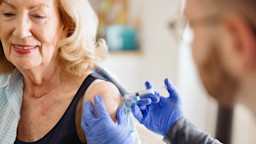
How Much Does the RSV Vaccine Cost?
The RSV vaccine for adults can cost about $350 without insurance. But it is covered by many insurance plans, including Medicare. Find out prices and ways to save.
Synagis (palivizumab) is a monoclonal antibody. It's given to prevent serious respiratory syncytial virus (RSV) infections in infants and young children who are at high risk for severe illness. Synagis (palivizumab) is injected into the muscle monthly, starting right before and continuing throughout the RSV season. Some of the more common side effects of this medication include fever and rash.

Prevention of serious respiratory syncytial virus (RSV) infections for:
Synagis (palivizumab) is an injection of monoclonal antibodies that can recognize the respiratory syncytial virus (RSV). If RSV enters the body, these antibodies can stop the virus from entering your cells and spreading. This means that RSV is less likely to cause serious lung problems.
| Common Brands | Synagis |
|---|---|
| Drug Class | Monoclonal antibody |
| Controlled Substance Classification | Not a controlled medication |
| Generic Status | No lower-cost generic available |
| Availability | Prescription only |

The following side effects may get better over time as your body gets used to the medication. Let your healthcare provider know immediately if you continue to experience these symptoms or if they worsen over time.
Contact your healthcare provider immediately if you experience any of the following.




Synagis (palivizumab) can cause some serious health issues. This risk may be even higher for certain groups. If this worries you, talk to your doctor or pharmacist about other options.
In some rare cases, children receiving Synagis (palivizumab) have had serious allergic reactions, including hives, itching, sudden drop in blood pressure, trouble breathing, and swelling of the face and throat. It can happen during the first dose of Synagis (palivizumab) or any of the following doses. If your child experiences a serious allergic reaction to Synagis (palivizumab), they should never receive the medication again.
Synagis (palivizumab) is given as an injection into the muscle and should be used with caution in children with certain blood problems. Talk to your provider if your child has a history of low platelets or bleeding problems.
Once-a-month Synagis (palivizumab) is only studied for prevention of RSV, not for treatment. If your child has developed RSV, however, you should still continue to get Synagis (palivizumab) monthly because it's possible to get RSV more than once a season.

Your child's provider will determine the dose based on your child's body weight.

Contraindications are specific health conditions or situations in which a person should not take a medication due to safety concerns. If you have any of the following conditions or if any of the following apply to you, let your healthcare provider know because Synagis (palivizumab) will not be safe for you to take.

Prevention of serious respiratory syncytial virus (RSV) infections for:


Prescription savings
Stop paying too much for your prescriptions. Compare prices, get pharmacy coupons, and save up to 80%. Find expert answers to your health questions so you can make the best decisions for yourself and your family.
Health conditions
Medications & treatment
Access & affordability
 Our monthly healthcare membership can help you save thousands on your prescription costs.
Resources

No, Synagis isn't a RSV vaccine; but rather, it's a monoclonal antibody. RSV vaccines are made up of pieces of RSV that trigger your body to make antibodies that help you fight against RSV in the future. Synagis is already made up of antibodies that can recognize and prevent the spread of RSV in the body.
Synagis and Beyfortus are both monoclonal antibody shots given to young children to prevent serious illness from RSV. But your child's provider might recommend one over the other based on your child's age, risks for RSV, and other health conditions. One of the main difference between Synagis and Beyfortus is that Synagis is given monthly throughout the RSV season, whereas a single Beyfortus injection is enough to provide protection for the entire RSV season. Ask your child's primary care provider if you've more questions about the two medications.
Synagis has been FDA-approved for children ages 2 years and younger. Though rare, there have been cases of serious allergic reactions in young children receiving injections. If this occurs, the clinic staff will provide supportive care for your child. Depending on how serious the reaction was, your child might not be able to receive future doses of Synagis.
Yes. According to the American Academy of Pediatrics, Synagis doesn't interfere with the body's immune response to live or inactivated vaccines. This means that your child can continue to get their childhood vaccines as scheduled.
Synagis works well to prevent serious illness caused by RSV in high-risk babies. A study of babies born premature or with BPD showed that children who received Synagis were 55% less likely to go to the hospital for respiratory problems from RSV compared to those who received placebo.
Synagis is typically given every month for the duration of the RSV season, which can vary based on where you live.
Synagis is given as a shot in the front of your child's thigh muscle.
Each injection of Synagis provides protection from RSV for about 1 month. In order to continue protecting your child throughout RSV season, it's important they get their shot every 28-30 days.
