





EpiPen Cost: Ways to Save, Alternatives, and More
An EpiPen can cost around $650-$700 without insurance. Get tips for saving on EpiPens, including ways to find coupons and cheaper alternatives.
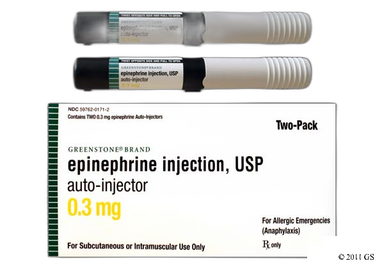
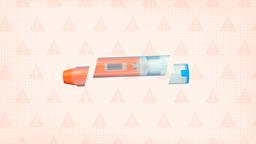
Epinephrine (Epipen), also known as the hormone adrenaline, is a life-saving injectable medication used to ease symptoms of anaphylaxis. It's available as a pre-filled syringe and auto-injector device that you inject into the muscle or under the skin of the middle of the outer thigh. Epinephrine (Epipen) can stabilize your blood pressure and heart rate, as well as ease your breathing. Side effects of this medication include restlessness, high blood pressure, and fast heart rate.

Epinephrine (Epipen) is a non-selective alpha- and beta-adrenergic receptor agonist that acts on receptors throughout the body. In doing so, it keeps your blood pressure from dropping too low, raises your heart rate, and opens your lungs so you can breathe normally. It also helps with swelling, itching, rashes, hives, and stomach issues linked to an allergic reaction.
| Common Brands | EpiPen, EpiPen Jr, Adrenaclick, Symjepi |
|---|---|
| Drug Class | Adrenergic receptor agonist |
| Controlled Substance Classification | Not a controlled medication |
| Generic Status | Lower-cost generic available |
| Availability | Prescription only |

The following side effects may get better over time as your body gets used to the medication. Let your healthcare provider know immediately if you continue to experience these symptoms or if they worsen over time.
Contact your healthcare provider immediately if you experience any of the following.
Along with its needed effects, a medicine may cause some unwanted effects. Although not all of these side effects may occur, if they do occur they may need medical attention.
Check with your doctor immediately if any of the following side effects occur:
Incidence not known
Abnormal or decreased touch sensation
arm, back, or jaw pain
bleeding, blistering, burning, coldness, discoloration of the skin, feeling of pressure, hives, infection, inflammation, itching, lumps, numbness, pain, rash, redness, scarring, soreness, stinging, swelling, tenderness, tingling, ulceration, or warmth at the injection site
blurred vision
chest pain, tightness, heaviness, or discomfort
cold, pale, or bluish color of the skin of the fingers or toes
confusion
difficulty in speaking
dizziness
double vision
fainting
fast, slow, irregular, pounding, or racing heartbeat or pulse
headache
inability to move the arms, legs, or facial muscles
inability to speak
numbness, tingling, or pain in the fingers
paleness of the skin
pounding in the ears
restlessness
shakiness in the legs, arms, hands, or feet
slow speech
sweating
trembling or shaking of the hands or feet
trouble breathing
unusual tiredness or weakness
vomiting
Get emergency help immediately if any of the following symptoms of overdose occur:
Symptoms of overdose
Agitation
coldness of the skin
confusion
decreased awareness or responsiveness
decreased urine output
drowsiness
hostility
irritability
lightheadedness
loss of consciousness
muscle twitching
rapid weight gain
rapid, deep breathing
seizures
severe sleepiness
stomach cramps
swelling of the face, ankles, or hands
unusual drowsiness, dullness, or feeling of sluggishness
Other side effects not listed may also occur in some patients. If you notice any other effects, check with your healthcare professional.
Call your doctor for medical advice about side effects. You may report side effects to the FDA at 1-800-FDA-1088.




Epinephrine (Epipen) can cause some serious health issues. This risk may be even higher for certain groups. If this worries you, talk to your doctor or pharmacist about other options.
Get medical help right away after you use epinephrine (Epipen), even if you start feeling better. It's best to have a healthcare provider monitor your condition just in case the symptoms come back or if you require additional treatments. Epinephrine (Epipen) can't replace immediate medical attention.
Epinephrine (Epipen) is only meant to be injected into the muscle or under the skin of the outer thigh. Don't injected it by any other route or into any other area of the body. Doing so can lead to serious medical problems.
If you're giving epinephrine (Epipen) to a child, try your best to hold the child's leg firmly in place and to prevent them from moving too much or kicking to prevent needle injuries.
Serious skin infections are rare, but can happen after using epinephrine (Epipen). To lower this risk, don't inject this medication into the buttock area. If you notice the epinephrine (Epipen) injection site becomes red, warm, swollen, or tender, seek medical care so you can be tested for an infection and receive treatment, if needed.
Epinephrine (Epipen) might contain sulfites. But if you're experiencing a severe, life-threatening allergic reaction and have an allergy to sulfites, you should still use epinephrine (Epipen) because it's a life-saving medication.
Epinephrine (Epipen) raises blood pressure and heart rate. Let your provider know if you experience any trouble breathing, chest pain, dizziness, changes in vision, or headache. These could be signs that your blood pressure or heart rate is too high and you might need to receive treatment after your allergic reaction is gone.

 Package
| Dosage | Quantity | Price as low as | Price per unit |
|---|---|---|---|
| 2 auto-injectors of 0.3mg | 1 package | $175.90 | $175.90 |
Your provider will prescribe epinephrine (Epipen) based on your body weight. Epinephrine (Epipen) is available as a prefilled syringe or device that contains a single and complete dose.
You can inject the medication into the muscle or under the skin in the middle of the outer thigh (even through clothing) when you feel an allergic reaction. Call 911. While you're waiting for help to arrive, you can repeat the dose if symptoms don't go away.
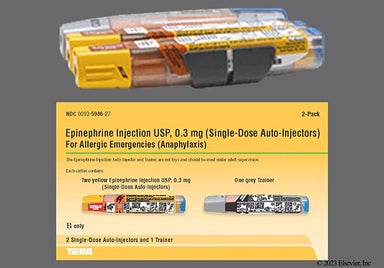
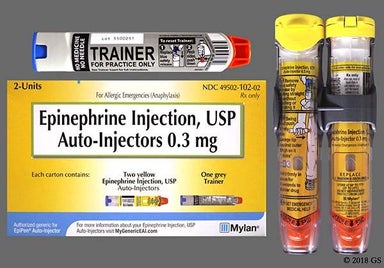
Epinephrine injection is available in multiple brand names (e.g., EpiPen, EpiPen Jr, Symjepi).

Although certain medicines should not be used together at all, in other cases two different medicines may be used together even if an interaction might occur. In these cases, your doctor may want to change the dose, or other precautions may be necessary. When you are taking this medicine, it is especially important that your healthcare professional know if you are taking any of the medicines listed below. The following interactions have been selected on the basis of their potential significance and are not necessarily all-inclusive.
Using this medicine with any of the following medicines is not recommended. Your doctor may decide not to treat you with this medication or change some of the other medicines you take.
Using this medicine with any of the following medicines is usually not recommended, but may be required in some cases. If both medicines are prescribed together, your doctor may change the dose or how often you use one or both of the medicines.
Using this medicine with any of the following medicines may cause an increased risk of certain side effects, but using both drugs may be the best treatment for you. If both medicines are prescribed together, your doctor may change the dose or how often you use one or both of the medicines.











Prescription savings
Stop paying too much for your prescriptions. Compare prices, get pharmacy coupons, and save up to 80%. Find expert answers to your health questions so you can make the best decisions for yourself and your family.
Health conditions
Medications & treatment
Access & affordability
Medication discounts

At the first sign of a severe allergic reaction, inject Epinephrine (Epipen) into the muscle, or under the skin, into the side of your thigh. If needed, you can give Epinephrine (Epipen) through clothing. Never inject Epinephrine (Epipen) into the veins or into any other part of your body. Each pre-filled syringe or device contains one dose. Each brand-name product of epinephrine might have slightly different directions. Make sure to review the instructions for your particular product and ask your provider or pharmacist if you have any questions.
Epinephrine (Epipen) works very quickly to relieve symptoms of a serious allergic reaction. But its effects don't last very long. Remember to get medical help right away after you use Epinephrine (Epipen). This is because Epinephrine (Epipen) wears off quickly and there's a risk that you can have another reaction in minutes or hours. If needed, you can give yourself another dose of Epinephrine (Epipen) while waiting for medical help to arrive. But if you need more than two doses of Epinephrine (Epipen), it should be done under the supervision of a healthcare provider. This is because you might need to use other medications and possibly stay in the hospital to treat your severe allergic reactions.
Yes, Epinephrine (Epipen) raises your blood pressure and heart rate. A severe allergic reaction is life-threatening because it can cause your blood pressure and heart rate to drop. So Epinephrine (Epipen) is helpful in someone who's having an allergic reaction because it raises blood pressure and heart rate so that blood continues to flow properly throughout your body.
Yes, epinephrine (also called the hormone adrenaline) is a hormone that's normally made in your adrenal glands. The overall purpose of epinephrine is to prepare your body for the "fight-or-flight" response to stress. It does this by raising your heart rate and blood pressure and opening your airways to make it easier to breathe. Epinephrine (Epipen) is a synthetic (man-made) version of natural epinephrine that has these same actions in your body during an allergic reaction.
No, epinephrine isn't a steroid; it's a hormone. But epinephrine can cause your body to release cortisol, which is a steroid hormone.
