Key takeaways:
Spravato (esketamine) is a ketamine-based nasal spray that’s FDA-approved to treat severe depression in adults. It’s given by a healthcare professional in a medical setting.
Common Spravato side effects include dissociation (feeling disconnected from your mind or body), drowsiness, and dizziness. More serious side effects include high blood pressure, slowed breathing, and misuse.
Most Spravato side effects are mild and short-lived. Your healthcare team will watch you closely for at least 2 hours after each dose of Spravato.
Recently, ketamine infusions have been in the spotlight as a depression treatment. But at this time, injectable ketamine isn’t FDA-approved for this use.
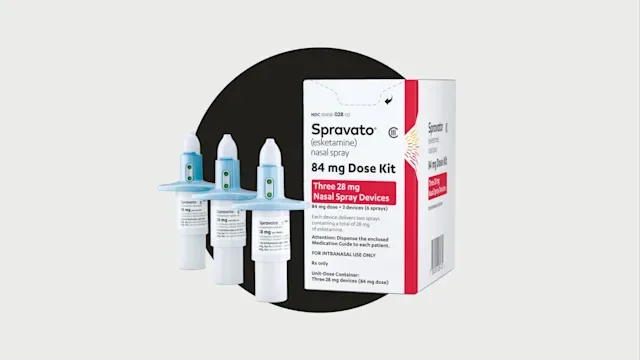
Spravato (esketamine) is the only FDA-approved ketamine-based treatment for severe or treatment-resistant depression. It comes as a nasal spray that’s administered in the presence of a healthcare professional. Even though Spravato has been called a game changer for fast depression relief, there are still some important side effects to be aware of before you use it. Here’s what you should know.
Spravato side effects at a glance
Below is a list of common and rare Spravato side effects reported in clinical studies as well as real-world use. Most side effects resolve on their own within 2 hours of receiving Spravato. You’ll remain under medical supervision during this time so your healthcare team can manage any side effects that occur.
Common and mild Spravato side effects include:
Sleepiness
Nausea and vomiting
Dissociation (feeling detached from reality)
Dizziness
Vertigo
Headache
Lethargy (feeling sluggish or drained of energy)
Euphoric mood
Nose or throat irritation
Altered taste
Dry mouth
Diarrhea or constipation
Anxiety
Increased heart rate
Feeling of intoxication
Blurred vision
Numbness to touch
Rare but serious Spravato side effects include:
High blood pressure
Hallucinations (seeing or hearing things that other people don’t)
Loss of consciousness
Spravato also has a few boxed warnings, which is the FDA’s most serious drug warning. These include:
Slowed breathing, dissociation, and sedation after administration
Potential for abuse and misuse
Suicidal thoughts and behaviors
Below, we’ll talk more in-depth about nine Spravato side effects and how to manage them.
Good to know: You shouldn’t receive Spravato if you’re pregnant, breastfeeding, or planning to become pregnant. The medication can cause harm to your baby.
1. Dissociation
Dissociation — feeling disconnected from your mind or body — is a common Spravato side effect, especially after your first few doses.
Dissociation symptoms tend to peak 30 to 40 minutes after receiving your dose and go away after 2 hours in most cases. The feeling is usually mild but can cause anxiety for some people. And in rare cases, more severe dissociation symptoms occur, including hallucinations.
A healthcare professional should watch you closely for at least 2 hours after each Spravato dose. Additionally, the following tips might help you during your appointment:
Engage in breathing and mindfulness exercises
Listen to calming music on your phone or other device
Ask your medical care team if a friend or family member can be with you for support
Dissociation rarely continues beyond 2 hours. Still, it’s possible to have lingering effects for a day or two after receiving Spravato. So plan on having a ride home after your treatment. You should also avoid any task that requires alertness for 24 hours.
2. Drowsiness
Drowsiness after receiving Spravato is usually mild and goes away the same day. Plan on resting after you get home from your Spravato treatment. As mentioned, avoid driving or other activities that require alertness. If you live alone, ask a friend or family member to check in on you. And if you still feel more tired than usual a day or two later, let your prescriber know.
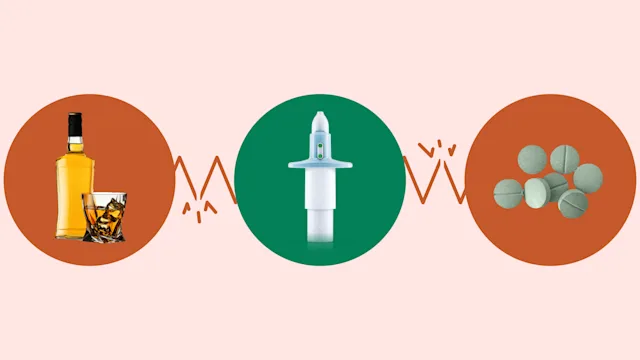
It’s also a good idea to avoid other sedating medications while you’re being treated with Spravato unless your prescriber recommends them. Examples include benzodiazepines, opioids, and sleeping pills.
Keep in mind that Spravato is sometimes prescribed along with oral antidepressants, many of which can cause ongoing drowsiness. But if drowsiness persists or becomes bothersome, talk to your healthcare team for guidance.
3. Dizziness
You might feel lightheaded after receiving Spravato. A spinning sensation (vertigo) can also occur. Lying down might help you cope with dizziness.
You’ll remain under medical supervision for at least 2 hours after your dose before you can go home. In most cases, dizziness will pass during this time. But be sure to let your prescriber know if it doesn’t.
On days you receive Spravato, be careful when changing positions — such as standing up from a sitting position — and take it slow. Staying hydrated and eating regularly may help you feel better.
Reach out to your prescriber if dizziness continues the next day or is severe. They may recommend a lower Spravato dose for your next treatment, since dizziness tends to be more likely with higher doses.
4. Nausea and vomiting
It’s common to feel a wave of nausea shortly after receiving Spravato. Vomiting is also possible, but it’s less common.
To lower the risk of nausea and vomiting, stop eating at least 2 hours before (and drinking fluids at least 30 minutes before) your Spravato dose.
Let your prescriber know if nausea is an issue for you during your treatment. Some medications, such as Zofran (ondansetron), may help treat nausea caused by Spravato. Your prescriber may also recommend taking an anti-nausea medication before your next Spravato dose to help prevent it.
5. Altered taste and dry mouth
Some people experience a foul or metallic taste in their mouth after receiving Spravato. This may happen because the nasal spray can drain into your throat, leaving an aftertaste. Dry mouth, nasal discomfort, and throat irritation are also possible.
Masking the aftertaste with something fruit-flavored may help. Consider bringing juice or a flavored beverage to drink after your Spravato dose is administered. If this still doesn’t do the trick, the bad taste should go away by the end of the day.
6. Increased blood pressure
Some people may experience an increase in blood pressure after receiving Spravato. This could happen any time you receive the medication, even if you haven’t experienced it in the past.
Your healthcare team should check your blood pressure before and after each Spravato dose. For most people, blood pressure normalizes within 2 to 4 hours. But if you experience any serious symptoms when you get home, such as chest pain or shortness of breath, seek emergency medical attention.
Good to know: People with a history of heart problems may be more likely to experience blood pressure problems from Spravato. So make sure to share your complete health history with your prescriber before starting Spravato.
7. Slowed breathing
There have been some reports of serious breathing problems with Spravato. This is extremely rare, but your risk may be higher if you consume other medications or substances that can slow breathing. Giving your prescriber a list of all your medications will help them check for this interaction. And let your prescriber know if you drink alcohol regularly, which can also contribute to slowed breathing (and worsen depression).
The risk of slowed breathing from Spravato is part of the reason you’ll stay at your prescriber’s office for at least 2 hours after receiving your dose. During this time, your healthcare team should monitor your oxygen levels. But let them know right away if at any point you feel like you can’t stay awake or you’re going to pass out.
8. Suicidal thoughts and behaviors
Spravato is approved for people with depression who are having suicidal thoughts or behaviors. But in rare cases, people have experienced worsening depression or thoughts of suicide while receiving Spravato.
This side effect isn’t common. But it’s a good idea to have a plan in place in case it happens. Consider the following tips:
Arrange for frequent check-ins with your support system (such as family, friends, and healthcare professionals).
Discuss other treatment options with your prescriber if Spravato hasn’t helped after 4 weeks of treatment.
Watch for worsening depression and mood changes and seek medical care if they occur.
If you or someone you know is having thoughts of suicide, you’re not alone, and help is available. Call the 988 Suicide & Crisis Lifeline at 988, or text HOME to 741-741 to reach the Crisis Text Line.
9. Misuse
Spravato is a controlled substance. This means it has a risk for dependence and misuse. Because of this (and the risk of high blood pressure and trouble breathing), it’s only given in a healthcare professional’s office.
Both you and your prescriber must enroll in Spravato’s Risk Evaluation and Mitigation Strategy (REMS) program before you can receive it. This is a drug safety program required by the FDA to manage the risks of certain medications. You should only receive Spravato that’s FDA-approved and administered by a healthcare professional.
Spravato misuse is unlikely to be an issue if you’re receiving Spravato as recommended. Misuse is more likely if you’re using non-FDA-approved compounded nasal sprays or if you’re administering Spravato yourself at home. Misuse is also more likely if you have a history of substance use disorder. Your prescriber should discuss the risks and benefits of Spravato with you to make sure it’s a safe option.
If you or someone you know struggles with substance use, help is available. Call SAMHSA’s National Helpline at 1-800-662-4357 to learn about resources in your area.
Frequently asked questions
There isn’t a set timeframe for Spravato treatment. It varies based on your symptoms and how you respond to the medication. Some people may only receive Spravato twice a week for 4 weeks while waiting for an oral antidepressant to start working. Others may continue Spravato treatment long term. Your prescriber will work with you to determine the best course of treatment for your needs.
Ketamine can cause kidney and bladder issues. But this isn’t a common side effect of Spravato. These issues are more likely with recreational use of ketamine outside of medical supervision. That being said, in rare cases, Spravato may cause painful or frequent urination. Let your prescriber know if these symptoms occur.
No, Spravato treatment isn’t associated with any liver issues. But Spravato side effects may last longer for those living with liver problems. So you may need to remain under supervision for longer than 2 hours after receiving your dose. Spravato isn’t recommended for those living with severe liver problems.
Headaches were a relatively common Spravato side effect in clinical trials. But researchers did not report whether or not these included migraines. Migraine triggers can vary from person to person. So it’s possible that Spravato could trigger a migraine for some people. But researchers have also studied Spravato as an off-label migraine treatment. So the actual risk of migraines during Spravato treatment is unclear.
There isn’t a set timeframe for Spravato treatment. It varies based on your symptoms and how you respond to the medication. Some people may only receive Spravato twice a week for 4 weeks while waiting for an oral antidepressant to start working. Others may continue Spravato treatment long term. Your prescriber will work with you to determine the best course of treatment for your needs.
Ketamine can cause kidney and bladder issues. But this isn’t a common side effect of Spravato. These issues are more likely with recreational use of ketamine outside of medical supervision. That being said, in rare cases, Spravato may cause painful or frequent urination. Let your prescriber know if these symptoms occur.
No, Spravato treatment isn’t associated with any liver issues. But Spravato side effects may last longer for those living with liver problems. So you may need to remain under supervision for longer than 2 hours after receiving your dose. Spravato isn’t recommended for those living with severe liver problems.
Headaches were a relatively common Spravato side effect in clinical trials. But researchers did not report whether or not these included migraines. Migraine triggers can vary from person to person. So it’s possible that Spravato could trigger a migraine for some people. But researchers have also studied Spravato as an off-label migraine treatment. So the actual risk of migraines during Spravato treatment is unclear.
The bottom line
Common Spravato (esketamine) side effects include dissociation (feeling disconnected from mind or body), drowsiness, and dizziness. You may also experience nausea and vomiting, altered taste, or a temporary increase in blood pressure. More serious Spravato side effects include breathing problems, suicidal thoughts and behaviors, and misuse.
You’ll be monitored at your prescriber’s office for at least 2 hours after receiving your Spravato dose. Most side effects should resolve within this timeframe. Still, avoid driving and other tasks that require attention until the day after receiving your dose. And let your care team know if you notice any lingering side effects. If you experience any severe symptoms, such as chest pain, trouble breathing, or severe mood changes, seek emergency care.

Why trust our experts?




References
Bahr, R., et al. (2019). Intranasal esketamine (Spravato) for use in treatment-resistant depression in conjunction with an oral antidepressant. Pharmacy and Therapeutics.
Ballard, E. D., et al. (2020). The role of dissociation in ketamine’s antidepressant effects. Nature Communications.
Bell, F. (2023). Acute suicidal ideation in the context of esketamine maintenance therapy. The American Journal of Psychiatry.
Bossaller, N. A., et al. (2020). Real-world approach to managing dysgeusia following the use of esketamine nasal spray: A case report. Annals of General Psychiatry.
Boudieu, L., et al. (2023). The efficacy and safety of intranasal formulations of ketamine and esketamine for the treatment of major depressive disorder: A systematic review. Pharmaceutics.
Chiappini, S., et al. (2025). Comparative safety of prescribed Esketamine and ketamine in relation to renal and urinary disorders: A pharmacovigilance perspective. Progress in Neuro-Psychopharmacology and Biological Psychiatry.
Doherty, T., et al. (2020). Cardiac safety of esketamine nasal spray in treatment-resistant depression: Results from the clinical development program. CNS Drugs.
Guo, H., et al. (2022). Neurological adverse events associated with esketamine: A disproportionality analysis for signal detection leveraging the FDA adverse event reporting system. Frontiers in Pharmacology.
Janssen Pharmaceuticals. (n.d.). What is the Spravato REMS (Risk Evaluation and Mitigation Strategy).
Janssen Pharmaceuticals. (2023). Spravato- esketamine hydrochloride solution [package insert].
McIntyre, R. S., et al. (2021). Synthesizing the evidence for ketamine and esketamine in treatment-resistant depression: An international expert opinion on the available evidence and implementation. American Journal of Psychiatry.
National Institute of Diabetes and Digestive and Kidney Diseases. (2012). Esketamine. LiverTox.
Price, M. Z., et al. (2024). Benefits and risks of esketamine nasal spray continuation in treatment-resistant depression. Biomarkers in Neuropsychiatry.
Srirangam, S., et al. (2012). Ketamine bladder syndrome: An important differential diagnosis when assessing a patient with persistent lower urinary tract symptoms. BMJ Case Reports.
U.S. Food & Drug Administration. (2022). FDA alerts health care professionals of potential risks associated with compounded ketamine nasal spray.
Williamson, D., et al. (2023). Adverse events and measurement of dissociation after the first dose of esketamine in patients with TRD. International Journal of Neuropsychopharmacology.
Yuan, H., et al. (2023). Real-world study of intranasal ketamine for use in patients with refractory chronic migraine: a retrospective analysis. Regional Anesthesia & Pain Medicine.
Zaki, N., et al. (2023). Long-term safety and maintenance of response with esketamine nasal spray in participants with treatment-resistant depression: Interim results of the SUSTAIN-3 study. Neuropsychopharmacology.