Key takeaways:
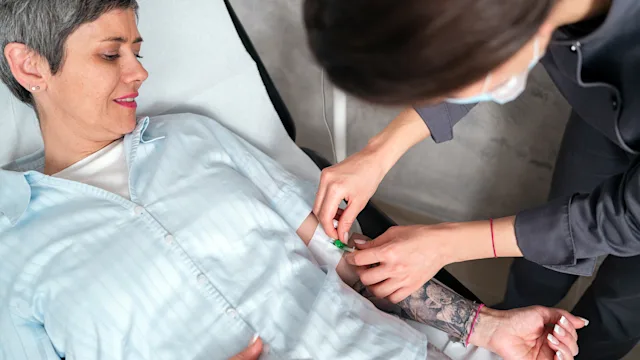
Spravato (esketamine) is a ketamine-based nasal spray that treats certain types of depression. You’ll administer it in a healthcare setting under medical supervision. And you’ll require monitoring for at least 2 hours after each dose.
The recommended Spravato dosage starts with 56 mg or 84 mg twice a week for 4 weeks. For treatment-resistant depression, you may continue with once-weekly treatments after the first 4 weeks.
There are many ways to save on Spravato. If you’re eligible, a manufacturer savings card can help you get Spravato for as little as $10 per treatment. A patient assistance program is also available.
When it comes to treating depression, there are several types of medication to consider. A newer treatment option, called Spravato (esketamine), contains an active ingredient that’s similar to ketamine (Ketalar). But they’re not the same thing, especially when it comes to how they’re administered.
Read on for information about Spravato dosages and what to expect when receiving this depression treatment.
What’s the typical Spravato dosage for adults?
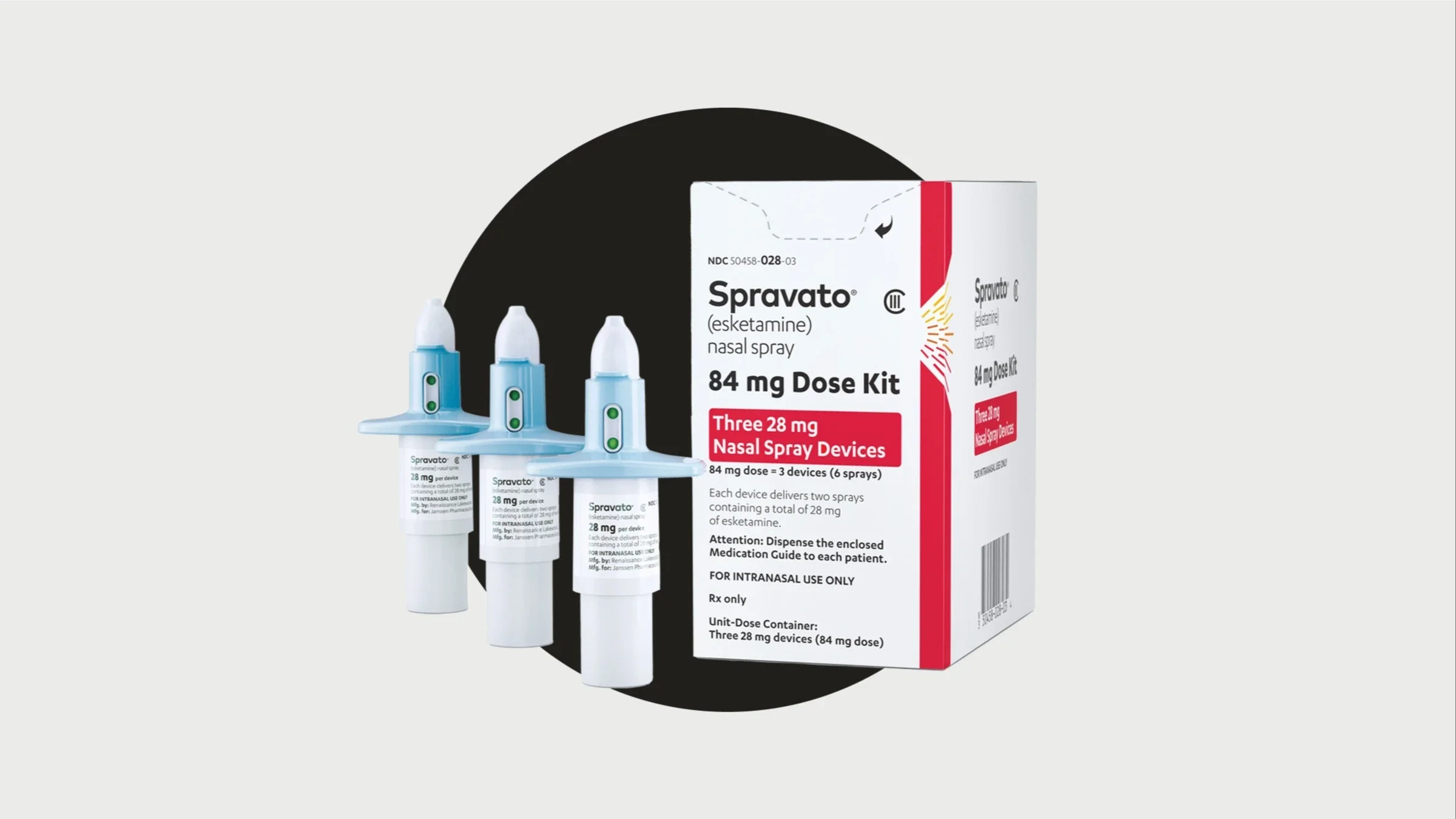
Spravato comes in single-use nasal spray devices that contain one spray for each side of your nose. The two sprays combined contain a total of 28 mg of esketamine. You’ll need to use two devices for a 56 mg dose and three devices for an 84 mg dose.
Spravato is FDA approved for adults only. And you should use Spravato only in a supervised healthcare setting. Your recommended Spravato dosage depends on the condition you’re treating.
Treatment-resistant depression
Spravato dosages for treatment-resistant depression have two phases: an induction (starting) phase and a maintenance phase:
Induction phase: During the induction phase, you’ll receive Spravato twice a week for 4 weeks (Weeks 1 to 4). The first dose of Spravato starts at 56 mg (two sprays in each nostril). After that, your prescriber may keep the dose at 56 mg or increase it to 84 mg (three sprays in each nostril) based on how you respond to the medication.
Maintenance phase: If you respond well to the induction phase of Spravato, you’ll typically receive 56 mg or 84 mg of Spravato once a week for 4 more weeks (Weeks 5 to 8). Starting at Week 9, you can continue with the same weekly dose schedule, or your prescriber may reduce your dosage to 56 mg or 84 mg once every 2 weeks.
In most cases, if you don’t respond well to the induction phase of Spravato, your prescriber will discontinue treatment. You can use Spravato on its own for treatment-resistant depression. But in some cases, your prescriber may have you take an oral antidepressant with it.
Depression with suicidal thoughts or behavior
Spravato is also approved for those experiencing suicidal thoughts and behavior along with depression symptoms. The Spravato dosage for depression with suicidal symptoms is 84 mg twice a week for 4 weeks. If the 84 mg dose isn’t well tolerated, your prescriber may lower your dosage to 56 mg twice a week.
Spravato is approved for this use only if you take an oral antidepressant with it. Spravato hasn’t been studied for longer than 4 weeks for depression with suicidal symptoms. Your prescriber will determine how to proceed after 4 weeks based on your needs.
Are there any dosage adjustments for health conditions?
There aren’t any Spravato dosage adjustments needed based on your age, kidney function, or liver function. But you may need a longer period of observation after receiving Spravato if you have mild or moderate liver problems.
Spravato isn’t recommended if liver problems are severe. Your prescriber can advise you if this restriction applies to you based on your medical history.
How to prepare for a Spravato appointment
It’s best to avoid eating for at least 2 hours before receiving Spravato and to avoid drinking liquids for at least 30 minutes before your treatment. Your prescriber will also check your blood pressure before you receive Spravato to make sure it’s safe to administer.
Here are the steps for administering Spravato:
Blow your nose.
Check the device indicator to make sure there are two green dots showing.
Tilt your head back at a 45-degree angle.
Place the tip of the device into one side of your nose. (You’ll know the tip is inserted far enough when you feel the nose rest press against the skin between your nostrils).
Use your other hand to close the open nostril. Then gently breathe in while you push the plunger until it stops. Remove the device, then sniff gently to keep the medication in your nose.
Repeat in the other nostril with the same device.
Check to make sure the dots on the front of the device are no longer green.
Wait 5 minutes before using a second (or third) device. Do not blow your nose between devices.
A healthcare professional will monitor your breathing and blood pressure for at least 2 hours after every Spravato treatment. This way, serious Spravato side effects can be treated right away if they happen. It’s a good idea to bring comfort items from home, such as a blanket and relaxing music, to use during this time.
You’ll need someone to drive you home after your appointment. And you shouldn’t drive or engage in other activities that require alertness or coordination until the day after receiving Spravato.
What happens if you miss a dose of Spravato?
If you miss a Spravato treatment session, reschedule it as soon as possible. In most cases, you can continue with your current dosing schedule as long as your symptoms aren’t getting worse.
If you miss a treatment session and your symptoms are worsening, let your prescriber know. You may need more frequent treatments to get back on track.
Since you’ll administer Spravato in a healthcare setting, the best way to avoid missing treatments is to schedule your appointments in advance. And be sure to reschedule right away if a conflict arises. It’s a good idea to circle the date in red on your calendar or set an alarm on your smartphone as a reminder.
What should you do if you take too much Spravato?
It’s unlikely that you’ll administer more Spravato than prescribed since you’ll be in a healthcare setting under medical supervision. But if an overdose happens, there’s an increased risk of side effects. These include nausea, high blood pressure, and feeling dizzy or disconnected from yourself.
Serious side effects, such as trouble breathing and suicidal thoughts, are also possible. But in most cases, these can be managed in your prescriber’s office if they occur.
If Spravato is administered outside a healthcare setting (which isn’t recommended), contact Poison Control at 1-800-222-1222 or call 911.
How to save on Spravato
There are ways to save on Spravato, which is available only as a brand-name medication. GoodRx can help you navigate between patient assistance programs and copay savings cards to save money on your prescription.
Save with a copay savings card. If you have commercial insurance, you may be eligible to pay as little as $10 for each Spravato treatment session using a manufacturer savings card. Savings are also available for office visit costs related to the observation period required after each treatment.
Save with patient assistance programs. If you’re uninsured or underinsured, you may be eligible for the manufacturer’s patient assistance program, which offers the medication free of cost.
Good to know: Spravato is administered in a healthcare setting. It’s not a prescription you’ll pick up at a pharmacy. And in some cases, it may be covered by your medical insurance plan instead of your pharmacy insurance plan. Your prescriber’s office can help you determine the best way to access Spravato and apply available savings.
Frequently asked questions
Researchers don’t know exactly how Spravato works for depression. Traditional antidepressants target chemicals such as serotonin and norepinephrine. But Spravato seems to work by affecting levels of a chemical called glutamate, which helps regulate mood. This may be why Spravato works when traditional antidepressant treatments aren’t effective.
Spravato stays in your system for only a day or two after each dose. But its antidepressant effects last much longer for most people. After the first 8 weeks of treatment, you may need a dose of Spravato only once every 2 weeks to manage your symptoms.
To prescribe Spravato, the healthcare office must be registered with the Spravato Risk Evaluation and Mitigation Strategies (REMS) program. This ensures the prescriber is aware of the proper administration practices to help protect your safety. In most cases, you’ll also have to register with the Spravato REMS program before you can start treatment.
Researchers don’t know exactly how Spravato works for depression. Traditional antidepressants target chemicals such as serotonin and norepinephrine. But Spravato seems to work by affecting levels of a chemical called glutamate, which helps regulate mood. This may be why Spravato works when traditional antidepressant treatments aren’t effective.
Spravato stays in your system for only a day or two after each dose. But its antidepressant effects last much longer for most people. After the first 8 weeks of treatment, you may need a dose of Spravato only once every 2 weeks to manage your symptoms.
To prescribe Spravato, the healthcare office must be registered with the Spravato Risk Evaluation and Mitigation Strategies (REMS) program. This ensures the prescriber is aware of the proper administration practices to help protect your safety. In most cases, you’ll also have to register with the Spravato REMS program before you can start treatment.
The bottom line
Spravato (esketamine) is a nasal spray administered in a healthcare setting for certain types of depression. The recommended Spravato dosage starts at 56 mg (two sprays in each nostril) or 84 mg (three sprays in each nostril) twice a week for 4 weeks. For treatment-resistant depression, you may then continue with once-weekly Spravato treatments. In some cases, you may need to take an oral antidepressant along with Spravato.
It’s best to avoid eating at least 2 hours before a Spravato treatment. And you’ll need to be observed by a healthcare professional for at least 2 hours after each dose. It’s best to avoid driving until the day after your Spravato treatment.

Why trust our experts?



References
Janssen Pharmaceuticals. (2026). Spravato- esketamine hydrochloride solution [package insert].
J&J With Me. (n.d.). Johnson & Johnson Patient Assistance Program. Johnson & Johnson.
Johnson & Johnson. (2025). Instructions for use: Spravato nasal spray device.
Medline Plus. (2025). Esketamine Nasal Spray.
Onaolapo, A. Y., et al. (2021). Glutamate and depression: Reflecting a deepening knowledge of the gut and brain effects of a ubiquitous molecule. World Journal of Psychiatry.
Spravato. (n.d.). Spravato REMS (Risk Evaluation and Mitigation Strategy). Janssen Pharmaceuticals.