



What Is Hyperhidrosis? Causes of Excessive Sweating and Treatment Options
What is hyperhidrosis? It’s a condition where you experience excessive sweating. Read more on the symptoms and treatments, and whether you should worry.
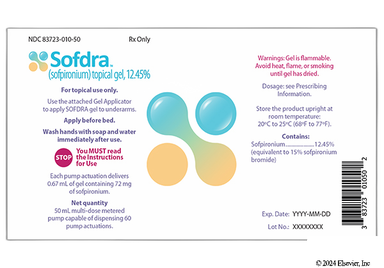
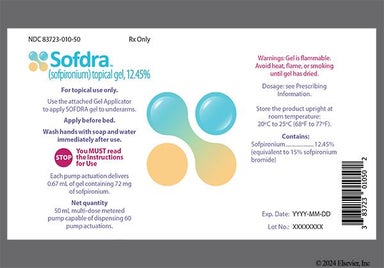
Sofdra (sofpironium) is an anticholinergic medication that treats excessive underarm sweating (primary axillary hyperhidrosis) for people ages 9 and up. It’s a gel that comes in a 50 ml bottle. You use the provided applicator to apply one pump of gel to each underarm once a day at bedtime. Common side effects include dry mouth, blurry vision, and irritation on the application area.

Sofdra (sofpironium) is an anticholinergic medication that works by blocking acetylcholine receptors in your body. Acetylcholine is a chemical that helps nerve cells send signals. It’s responsible for many functions in your body, including telling your sweat glands to make sweat.
When you apply Sofdra (sofpironium) to your underarms, it stops acetylcholine from attaching to its receptors. Without this signal, your sweat glands make less sweat.
| Common Brands | Sofdra |
|---|---|
| Drug Class | Anticholinergic |
| Controlled Substance Classification | Not a controlled medication |
| Generic Status | No lower-cost generic available |
| Availability | Prescription only |

The following side effects may get better over time as your body gets used to the medication. Let your healthcare provider know immediately if you continue to experience these symptoms or if they worsen over time.
Side effects that you should report to your care team as soon as possible:
Side effects that usually do not require medical attention (report these to your care team if they continue or are bothersome):



How to use Sofdra (sofpironium):

Sofdra (sofpironium) can cause some serious health issues. This risk may be even higher for certain groups. If this worries you, talk to your doctor or pharmacist about other options.
Sofdra (sofpironium) can cause difficulty urinating. The risk is higher if you have an enlarged prostate or if the neck of your bladder is blocked (bladder-neck obstruction). If you experience pain or swelling in your lower stomach, trouble urinating, or sudden urge to urinate, stop Sofdra (sofpironium) and talk to your prescriber immediately.
Normally, in hot or warm temperatures, your body produces sweat to cool down and avoid overheating. But Sofdra (sofpironium) works by stopping you from making sweat.
If you notice you aren’t sweating in hot temperatures, stop using Sofdra (sofpironium) and tell your prescriber. Continuing to use Sofdra (sofpironium) can raise your risk of heatstroke or very high fevers. Your risk is higher if you have certain medical conditions like heart problems, high blood pressure, and diabetes. It’s also higher if you take certain medications like diuretics, beta blockers, and antipsychotics.
Sofdra (sofpironium) can cause blurred vision. If you experience blurred vision, stop using Sofdra (sofpironium) until your vision goes back to normal. Also avoid activities that you need to have clear vision for, such as using heavy machinery or driving a car, until symptoms go away.

Apply one pump on each underarm once per day at bedtime.

Contraindications are specific health conditions or situations in which a person should not take a medication due to safety concerns. If you have any of the following conditions or if any of the following apply to you, let your healthcare provider know because Sofdra (sofpironium) will not be safe for you to take.


Prescription savings
Stop paying too much for your prescriptions. Compare prices, get pharmacy coupons, and save up to 80%. Find expert answers to your health questions so you can make the best decisions for yourself and your family.
Health conditions
Medications & treatment
Access & affordability
Medication discounts

Hyperhidrosis is a condition in which your sweat glands make too much sweat. Primary axillary hyperhidrosis happens when you have too much sweat in the armpit or underarm area. If your excessive sweating lasts at least 6 months and you have two or more signs of this condition, talk to a healthcare professional. These signs include one episode of excessive sweating per week, excessive sweating on both underarms, or sweating that stops you from doing everyday activities. Sofdra is an option to help reduce your excessive underarm sweating. Check with your prescriber to see if Sofdra is right for you.
You can apply Sofdra 30 minutes after showering or washing your underarms. But if you’ve already taken a shower or washed your underarms, wait 8 hours before applying the gel. Applying Sofdra and showering immediately after won’t allow the medication to absorb fully. This can affect how well the medication reduces excessive sweating.
No. Using deodorant at the same time as Sofdra can make it harder for your skin to absorb the medication. This can affect how well it works. You can still use deodorant, but apply it 8 hours after Sofdra.
There isn’t enough data to know whether Sofdra is safe in pregnancy. In animal studies, no harmful effects were found after pregnant rabbits and rats were given high doses of injected Sofdra. But animal studies don’t always represent what happens in humans, especially since Sofdra was injected in these studies instead of applied to the skin in humans. If you’re pregnant or planning on becoming pregnant, talk with your prescriber to see if this medication is safe for you.
In a clinical trial in Japan, Sofdra at 5% (a lower strength than the 12.45% used in the U.S.) started working in as quickly as 1 to 2 weeks. But the full effect can take about 6 weeks. Everyone responds differently, so speak with your prescriber if you have more questions.
Yes it does! In a clinical trial in the United States, sweating got better for about 75% of the participants after using Sofdra for 6 weeks. To measure how much people sweat under their arms, researchers used the Hyperhidrosis Disease Severity Measure-Axillary (HDSM-Ax) score. The score ranges from 0 (no sweating) to 44 (severe sweating). After 6 weeks of treatment, the HDSM-Ax score for these participants improved by at least 1 point.
Using other anticholinergic medications (e.g., glycopyrrolate, oxybutynin) can worsen side effects you may experience with Sofdra. These side effects include dry mouth, blurred vision, difficulty urinating, fast heartbeat, and constipation. Consult your prescriber or pharmacist before starting any medications to make sure they don’t interact.
