Romvimza
Romvimza (vimseltinib) is a type of targeted therapy. It helps treat a rare condition called tenosynovial giant cell tumor (TGCT). This medication is an option for adults if surgery could make symptoms from these noncancerous growths worse. Romvimza (vimseltinib) comes as a capsule you take by mouth twice a week, separated by at least 72 hours (3 days). Common side effects include swelling around the eyes, feeling tired, and rash.


What is Romvimza (vimseltinib)?
What is Romvimza (vimseltinib) used for?
- Tenosynovial giant cell tumor (TGCT) in adults with symptoms that could get worse with surgery
How Romvimza (vimseltinib) works
Romvimza (vimseltinib) is a type of kinase inhibitor. More specifically, it works as a CSF1R inhibitor. This means it blocks a protein called CSF1R.
In TGCT, too much signaling from CSF1R tells immune cells to move into the areas of the body around joints and tendons. This forms noncancerous growths that can cause pain, swelling, stiffness, and trouble moving.
By blocking CSF1R, Romvimza (vimseltinib) stops this signaling from happening. This can help shrink or control tumor growth and improve how your joint works.
Drug facts
| Common Brands | Romvimza |
|---|---|
| Drug Class | Kinase inhibitor |
| Controlled Substance Classification | Not a controlled medication |
| Generic Status | No lower-cost generic available |
| Availability | Prescription only |

Side effects of Romvimza (vimseltinib)
The following side effects may get better over time as your body gets used to the medication. Let your healthcare provider know immediately if you continue to experience these symptoms or if they worsen over time.
Common Side Effects
- Higher liver enzyme levels (up to 92%)
- Swelling around the eye (60%)
- Tiredness (59%)
- Rash (47%)
- Higher cholesterol levels (43%)
- Swelling in the hands, legs, or feet (33%)
- Face swelling (31%)
- Lower white blood cell count (up to 31%)
- Itchy skin (29%)
Less Common Side Effects
- High blood pressure
- Nerve problems (numbness or tingling feeling)
- Watery eyes
- Dry eye
- Higher creatinine levels
- Higher magnesium levels
- Lower calcium levels
Romvimza (vimseltinib) serious side effects
Contact your healthcare provider immediately if you experience any of the following.
- Liver injury: yellow skin or eyes, dark urine, pain in the upper ride side of your belly
The following Romvimza (vimseltinib) side effects have also been reported
Side effects that you should report to your care team as soon as possible:
- Allergic reactions—skin rash, itching, hives, swelling of the face, lips, tongue, or throat
- Liver injury—right upper belly pain, loss of appetite, nausea, light-colored stool, dark yellow or brown urine, yellowing skin or eyes, unusual weakness or fatigue
Side effects that usually do not require medical attention (report these to your care team if they continue or are bothersome):

Pros and cons of Romvimza (vimseltinib)
Pros
- An option for TGCT when surgery isn't a good choice
- A pill that's taken only twice a week, with or without food
- Can improve joint function and control tumor growth
Cons
- Often causes swelling around the eyes and in the face, hands, and feet
- Can cause serious liver damage, so need to do blood tests regularly to check safety
- Can interact with some medications, like some heartburn or allergy medications (might need to avoid certain ones to stay safe)

Pharmacist tips for Romvimza (vimseltinib)

- Take Romvimza (vimseltinib) twice a week, at least 72 hours (3 days) apart. Take it on the same days each week. Take it on the same days each week. Set reminders on your calendar. It can also help to pick days of the week that are easy to remember, like days when you have regular weekly plans or activities.
- You can take Romvimza (vimseltinib) with or without food. Whichever way you choose, try to be consistent with what works for you.
- Swallow Romvimza (vimseltinib) capsules whole with water. Don’t open, break, or chew them. That can affect how the medication gets absorbed into your body and how well it works for you. If you have trouble swallowing the capsule whole, talk to your prescriber.
- If you miss a dose of Romvimza (vimseltinib), check how much time has passed. If it's been 48 hours (2 days) or less, take it as soon as you remember. Then, take your next dose on your usually scheduled day. If it's been more than 48 hours (2 days), skip the missed dose and wait for your next scheduled time to take your usual dose.
- Watch for swelling while you're taking Romvimza (vimseltinib). It's common to have swelling around your eye or face with this medication. You might also see swelling of your hands, legs, ankles, or feet. If this happens, take photos or notes and update your care team.
- Tell your care team if any side effects start to bother you, worry you, or get severe while taking Romvimza (vimseltinib). This can include swelling, feeling tired, rash, or itchiness. Your care team can see how they can help or if you need any dose changes.
- It's a good idea to regularly check your blood pressure at home. Romvimza (vimseltinib) can raise your blood pressure. Share your readings with your care team, and let them know if your blood pressure stays higher than usual. They can see if you need help managing your blood pressure.
- Make sure to get blood tests done when your prescriber tells you to while taking Romvimza (vimseltinib). This medication can change your lab results, like your liver tests and white blood cell count. Your care team will check on a schedule during treatment. This helps them catch problems early and adjust your treatment plan if needed. Talk to your prescriber if you have questions about your lab results.
- Tell your care team about all the medications you take or plan to take. Romvimza (vimseltinib) can interact with some medications. Examples include statins, some heartburn medications, and some allergy medications, among others. Your care team can tell you if you should avoid certain ones or specifically time when to take them to stay safe.
- Keep Romvimza (vimseltinib) capsules in the original blister pack at room temperature (68°F to 77°F). Don’t take out the capsules from the blister pack and put them into another container.
- If you or your partner can become pregnant: Use reliable birth control, including condoms, while taking Romvimza (vimseltinib) and for 1 month after your last dose. The medication can harm an unborn baby. If you or your partner get pregnant during treatment, tell your prescriber right away.

Risks and warnings for Romvimza (vimseltinib)
Romvimza (vimseltinib) can cause some serious health issues. This risk may be even higher for certain groups. If this worries you, talk to your doctor or pharmacist about other options.
Liver injury
- Risk factors: History of high liver enzyme levels | Active liver or bile duct problems
Romvimza (vimseltinib) can raise your liver enzyme levels. This can be a sign of liver injury. In rare cases, people taking this medication have had very high levels.
Before starting Romvimza (vimseltinib), your prescriber will check your liver with a blood test. Also tell them if you have any liver or bile duct problems. Some people with these issues should avoid taking this medication. Your prescriber can make sure Romvimza (vimseltinib) is safe for you to take.
If you take Romvimza (vimseltinib), your prescriber will check your liver during treatment. Tests are done twice a month for the first 2 months, then every 3 months for the first year, and then as needed.
Call your care team right away if you notice yellow skin or eyes, dark urine, or pain in the upper ride side of your belly. These can be signs of liver problems. Based on your test results and symptoms, your prescriber might pause, lower, or stop Romvimza (vimseltinib).
Harm to an unborn baby
Based on animal data and how it works, Romvimza (vimseltinib) might harm an unborn baby if taken during pregnancy. If you can become pregnant, you'll likely need to take a pregnancy test before starting treatment. This helps make sure you’re not pregnant before you begin.
If you or your partner can become pregnant, use effective birth control while you're taking Romvimza (vimseltinib). Keep using birth control for 1 month after your last dose. For men, be sure to use condoms during that time. If you or your partner becomes pregnant during treatment, tell your care team right away.
Allergic reactions to capsule dyes (FD&C Yellow No. 5 and No. 6)
- Risk factors: Known FD&C Yellow No. 5 (tartrazine) sensitivity | History of aspirin sensitivity
Some Romvimza (vimseltinib) capsule strengths contain color dyes. These are FD&C Yellow No. 5 (tartrazine) and FD&C Yellow No. 6 (Sunset Yellow FCF). These dyes can cause allergic‑type reactions in some sensitive people. In particular, it's possible for people with an aspirin sensitivity to also be sensitive to FD&C Yellow No. 5.
Watch for hives, rash, wheezing, or trouble breathing. If these happen, stop taking Romvimza (vimseltinib) and get medical help right away.
Higher creatinine levels without affecting your kidneys
People taking Romvimza (vimseltinib) might have higher creatinine levels in their blood. This typically can be a sign of kidney damage. But with this medication, these lab results might not mean actual kidney damage. Instead, it might be due to how the medication affects creatinine in your body. Creatinine levels usually go back to normal after you stop Romvimza (vimseltinib). If you're worried about your lab results during treatment, talk to your prescriber.

Romvimza (vimseltinib) dosage
Typical dosage for Romvimza (vimseltinib)
The recommended dose is 30 mg by mouth twice a week, taken at least 72 hours (3 days) apart. Take the medication on the same two days every week.

What are alternatives to Romvimza (vimseltinib)?

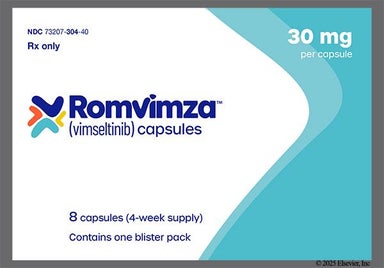
Romvimza (vimseltinib) images