



Potassium Chloride vs. Potassium Citrate: What’s the Best Potassium Supplement?
Explore the differences between potassium chloride and potassium citrate to find the best potassium supplement for your needs.
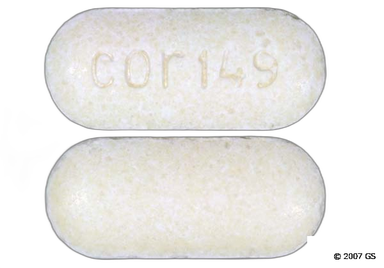
Potassium citrate extended-release tablets (Urocit-K) help treat and prevent kidney stones in adults. The medication makes your urine less acidic, which helps stop stones from forming. It's taken by mouth 2 or 3 times a day, depending on the dosage strength you're taking. The medication is usually taken with meals. Some people might have stomach pain, vomiting, or diarrhea as side effects.

Potassium citrate (Urocit-K) is an alkalinizing agent. The potassium salt works by making your urine less acidic. This prevents kidney stones from forming.
| Common Brands | Urocit-K |
|---|---|
| Drug Class | Alkalinizing agent |
| Controlled Substance Classification | Not a controlled medication |
| Generic Status | Lower-cost generic available |
| Availability | Prescription only |

The following side effects may get better over time as your body gets used to the medication. Let your healthcare provider know immediately if you continue to experience these symptoms or if they worsen over time.
Contact your healthcare provider immediately if you experience any of the following.
Along with its needed effects, a medicine may cause some unwanted effects. Although not all of these side effects may occur, if they do occur they may need medical attention.
Check with your doctor immediately if any of the following side effects occur:
Get emergency help immediately if any of the following symptoms of overdose occur:
Symptoms of overdose
Abdominal or stomach pain
confusion
difficult breathing
irregular heartbeat
nervousness
numbness or tingling in the hands, feet, or lips
shortness of breath
weakness or heaviness of the legs
Other side effects not listed may also occur in some patients. If you notice any other effects, check with your healthcare professional.
Call your doctor for medical advice about side effects. You may report side effects to the FDA at 1-800-FDA-1088.




Potassium citrate (Urocit-K) can cause some serious health issues. This risk may be even higher for certain groups. If this worries you, talk to your doctor or pharmacist about other options.
Potassium citrate (Urocit-K) can raise the potassium levels in the body. It can be dangerous and cause heart problems if potassium levels get too high.
Avoid this medication if you have a health condition that makes it harder for your body to get rid of potassium. These include chronic kidney disease (CKD) and heart failure. The risk for high potassium levels is also greater if you take other medications that can raise potassium levels or use potassium-based salt substitutes.
Your prescriber will check your potassium levels with blood tests. They might also check your heart rhythm using electrocardiograms. These tests help make sure potassium citrate (Urocit-K) is safe for you to take. Tell your care team if you have symptoms of high potassium like fatigue, muscle weakness, tingling, numbness, nausea, or irregular heartbeat.
Although rare, other potassium salts have caused stomach lining damage. This can sometimes cause stomach bleeding and be life-threatening.
To stay safe, be aware of the risk for damage to the stomach lining. The risk might be higher if you take medications that are hard on the stomach, like nonsteroidal anti-inflammatory drugs (NSAIDs). It could also be higher if you're taking medications that slow digestion, like anticholinergics.
Stop taking potassium citrate (Urocit-K) and get medical help right away if you have severe vomiting, stomach pain, or bloody or dark stools. These could be signs of stomach bleeding or damage.

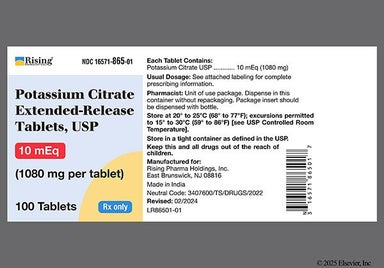
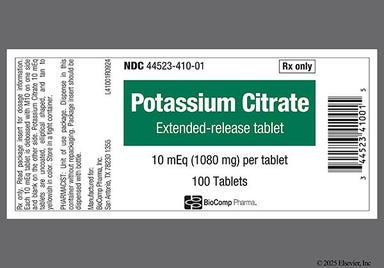
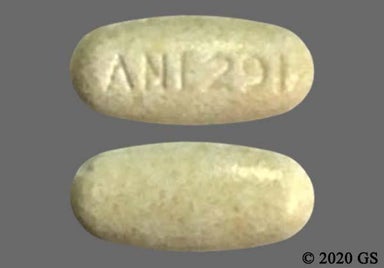
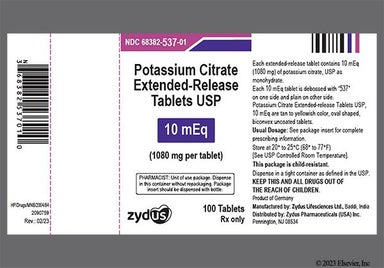
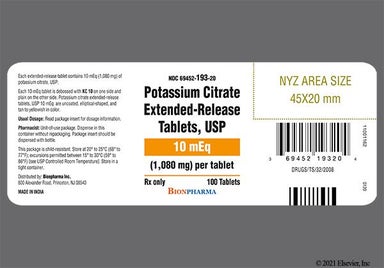
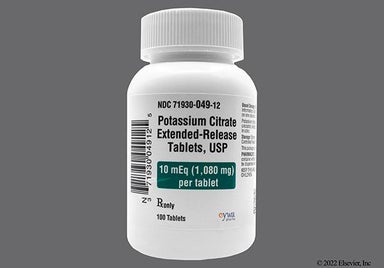
 Tablet
| Dosage | Quantity | Price as low as | Price per unit |
|---|---|---|---|
| 10meq | 60 tablets | $12.68 | $0.21 |
| 5meq | 180 tablets | $38.13 | $0.21 |
| 15meq | 180 tablets | $18.82 | $0.10 |
The dosage depends on the amount of citrate in your urine and the pH of your urine (how acidic it is). This is measured with a 24-hour urinary citrate test and a urinary pH test.
Your prescriber will adjust the dose based on how well the medication works for you. Don't take more than 100 mEq per day.

Although certain medicines should not be used together at all, in other cases two different medicines may be used together even if an interaction might occur. In these cases, your doctor may want to change the dose, or other precautions may be necessary. Tell your healthcare professional if you are taking any other prescription or nonprescription (over-the-counter [OTC]) medicine.


Contraindications are specific health conditions or situations in which a person should not take a medication due to safety concerns. If you have any of the following conditions or if any of the following apply to you, let your healthcare provider know because Potassium citrate (Urocit-K) will not be safe for you to take.




Prescription savings
Stop paying too much for your prescriptions. Compare prices, get pharmacy coupons, and save up to 80%. Find expert answers to your health questions so you can make the best decisions for yourself and your family.
Health conditions
Medications & treatment
Access & affordability
 Our monthly healthcare membership can help you save thousands on your prescription costs.
Resources

Talk to your prescriber about how long you might need to take Potassium Citrate ER. It could depend on how often you're getting kidney stones during treatment. It also depends on your urinary citrate levels and urinary pH (how acidic your urine is). In addition, it could depend on whether you're having any side effects that bother you or are serious. Each person is different and will need to take this medication for a different amount of time.
It's best to take Potassium Citrate ER when you have meals or, if taken at night, when you eat a bedtime snack. You can also take it within 30 minutes after this food. Taking Potassium Citrate ER with food can help prevent side effects like stomach irritation, stomach pain, and nausea.
Yes, Potassium Citrate ER can help dissolve certain types of kidney stones. The medication works by making the urine less acidic, which helps dissolve stones. By keeping the urine less acidic, it also helps prevent new stones from forming.
Yes, it's possible to take too much Potassium Citrate ER. This can cause high potassium levels in your body, which can be dangerous. Symptoms of too much potassium include weakness, tingling, numbness, nausea, and abnormal heartbeat. Only take Potassium Citrate ER as directed by your prescriber. If you think you might've taken too much, call a Poison Center at 1-800-222-1222 or get medical help right away.
Weight gain wasn't a reported side effect of Potassium Citrate ER in studies. Talk to a healthcare professional if you notice weight gain that's concerning to you while taking this medication.
A small study suggests that Potassium Citrate ER might lower blood pressure. But more research is needed to know for sure. You can check your blood pressure at home. Bring a record of your readings to your appointments to discuss with your healthcare professional.
No. You need a prescription from a healthcare professional for Potassium Citrate ER for kidney stones. It has a higher amount of potassium than over-the-counter supplements that contain potassium. It also comes in a special extended-release form.
Potassium citrate and potassium gluconate are different types of potassium salts. Potassium gluconate is available over the counter. It helps treat and prevent low potassium levels. Potassium Citrate ER is a prescription medication that's used to treat and prevent kidney stones. Ask a healthcare professional if you have more questions about these potassium salts.
