Pombiliti
Pombiliti (cipaglucosidase alfa) is an enzyme replacement therapy that treats Pompe disease in adults. It's given as an infusion once every 2 weeks by a healthcare provider. You need to take Opfolda (miglustat) an hour before each infusion; this is an oral medication that helps Pombiliti (cipaglucosidase alfa) work better. Some common side effects of this combination treatment include headache and diarrhea. The Pombiliti (cipaglucosidase alfa) infusion itself can put you at risk throat swelling, hives, and other serious infusion-related reactions.


What is Pombiliti (cipaglucosidase alfa)?
What is Pombiliti (cipaglucosidase alfa) used for?
- Late-onset Pompe disease in adults weighing at least 88 lbs (40 kg) - in combination with Opfolda (miglustat)
How Pombiliti (cipaglucosidase alfa) works
People who have Pompe disease don't have enough of an enzyme (protein) called acid alpha-glucosidase (GAA). This enzyme typically helps convert glycogen stored in cells into sugars to be used for energy. Without enough GAA, glycogen builds up in the cells and can cause problems, such as muscle weakness.
Pombiliti (cipaglucosidase alfa-atga) is an enzyme replacement therapy (ERT) used to replace GAA in people with Pompe disease. It's given along with an enzyme stabilizer called Opfolda (miglustat) that prevents Pombiliti from breaking down too quickly in the body.
Drug facts
| Common Brands | Pombiliti |
|---|---|
| Drug Class | Enzyme replacement therapy |
| Controlled Substance Classification | Not a controlled medication |
| Generic Status | No lower-cost generic available |
| Availability | Prescription only |

Pombiliti (cipaglucosidase alfa) dosage
Typical dosage for Pombiliti (cipaglucosidase alfa)

What are alternatives to Pombiliti (cipaglucosidase alfa)?

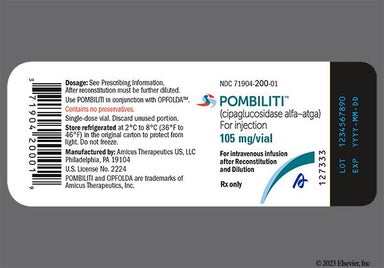
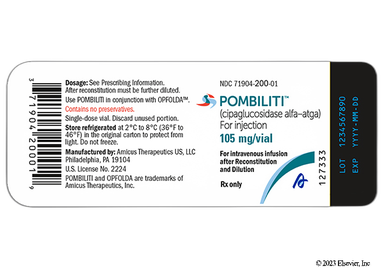
Pombiliti (cipaglucosidase alfa) images