Phenylephrine Non-Prescription
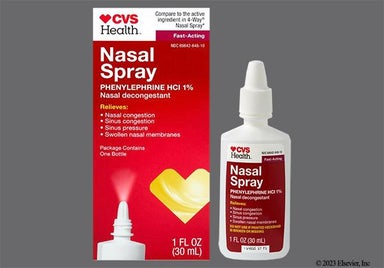
Phenylephrine nasal spray is a decongestant. It's used to treat nasal and sinus congestion in children and adults. The typical dose is 2 or 3 sprays every 4 hours, but for no longer than 3 days. It's typically well-tolerated, but some people might experience temporary side effects, such as stinging or sneezing, right after each spray. Phenylephrine nasal spray is available as brand name (e.g., Neo-Synephrine) and generic medications.


What is Phenylephrine nasal spray?
What is Phenylephrine nasal spray used for?
- Short-term relief of nasal and sinus congestion and pressure
How Phenylephrine nasal spray works
Phenylephrine nasal spray is a decongestant. It's thought to work by narrowing the blood vessels in the nose to relieve sinus pressure.
Drug facts

Side effects of Phenylephrine nasal spray
The following side effects may get better over time as your body gets used to the medication. Let your healthcare provider know immediately if you continue to experience these symptoms or if they worsen over time.
Common Side Effects
- Temporary discomfort, like burning and tingling
- Runny nose
Less Common Side Effects
- Sneezing
- Rebound congestion (if using longer than 3 days)
The following Phenylephrine nasal spray side effects have also been reported
Along with its needed effects, a medicine may cause some unwanted effects. Although not all of these side effects may occur, if they do occur they may need medical attention.
Check with your doctor as soon as possible if any of the following side effects occur:
Increase in runny or stuffy nose
Symptoms of too much medicine being absorbed into the body
Fast, irregular, or pounding heartbeat
headache or dizziness
increased sweating
nervousness
paleness
trembling
trouble in sleeping
Note: The above side effects are more likely to occur in children because there is a greater chance that too much of this medicine may be absorbed into the body.
Some side effects may occur that usually do not need medical attention. These side effects may go away during treatment as your body adjusts to the medicine. Also, your health care professional may be able to tell you about ways to prevent or reduce some of these side effects. Check with your health care professional if any of the following side effects continue or are bothersome or if you have any questions about them:
Burning, dryness, or stinging of inside of nose
Other side effects not listed may also occur in some patients. If you notice any other effects, check with your healthcare professional.
Call your doctor for medical advice about side effects. You may report side effects to the FDA at 1-800-FDA-1088.

Get your GoodRx coupon

Pros and cons of Phenylephrine nasal spray
Pros
- Available over the counter
- Typically well-tolerated with few side effects
- The phenylephrine 0.125% strength nasal drops can be used in children as young as 2 years old
Cons
- Might need to be used up to every 4 hours
- Might be difficult for some people to use the spray correctly
- Can't be used for longer than 3 days due to the risk of rebound congestion

Pharmacist tips for Phenylephrine nasal spray

- Don't use phenylephrine nasal spray longer than 3 days because doing so can cause your congestion to come back or get worse. If your symptoms don't get better after 3 days, talk with your PCP about other treatment options, including home remedies.
- You might feel temporary discomforts, such as stinging or sneezing, right after using phenylephrine nasal spray. These side effects are typically mild and go away after a while. But if they're bothersome and don't go away, let your primary care provider (PCP) know because you might need to stop using this spray.
- If phenylephrine nasal spray isn't enough to ease your congestion, ask a member of your care team about other nasal sprays, such as fluticasone (Flonase) or sodium chloride (Ocean Nasal Spray). These medications work differently than phenylephrine nasal spray and your care team can talk with you about other available options to help with your symptoms.
- If you're pregnant, don't use phenylephrine nasal spray until you've talked with your obstetrician-gynecologist (OB-GYN) to understand the risks and benefits of this medication. There's not much research looking into how phenylephrine nasal spray might affect pregnancy, but evidence suggests oral decongestants can cause harm. Your care team can talk with you about safer options to treat your symptoms during pregnancy.
Tips on how to use phenylephrine nasal sprays:
- Before using phenylephrine nasal spray, blow your nose and wash your hands with soap and water. Shake the bottle gently before each use and remove the cap. Press down one nostril with your index finger to close it. Tilt your head slightly forward and place the tip of the bottle into the other nostril aiming towards the back of your head. For each dose, squeeze the bottle with firm, quick pressure while breathing in.
- It's normal for some of the spray or drops to drip out your nose after each dose. Don't give yourself or your child any additional sprays or drops than what's recommended to try to replace what drips out. You might accidentally use too much medication and put yourself or your child at higher risk for side effects.
- Always clean the tip of the bottle after each use. Don't share phenylephrine nasal spray with other people to avoid spreading infections.
- Stop using phenylephrine nasal spray if you feel nervous or dizzy, or if you can't sleep after using this medication. Ask your primary care provider for other options to help with your congestion.
- Phenylephrine nasal spray is a decongestant, which are in many other over-the-counter medications. Using more than one medication containing a decongestant, including oral forms, can cause serious side effects, such as fast heart rate and dizziness. If you're not sure if a product has a decongestant, ask your pharmacist.

Common questions about Phenylephrine nasal spray
According to the manufacturer's label, you can use phenylephrine nasal spray as often as every 4 hours. But don't use this medication for longer than 3 days in a row because doing so can raise the risk of rebound congestion. Note that if phenylephrine nasal spray was prescribed to you by a healthcare provider, it's possible they might give you different instructions than what's in the manufacturer's label. Talk with your healthcare team if you have more questions about using phenylephrine nasal spray.
No, phenylephrine nasal spray and oxymetazoline (Afrin) aren't the same, but they're similar. Both medications are nasal decongestant sprays that eases congestion by tightening the blood vessels in the nose. They're both available over the counter for adults and children. One main difference is that oxymetazoline (Afrin) typically lasts longer than phenylephrine nasal spray. It's taken every 10 to 12 hours whereas phenylephrine nasal spray is taken every 4 hours.
No, phenylephrine nasal spray isn't addictive. The definition of addiction is when a person continues to engage in a behavior even though it's harmful. While using phenylephrine nasal spray won't lead to addiction, you're at risk for becoming dependent on this medication if you use it for longer than 3 days in a row (rebound congestion). When this happens, phenylephrine nasal spray becomes less effective in relieving congestion and your congestion typically worsens. Talk with your healthcare team if you're concerned about rebound congestion.
Yes, using phenylephrine nasal spray for longer than 3 days in a row can cause rebound congestion. This is when your congestion comes back and is typically more difficult to treat. If you've used phenylephrine nasal spray for 3 days and it's still not gone, stop using the nasal spray and contact your primary care provider. They can talk with you about other options to help with congestion and also let you know if you need more medical attention.
No, phenylephrine nasal spray isn't an antihistamine; it's a decongestant. Antihistamine nasal sprays are used to lessen allergy symptoms like sneezing, runny nose, or itchy, watery eyes. But phenylephrine nasal spray is used to treat nasal and sinus congestion. If needed, you can use an antihistamine nasal spray with phenylephrine nasal spray. Just be sure to space out the timing of the doses by about 15 minutes to allow some time for your nose to absorb each medication.
Oral phenylephrine can raise your blood pressure. But phenylephrine nasal spray is unlikely to affect your blood pressure because very little, if any, medication would get absorbed into your body. An older study suggest that phenylephrine nasal spray isn't likely to raise blood pressure. Still, because there's a potential risk, ask your primary care provider if phenylephrine nasal spray is safe for you if you have a history of heart problems.
Trouble sleeping is a typical side effect of oral phenylephrine, but it's not as likely with phenylephrine nasal spray nasal spray. If you're having trouble sleeping while using phenylephrine nasal spray, talk with your primary care provider. They can try to help you figure out if your insomnia is caused by phenylephrine nasal spray or other factors, and recommend ways to help you get better rest.

How to save using GoodRx



Risks and warnings for Phenylephrine nasal spray
Phenylephrine nasal spray can cause some serious health issues. This risk may be even higher for certain groups. If this worries you, talk to your doctor or pharmacist about other options.
For use in the nose only
While phenylephrine is available in forms that can be taken by mouth, phenylephrine nasal spray should only be used in your nose. Don't give yourself or your child this medication any other way. If you feel a nasal spray isn't the best choice for you, ask your pharmacist or primary care provider for other options to treat your congestion. If you or someone else takes phenylephrine nasal spray by mouth, get medical help right away or contact a poison control center at 1-800-222-1222.
Worsening of medical conditions
- Risk factors: Heart disease or high blood pressure | Endocrine problems (e.g., thyroid disease, diabetes) | Trouble urinating
Don't use phenylephrine nasal spray if you have any of the medical conditions listed above unless your primary care provider (PCP) said it's safe to do so. Using phenylephrine nasal spray can worsen your condition(s) and cause serious side effects. Make sure your PCP knows about all medical conditions you have or have had in the past before starting phenylephrine nasal spray.

Phenylephrine nasal spray dosage


Typical dosage for Phenylephrine nasal spray
There are several manufacturers of phenylephrine nasal spray that might have various strengths and concentrations. The dose and age cut-offs might differ depending on the product you have. Always check the box for specific directions.
Some examples include:
Little Remedies Nasal Drops (phenylephrine 0.125%)
- Age 2 years to 6 years: The typical dose is to place 2 to 3 drops in each nostril, no more than every 4 hours. Don't use for longer than 3 days.
- Age under 2 years: Ask your child's pediatrician.
Neo-Synephrine Mild (phenylephrine 0.25%) nasal spray
- Age 6 years to under 12 years: The typical dose is to spray 2 to 3 sprays in each nostril, no more than every 4 hours. Don't use for longer than 3 days.
- Age under 6 years: Ask your child's pediatrician.
Neo-Synephrine Regular (phenylephrine 0.5%) nasal spray and generic phenylephrine 1% nasal spray
- Age 12 years and up: The typical dose is to spray 2 to 3 sprays in each nostril, no more than every 4 hours. Don't use for longer than 3 days.
- Age under 12 years: Ask your child's pediatrician.

Interactions between Phenylephrine nasal spray and other drugs
Although certain medicines should not be used together at all, in other cases two different medicines may be used together even if an interaction might occur. In these cases, your doctor may want to change the dose, or other precautions may be necessary. When you are taking this medicine, it is especially important that your healthcare professional know if you are taking any of the medicines listed below. The following interactions have been selected on the basis of their potential significance and are not necessarily all-inclusive.
Using this medicine with any of the following medicines is not recommended. Your doctor may decide not to treat you with this medication or change some of the other medicines you take.
- Dihydroergotamine
- Linezolid
- Rasagiline
- Selegiline
Using this medicine with any of the following medicines is usually not recommended, but may be required in some cases. If both medicines are prescribed together, your doctor may change the dose or how often you use one or both of the medicines.
- Ergonovine
- Fentanyl Citrate
- Iobenguane I 123
- Iobenguane I 131
- Methylergonovine
- Midodrine

How much does Phenylephrine nasal spray cost?
$4.53

What are alternatives to Phenylephrine nasal spray?

News about Phenylephrine nasal spray




Phenylephrine nasal spray images