Key takeaways:
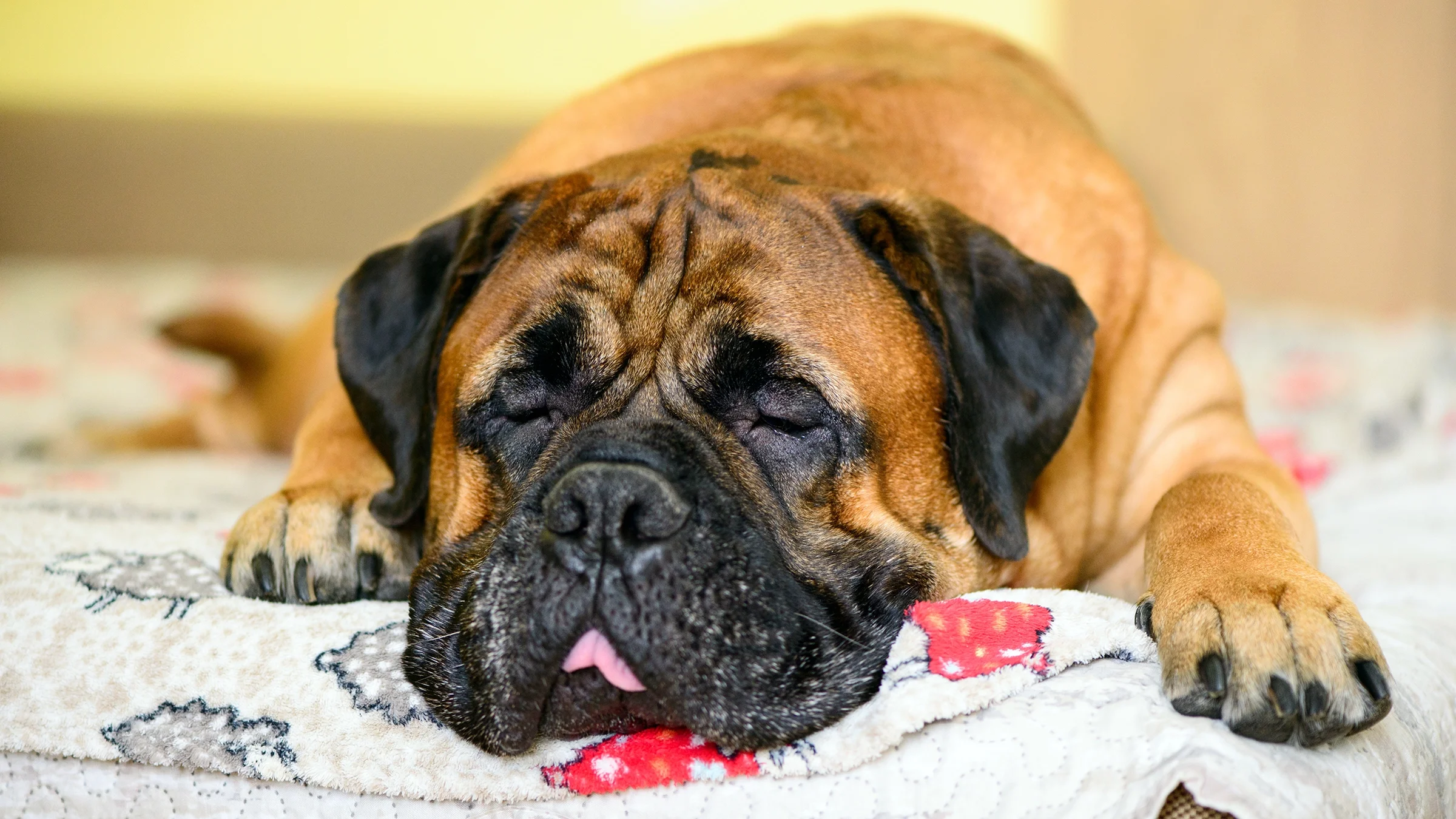
Sleep apnea primarily affects short-nosed dog breeds like pugs and bulldogs. In dogs, the condition is called brachycephalic obstructive airway syndrome (BOAS).
BOAS symptoms include snoring, labored breathing, and daytime sleepiness.
Treatment for sleep apnea in dogs includes surgery and medication.
You probably know about sleep apnea in people. It’s a serious sleep disorder in which your breathing starts and stops repeatedly during sleep. But humans aren’t the only ones who can have this condition. Dogs can have it, too.
Here’s what you need to know about sleep apnea in dogs, including symptoms, treatments, and when to see your vet.
Can dogs have sleep apnea?
Sleep apnea is not a common problem for most dogs. It primarily affects brachycephalic or short-nosed dogs. The condition is called brachycephalic obstructive airway syndrome (BOAS).
Search and compare options
“This syndrome is due to anatomical issues such as narrow nostrils, a narrow trachea, an overlong soft palate, and a narrowed laryngeal opening,” Susan Kimmel, DVM, DACVIM-SAIM, a New York-based veterinary specialist in internal medicine, told GoodRx Health.
How serious is sleep apnea in dogs?
BOAS is a serious problem for some dogs. It can make it hard to breathe, especially in the heat. Dogs use breathing to cool down, so if they struggle to breathe, their body temperature may rise to dangerous levels.
Kimmel said, “It can be life-threatening due to the risk of respiratory arrest or even heat stroke since dogs use their breathing to help control their body temperature.”
Heat stroke in dogs can lead to organ failure and death.
What are the symptoms of sleep apnea in dogs?
Symptoms of sleep apnea in dogs are noticeable while they’re awake and asleep. Signs include:
Labored breathing at rest that gets worse during exercise
Snoring
Snorting
Chronic cough
Poor physical strength or endurance
Daytime fatigue
Changing sleep positions to make breathing easier

Read more like this
Explore these related articles, suggested for readers like you.
When should you talk to your vet about symptoms of sleep apnea in your dog?
You should talk to your vet “if you notice excessive noise while breathing or panting, intolerance of exercise, or frequent loud snoring,” said Kimmel. And talk to your vet about the risk of BOAS if you have any of the breeds mentioned below.
How do you treat sleep apnea in dogs?
The most common treatment for sleep apnea in humans is continuous positive airway pressure or a CPAP machine. Unfortunately, CPAP isn’t practical for dogs. Surgery or medications are the standard treatments for pups.
Surgery
“Surgical treatment to correct the anatomical issues is the best treatment, when possible,” said Kimmel. “The nostrils can be widened, the palate can be shortened, and sometimes the issues causing the larynx opening to be narrowed can be removed.”
Kimmel said it’s best to schedule surgery when your dog is young because “as time passes, there are degenerative changes that can start to occur that can’t be reversed.”
Medications
Some medications also help dogs manage sleep apnea, according to Kimmel. These include:
Ondansetron: Ondansetron (Zofran, Zuplenz) is an anti-nausea and anti-vomiting medication for humans. Kimmel said ondansetron has been shown to help dogs with sleep apnea. Ondanestron may work by keeping the upper throat from relaxing and closing the airway.
Trazodone: Trazodone is an antidepressant and anti-anxiety medication. Like ondansetron, trazodone may work for dogs by keeping the upper airways from dilating and blocking airflow.
Which dog breeds are more prone to sleep apnea?
Brachycephalic dog breeds are at higher risk of developing sleep apnea. They include:
English bulldog
French bulldog
Pug
Pekingese
Shih tzu
Boxer
Cavalier King Charles spaniel
Boston terrier
Mastiff
Lhasa apso
Can you reduce the risk of sleep apnea in your dog?
There are a couple of things you can do to protect your dog from developing sleep apnea.
The first is to go ahead and have surgery.
“Sleep apnea in dogs can be reduced by surgically treating the cause of the airway obstruction,” said Kimmel.
A healthy weight can also lower your pet’s risk. “Dogs at risk should be maintained at a healthy, lean weight,” said Kimmel. “For some dogs with mild signs, weight loss alone may be enough to significantly improve their breathing.”
The bottom line
Dogs with short noses, like bulldogs and boxers, are prone to a type of sleep apnea called brachycephalic obstructive airway syndrome (BOAS). Signs your dog may have BOAS include snoring, interrupted sleep, and trouble breathing at rest and during exercise.
Dogs with BOAS should be treated with surgery or medication. Sometimes weight loss can lower the risk or severity of the condition. If your dog has a hard time breathing, take them to the vet. BOAS can be life-threatening and should be treated in a timely manner.

Why trust our experts?



References
Cambridge Veterinary School. (n.d.). Management and treatment of BOAS.
Hohenhaus, A. (2023). Should I be concerned about snoring in my dog or cat? Schwarzman Animal Medical Center.
Humane Society Veterinary Medical Association. (n.d.). The cost of cuteness: Health and welfare issues associated with brachycephalic dog breeds.
North Downs Specialist Referrals. (n.d.). Brachycephalic obstructive airway syndrome (BOAS).
Today’s Veterinary Practice. (2014). Corrective surgery: Dogs with brachycephalic airway syndrome.
University of Helsinki. (2023). Study shows short snout predisposes dogs to sleep apnea. Phys Org.
Veasey, S.C., et al. (1998). The effects of trazodone with l-tryptophan on sleep-disordered breathing in the English bulldog. American Journal of Respiratory and Critical Care Medicine.
Villedieu, E., et al. (2022). BOAS (brachycephalic obstructive airway syndrome); OSA (obstructive sleep apnea). Journal of the American Animal Hospital Association.
WSAVA Global Veterinary Community. (n.d.). Brachycephalic obstructive airway syndrome (BOAS).
Zong, S., et al. (2023). Advances in animal models of obstructive sleep apnea. Frontiers in Medicine.