Key takeaways:
Ozempic is an injectable medication that can help treat Type 2 diabetes by improving blood sugar levels. But it can also impact appetite and digestion.
Ozempic's effect on the gut means it can cause side effects like nausea, vomiting, and diarrhea. About 8% of people experience diarrhea while taking Ozempic.
There are ways to avoid Ozempic-related diarrhea, such as limiting high-fat foods and sugary drinks, both of which can worsen diarrhea.
Save on related medications
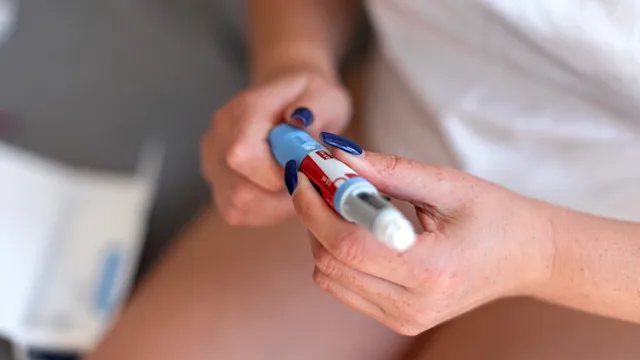
Ozempic (semaglutide) is an injectable medication that’s FDA-approved to help treat Type 2 diabetes. Ozempic can help people with diabetes in many ways. It can help improve blood sugar levels and lower your risk of developing heart attacks and stroke.
Ozempic can also lead to side effects, like diarrhea. And diarrhea from Ozempic can be unpleasant enough to make some people completely stop the medication. But how often does Ozempic cause diarrhea? And how long does it last?
Research shows that Ozempic-related diarrhea does eventually go away on its own. But until that time comes, there are ways to treat it. Here’s everything to expect when Ozempic causes diarrhea.
Search and compare options
Does Ozempic cause diarrhea?
Yes, Ozempic causes diarrhea. In clinical trials, diarrhea was the third most commonly reported side effect, just behind nausea and vomiting. But only about 8% of people experienced diarrhea while taking Ozempic. That means most people won’t experience diarrhea while taking Ozempic. But, if you do, don’t give up on your medication.
One study showed that only about 4% of people who experience gut-related side effects end up opting to stop taking Ozempic. This study suggests that while Ozempic side effects are bothersome, they aren’t manageable. And most people were willing to tolerate the side effects in order to continue taking the medication.
How long does Ozempic diarrhea last?
It’s not clear how long Ozempic-related diarrhea lasts.
In one study, diarrhea lasted an average of 3 days. In other studies, most Ozempic-related side effects went away within a few weeks. So, the diarrhea side effect is likely somewhere in between. Your diarrhea will likely go away on its own as your body gets used to medication.
But keep in mind that diarrhea episodes can get worse when people increase their Ozempic dose. You may need to give your body a few days to adjust to your new dose if you experience a new wave of diarrhea with a dose increase.
Why does Ozempic cause diarrhea?
It’s not clear why Ozempic causes diarrhea. But research suggests it's related to how the medication affects your gut.
Ozempic changes how your body absorbs some nutrients, which can lead to diarrhea. Ozempic also affects how quickly the gut moves. It slows down how fast the stomach empties. It can also slow down the rest of the gut. But, in some people, this can also send a signal to the intestine that it’s time to poop, leading to diarrhea.
Can Ozempic cause constipation?
Yes, in addition to diarrhea, Ozempic can also cause constipation. And it’s possible to experience both diarrhea and constipation while taking Ozempic. You might wonder, “But how can you experience both at once?”
When people get constipated, old, hard stool sits inside the colon. As new stool forms, the blocked colon can’t absorb the water out of the new stool. So, the new stool stays liquid and leaks around the older, harder stool. This is called overflow diarrhea and it’s very common in people who experience chronic constipation. Some experts think overflow diarrhea is the actual reason why so many people experience diarrhea while taking semaglutide.
How do you treat diarrhea from Ozempic?
If you’re experiencing Ozempic-related diarrhea, there are things you can do to get relief. These things can also help you to avoid future episodes of diarrhea when you have dose changes.
1. Avoid certain foods and drinks
Certain foods and drinks can aggravate diarrhea, no matter what’s causing your loose stools.
Try to cut down or remove these foods from your diet until your diarrhea goes away:
Caffeinated drinks
Alcohol
Sugary beverages
Milk
High-fat foods can also worsen Ozempic-related diarrhea. So it may help to cut back on high-fat foods, like full-fat dairy products, such as:
Milk
Cheese
Yogurt
Ice cream
Fried or greasy foods can also worsen symptoms. Avoid foods like:
French fries
Pizza
Hamburgers
Fried chicken
Instead, try to boil, grill, or bake food whenever possible. You can also swap out full-fat dairy products for nonfat or low-fat options. As your body gets used to Ozempic, you may be able to slowly add some of these foods back into your diet.
2. Drink more water
When you have diarrhea, it's important to increase your fluid intake to replace what you’re losing. Opt for water, clear drinks that contain electrolytes, or broth. Most people need between 91 oz and 125 oz of fluid each day.
Getting enough fluid will also help you to avoid Ozempic-related constipation and overflow diarrhea.
3. Try over-the-counter medication, if needed
If your diarrhea lasts longer than a couple days and is significantly affecting your day, there are over-the-counter (OTC) medications that can provide relief. Popular options include:
Imodium A-D (loperamide): Loperamide works by slowing down your intestines. So, if you try it and it helps, use it sparingly. Remember that Ozempic has a similar effect on the gut, so Imodium could potentially worsen diarrhea and other side effects.
Pepto-Bismol or Kaopectate (bismuth subsalicylate): Bismuth subsalicylate is a common choice for upset stomach and heartburn, and it can help with diarrhea as well. It coats the stomach and decreases the amount of fluid produced in the intestines.
Probiotics: These are supplements that contain friendly bacteria that nourish your gut. Probiotics can help restore a healthy balance in your intestines, which can help with both constipation and diarrhea.
3. Talk with a healthcare professional
It’s a good idea to talk with your healthcare team if you’re experiencing diarrhea while taking Ozempic. They might adjust the rate of your dose increase, which can help reduce side effects. Experts believe higher doses of semaglutide are more likely to cause diarrhea. This is probably why about 1 in 3 people taking Wegovy (another semaglutide medication) experience diarrhea. (Wegovy is FDA-approved for weight management, but it’s typically given at higher doses than Ozempic.)
It’s also possible that your other medications are contributing to diarrhea, too. For example, many people taking Ozempic also take metformin, which can also cause diarrhea. Your prescriber might adjust your other medications or swap them out for something else. Just make sure you don’t stop taking any of your medications without talking with your healthcare team.
Frequently asked questions
Yes, whether or not you experience diarrhea when you first start taking Ozempic, increasing your dose can cause diarrhea. This will likely resolve on its own within a few days of increasing your dose.
Yes, whether or not you experience diarrhea when you first start taking Ozempic, increasing your dose can cause diarrhea. This will likely resolve on its own within a few days of increasing your dose.
The bottom line
Ozempic (semaglutide) is an injectable medication that can help lower blood sugar levels in adults with Type 2 diabetes. But Ozempic can cause side effects, like diarrhea. In clinical studies, about 8% of people experienced diarrhea while taking Ozempic. Diarrhea usually went away on its own within a week.
If you’re experiencing diarrhea while taking Ozempic, avoid high-fat foods, sugary beverages, and caffeine — all of which can worsen your symptoms. You can also talk with your prescriber about adjusting your dose. This can help lower the risk of future episodes of diarrhea.

Why trust our experts?



References
Friedrichsen, M., et al. (2021). The effect of semaglutide 2.4 mg once weekly on energy intake, appetite, control of eating, and gastric emptying in adults with obesity. Diabetes, Obesity & Metabolism.
Gorgojo-Martínez, J. J., et al. (2022). Clinical recommendations to manage gastrointestinal adverse events in patients treated with GLP-1 receptor agonists: A multidisciplinary expert consensus. Journal of Clinical Medicine.
Marso, S. P., et al. (2016). Semaglutide and cardiovascular outcomes in patients with Type 2 diabetes. The New England Journal of Medicine.
Novo Nordisk. (2024). Wegovy semaglutide injection 2.4mg [package insert].
Novo Nordisk. (2025). Ozempic semaglutide injection 0.5mg, 1mg, 2mg [package insert].
Shu, Y., et al. (2022). Gastrointestinal adverse events associated with semaglutide: A pharmacovigilance study based on FDA adverse event reporting system. Frontiers in Public Health.
Smits, M. M., et al. (2021). Safety of semaglutide. Frontiers in Endocrinology.
Wharton, S., et al. (2022). Gastrointestinal tolerability of once‐weekly semaglutide 2.4 mg in adults with overweight or obesity, and the relationship between gastrointestinal adverse events and weight loss. Diabetes, Obesity & Metabolism.