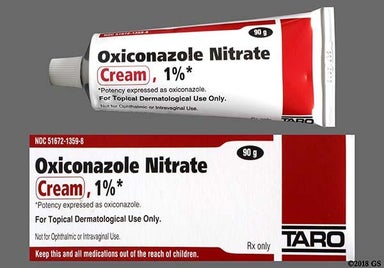
oxiconazole
Oxiconazole, also known by its brand name Oxistat, is a topical azole antifungal that's used for many different types of fungal skin infections, such as jock itch and athlete's foot. The lotion is approved for adults and is brand name only. But the cream is available for people 12 years and older as a brand-name medication and lower-cost generic. Oxiconazole (Oxistat) is applied on the infected skin once or twice per day for 2 or 4 weeks, depending on the type of fungal skin infection. Side effects are rare but can include skin irritation, itching, or burning.


What is Oxiconazole (Oxistat)?
What is Oxiconazole (Oxistat) used for?
- Ringworm
- Jock itch
- Athlete's foot
- Tinea versicolor (fungal infection that causes small patches of your skin to be discolored) - cream only
How Oxiconazole (Oxistat) works
Oxiconazole (Oxistat) is an azole antifungal. It works by stopping the fungus from being able to make a protective covering. This stops the fungus from growing or surviving.
Drug facts
| Common Brands | Oxistat |
|---|---|
| Drug Class | Antifungal |
| Controlled Substance Classification | Not a controlled medication |
| Generic Status | Lower-cost generic available |
| Availability | Prescription only |

Side effects of Oxiconazole (Oxistat)
The following side effects may get better over time as your body gets used to the medication. Let your healthcare provider know immediately if you continue to experience these symptoms or if they worsen over time.
Common Side Effects
- Side effects aren't common. See Other Side Effects.
Less Common Side Effects
- Itching
- Burning sensation
- Skin irritation
- Skin redness
- Stinging
The following Oxiconazole (Oxistat) side effects have also been reported
Along with its needed effects, a medicine may cause some unwanted effects. Although not all of these side effects may occur, if they do occur they may need medical attention.
Check with your doctor as soon as possible if any of the following side effects occur:
Some side effects may occur that usually do not need medical attention. These side effects may go away during treatment as your body adjusts to the medicine. Also, your health care professional may be able to tell you about ways to prevent or reduce some of these side effects. Check with your health care professional if any of the following side effects continue or are bothersome or if you have any questions about them:
Other side effects not listed may also occur in some patients. If you notice any other effects, check with your healthcare professional.
Call your doctor for medical advice about side effects. You may report side effects to the FDA at 1-800-FDA-1088.

Get your GoodRx coupon

Pros and cons of Oxiconazole (Oxistat)
Pros
- Works well to treat several types of fungal skin infections
- Few side effects
- Applied directly to the affected area(s)
Cons
- Might take 2 to 4 weeks to see improvement
- Can cause skin irritation where you applied the medication
- Oxiconazole (Oxistat) lotion doesn't have a lower-cost generic version; only available as a brand-name product

Pharmacist tips for Oxiconazole (Oxistat)

- Make sure to use oxiconazole (Oxistat) for the entire time that your healthcare professional has prescribed it for. Don't stop using the medication earlier, even if your symptoms have improved, unless your prescriber tells you to do so. Stopping treatment too early can make the infection more likely to come back again.
- For the lotion only: Shake the lotion bottle well before each use because some medication might've settled at the bottom.
- Wash your hands well with soap and water before and after you apply oxiconazole (Oxistat) to the affected areas. Also clean the affected area(s) of your skin before you apply the medication.
- Apply enough cream or lotion to cover the affected areas and the surrounding skin. Only use oxiconazole (Oxistat) for the condition that it's prescribed for.
- Don't apply oxiconazole (Oxistat) in the mouth, eyes, nose, or vagina. Use care when you're applying this medication to the skin around or near these areas. Rinse or wash the area well with water if you do accidentally get oxiconazole (Oxistat) into your eyes, nose, or vagina.
- Itching, burning, and skin irritation are possible side effects. Contact your prescriber if these side effects worsen over time or if you notice blistering, swelling, or oozing. These might be signs of a different, more serious skin condition.
- Let your healthcare professional know if your symptoms don't get better after you use oxiconazole (Oxistat) for the prescribed amount of time for your specific fungal skin infection or if your condition worsens. You might need other treatment.
- Don't wrap any bandages or dressings over places where you've applied oxiconazole (Oxistat) unless your prescriber instructed you to.
- Talk with your healthcare professional if you're pregnant or breastfeeding. It's unclear whether oxiconazole (Oxistat) is safe to use while pregnant or breastfeeding because it hasn't been well studied. Your healthcare professional can discuss your options with you.
- Store oxiconazole (Oxistat) at room temperature in the bottle it came in from the pharmacy.

Risks and warnings for Oxiconazole (Oxistat)
Oxiconazole (Oxistat) can cause some serious health issues. This risk may be even higher for certain groups. If this worries you, talk to your doctor or pharmacist about other options.
For use on the skin only
Only apply oxiconazole (Oxistat) to the surface of your skin. Never place the medication into the eyes, nose, or vagina. Applying oxiconazole (Oxistat) to these areas can cause pain and irritation. Let your prescriber know if your skin becomes irritated or sensitive while you're using this medication. You might have to switch to a different medication.

Oxiconazole (Oxistat) dosage


Interactions between Oxiconazole (Oxistat) and other drugs
Although certain medicines should not be used together at all, in other cases two different medicines may be used together even if an interaction might occur. In these cases, your doctor may want to change the dose, or other precautions may be necessary. Tell your healthcare professional if you are taking any other prescription or nonprescription (over-the-counter [OTC]) medicine.

How much does Oxiconazole (Oxistat) cost?

What are alternatives to Oxiconazole (Oxistat)?

Oxiconazole (Oxistat) images