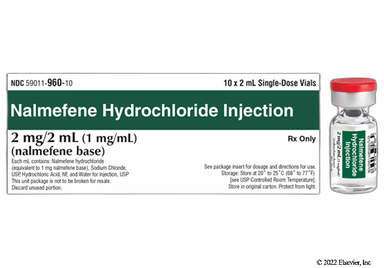
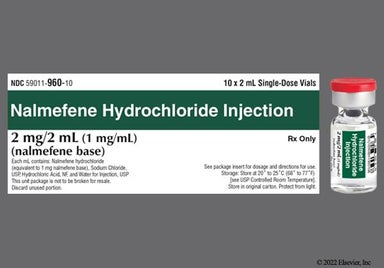
Nalmefene is an injectable medication that's used to reverse the effects of opioids or to manage opioid overdose. It's typically injected into the veins by a healthcare provider and only used in the hospital. Nalmefene works fast, but some people might require multiple doses.
Reversing opioid effects, including slowed breathing
Managing opioid overdose
How Nalmefene works
Nalmefene is an opioid antagonist, which can help prevent or reverse the effects of opioids, including respiratory depression (slowed breathing), sedation (sleepiness), and low blood pressure.
The following side effects may get better over time as your body gets used to the medication. Let your healthcare provider know immediately if you continue to experience these symptoms or if they worsen over time.
Don't need to adjust the dose for liver or kidney problems
Cons
Has to be given by injection
Only available in the emergency room or hospital
Risk of opioid withdrawal symptoms
Pharmacist tips for Nalmefene
If your body is dependent on opioids to function normally, you might experience withdrawal symptoms when getting nalmefene injections. Let your provider know if you experience signs of fast heart rate, nausea, vomiting, diarrhea, sweating, anxiety, agitation, dizziness, confusion, headache, trouble sleeping, or seizures.
Let your provider know if your breathing gets better after receiving nalmefene, but then gets worse again after your dose. Sometimes your breathing problems can come back, and you might need multiple doses.
Risks and warnings for Nalmefene
Nalmefene can cause some serious health issues. This risk may be even higher for certain groups. If this worries you, talk to your doctor or pharmacist about other options.
Risk of recurrent breathing problems
Some people who accidentally overdose on a long-acting opioid, such as methadone or levo-alpha-acetylmethadol (LAAM), might have breathing problems that last for longer than the duration that nalmefene works. These breathing problems can be complicated and might require anesthetics, neuromuscular blockers, and other medications. Your provider will monitor you for a period of time after your nalmefene injection to make sure you don't have any recurring breathing problems. You'll need medical care and possibly more doses of nalmefene if your breathing problems return.
Risk of heart problems
Risk factors: Heart problems | Taking medications that affect the heart
Medications that reverse the effects of opioids can affect the heart and lead to problems, such as changes in blood pressure and heart rhythm. While nalmefene have been used safely by people with heart problems in the past, you should let your provider know if you've heart probems. Also, let them know if you're taking other medications that can affect your heart. If so, they can monitor you properly.
Opioid antagonists, such as nalmefene, can cause withdrawal symptoms in people who've been using opioids for a long time. The risk is higher for people who might rely on opioids to function normally, or take higher dose of opioids. Let your provider know right away if you experience withdrawal symptoms, such as high blood pressure, fast heart rate, nausea, vomiting, diarrhea, sweating, anxiety, agitation, dizziness, confusion, headache, trouble sleeping, or seizures.
Nalmefene dosage
Typical dosage for Nalmefene
Nalmefene is usually given in a hospital setting by a healthcare provider. The dose of nalmefene will be determined by your provider to manage your opioid overdose or to reverse the effects of opioids.
What are alternatives to Nalmefene?
There are a number of medications that your doctor can prescribe in place of Nalmefene. Compare a few possible alternatives below.
Nalmefene
Used for:
Reversing opioid effects, including slowed breathing
Nalmefene is usually given into the vein by your healthcare provider. If your provider can't access your veins, then this medication can be given into the muscle or under the skin.
When Nalmefene is given for suspected overdose, this medication has shown to reverse breathing problems within 2 to 5 minutes of injection in most people. When Nalmefene is given to reverse the effects of opioids after surgery, it can take 5 to 20 minutes to work for most people. Your response to Nalmefene can vary depending on the opioid dose and your body's opioid dependence level.
Nalmefene hasn't been shown to have any effect when given to people who didn't take opioids. Nalmefene should only be given to people who are suspected to overdose on opioids. This medication won't have any effect in people if their symptoms of excessive sleepiness or slowed breathing aren't caused by opioids.
It's unknown if Nalmefene can harm your baby. Let your provider know if you're pregnant or breastfeeding. They will determine if this medication is right for you.
No, Nalmefene hasn't been shown to cause tolerance (when your body gets used to the medication), dependence (when your body depends on the medication to function), or abuse (when the medication is purposely used for a non-medical reason).