Key takeaways:
Metformin can do much more than treat diabetes. And researchers continue to study and find ways it can help treat other conditions.
Metformin can help with weight loss and reduce the size of your waist.
Metformin can also improve fertility. It even helps people with certain medical conditions live longer.
Save on related medications
Metformin is the first-choice oral treatment for Type 2 diabetes. It improves the effects of insulin on the liver and skeletal muscles, which helps to lower blood glucose levels. But researchers have found many other uses for metformin beyond diabetes treatment. The benefits of metformin range from improving fertility to increasing life span.
Let’s take a closer look at what metformin does in the body and its top benefits.
Primary metformin benefits
Metformin has been FDA approved to treat Type 2 diabetes since 1994. For many people, it can help you manage blood glucose and lead to improved hemoglobin A1C levels (known as HbA1c or A1C).
Search and compare options
Metformin lowers blood glucose levels in these ways:
Lowers glucose production by the liver
Increases glucose uptake in the gut
Improves how the body uses insulin
Improves how glucose is used by the muscles
Potential secondary metformin benefits
In addition to treating Type 2 diabetes, there are other off-label uses of metformin. Research is currently ongoing for a number of secondary metformin benefits. Let’s take a look at seven metformin benefits beyond diabetes treatment.
1. Metformin for fertility
Metformin can improve fertility for some people who have trouble getting pregnant. Metformin reduces insulin levels in the bloodstream. This promotes egg release from the ovary (or ovulation). This is an important first step in getting pregnant: Without an egg, there’s nothing for sperm to fertilize.
Experts agree that it’s best to use metformin alone to help people get and stay pregnant. But, in some cases, healthcare professionals may recommend metformin along with clomiphene to help people get pregnant.
Studies also show that metformin may improve male fertility in those with obesity. Metformin might also help male infertility treatments work better.
2. Metformin and longevity
In mice, metformin prolongs life span and improves immunity. But in humans, things aren’t as clear cut. Researchers think metformin decreases the risk of early death from certain medical conditions, including diabetes and heart disease.
In other words, when it’s part of a medical treatment plan, metformin increases the number of healthy years in your life if you have these medical conditions. But it’s not a fountain of youth. It won’t keep you from aging, and it doesn’t add years to everyone’s life.
3. Metformin and weight loss
There’s evidence that metformin can help treat obesity and obesity-related conditions, like metabolic syndrome. Metformin can help people with obesity reduce their weight, even if they don’t have diabetes.
The Diabetes Prevention Study is the largest study to show the weight benefits of metformin. This study found that people who took metformin lost weight and reduced their waist size. And the results lasted long term.
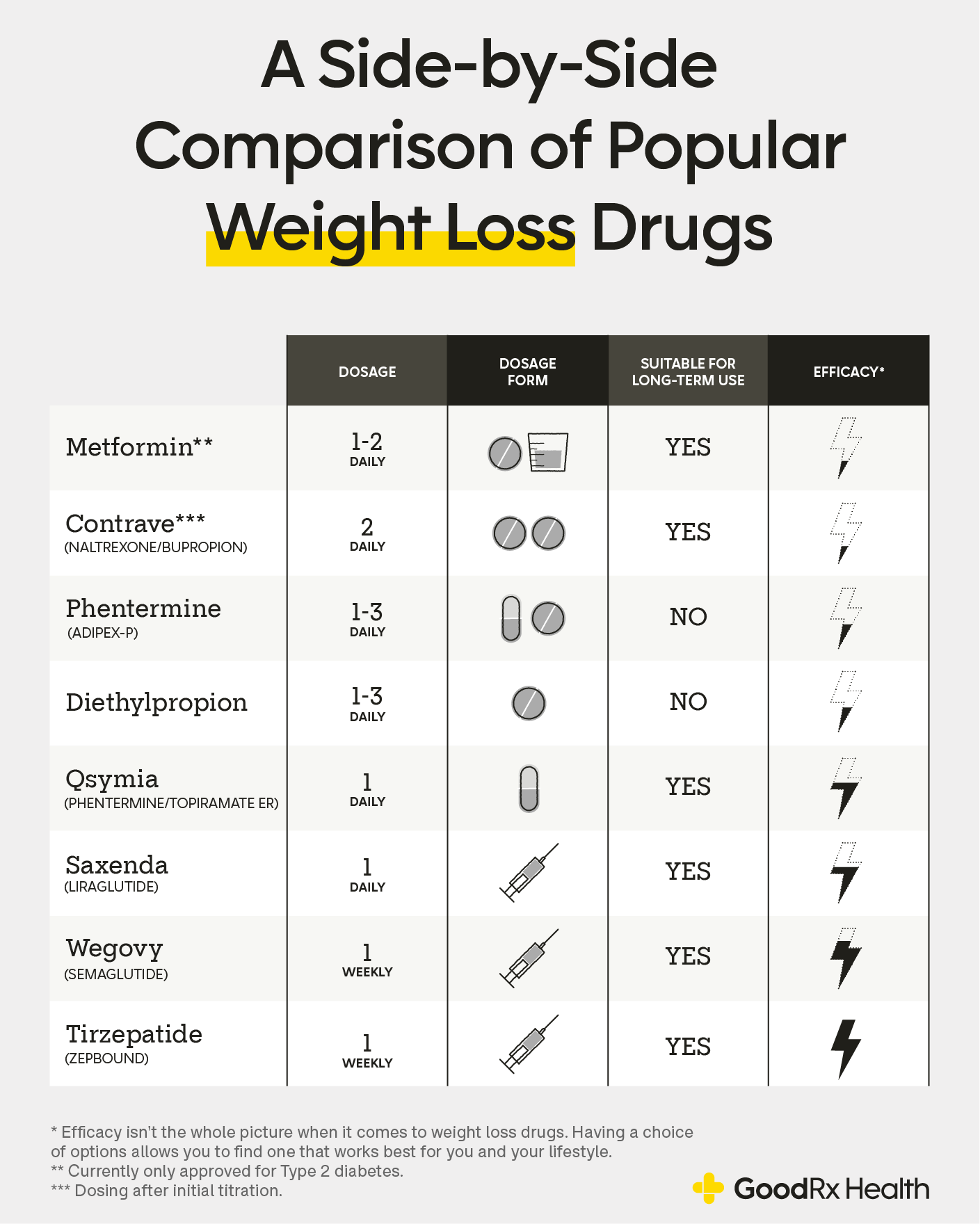
The infographic below shows how metformin compares to other weight loss drugs.
4. Metformin and cancer
In lab models, metformin can slow some tumor growth and stop certain tumors from forming. But it’s not yet clear if metformin can stop cancer from developing in people. Studies are also looking at whether metformin helps treat cancer when used as part of standard cancer therapy.
Here’s what experts know so far:
Colon cancer: Studies show that people with diabetes who take metformin have a lower risk of developing colon polyps that can turn into colon cancer. Researchers are investigating whether metformin can help prevent polyps from forming in people who don’t have diabetes.
Prostate cancer: There’s evidence that people with prostate cancer who took metformin as part of their hormonal therapy lived longer and responded better to treatment.
Breast cancer: There’s some evidence that people with Type 2 diabetes who take metformin develop cancer less often. But it’s not clear yet if metformin helps treat breast cancer when people use it as part of a breast cancer treatment plan.
5. Metformin and COVID-19
Early studies showed that women taking metformin for Type 2 diabetes or obesity treatment were less likely to die from COVID-19 illness. It’s not yet clear if the metformin itself was responsible for this effect.
So far, studies haven’t shown that metformin reduces everyone’s risk of developing severe illness related to COVID. So, if you’ve been diagnosed with COVID, there’s no reason to take metformin, unless it’s already part of your medical care plan.
6. Metformin and diabetes prevention
Metformin can decrease your risk of developing diabetes. Studies show that people with obesity and metabolic syndrome who took metformin decreased their risk of developing diabetes by 30%. And the benefits lasted long term: The risk of developing diabetes decreased 18% over 15 years.
7. Metformin and dementia
Studies show that people with diabetes who take metformin have a lower risk of dementia than those who take other diabetes medications, like glipizide or glyburide. But right now, there’s no evidence that taking metformin prevents people from developing dementia.
Frequently asked questions
There are several reasons you might feel good on metformin. Metformin helps stabilize blood glucose and makes your body more sensitive to insulin. This allows you to use glucose more efficiently to make energy. Metformin may help you lose weight, which can boost your energy levels. Research also shows that metformin may be able to generate lactate, which the body can use as an additional source of energy.
Metformin is meant to be taken every day when prescribed for medical conditions. When taken every day, blood glucose normalizes, your risk of dementia may be lowered, and fertility may be improved. But as with any medication, there are some risks too. Complications can include:
Lactic acidosis
Hypoglycemia
Diarrhea
B-12 deficiency
A healthcare professional can tell you if treatment with metformin is right for you.
Many people take metformin for many years without complications and with positive benefits. The longer you take it, the more likely you are to experience side effects like B-12 deficiency. Your prescriber will help you monitor for side-effects so that they can be treated. If necessary, an alternate medication may be selected.
There are several reasons you might feel good on metformin. Metformin helps stabilize blood glucose and makes your body more sensitive to insulin. This allows you to use glucose more efficiently to make energy. Metformin may help you lose weight, which can boost your energy levels. Research also shows that metformin may be able to generate lactate, which the body can use as an additional source of energy.
Metformin is meant to be taken every day when prescribed for medical conditions. When taken every day, blood glucose normalizes, your risk of dementia may be lowered, and fertility may be improved. But as with any medication, there are some risks too. Complications can include:
Lactic acidosis
Hypoglycemia
Diarrhea
B-12 deficiency
A healthcare professional can tell you if treatment with metformin is right for you.
Many people take metformin for many years without complications and with positive benefits. The longer you take it, the more likely you are to experience side effects like B-12 deficiency. Your prescriber will help you monitor for side-effects so that they can be treated. If necessary, an alternate medication may be selected.
The bottom line
Metformin has many more benefits beyond its first use in the treatment of diabetes. More and more studies continue to find additional benefits of metformin. In the future, healthcare teams may use metformin to treat and prevent a number of conditions, including dementia, cancer, and COVID-19.

Why trust our experts?




References
Aroda, V. R., et al. (2018). Metformin and type 2 diabetes prevention. Diabetes Spectrum.
Bramante, C. T., et al. (2020). Observational study of metformin and risk of mortality in patients hospitalized with COVID-19. MedRxiv: The Preprint Server for Health Sciences.
Crandall, J. P., et al. (2025). The Diabetes Prevention Program and its Outcomes Study: NIDDK’s journey into the prevention of type 2 diabetes and its public health impact. Diabetes Care.
Giaccari, A., et al. (2021). Metformin benefits: Another example for alternative energy substrate mechanism? Diabetes Care.
Gluek, C. J., et al. (2001). Metformin reduces weight, centripetal obesity, insulin, leptin, and low-density lipoprotein cholesterol in nondiabetic, morbidly obese subjects with body mass index greater than 30. Metabolism: Clinical and Experimental.
Hashim, H. A., et al. (2015). Combined metformin-clomiphene in clomiphene-resistant polycystic ovarian syndrome: A systematic review and meta-analysis of randomized controlled trials. Acta Obstetricia Gynecologica Scandinavica.
Higurashi, T., et al. (2018). Metformin and colorectal cancer. Frontiers in Endocrinology.
Kasznicki, J., et al. (2014). Metformin in cancer prevention and therapy. Annals of Translational Medicine.
Marks, A. R., et al. (2015). Metformin use and risk of colorectal adenoma after polypectomy in patients with type 2 diabetes mellitus. Cancer Epidemiology, Biomarkers & Prevention.
Michailidis, M., et al. (2022). Antibiotic drugs in treatment of Alzheimer’s disease. International Journal of Molecular Sciences.
Mohammed, I., et al. (2021). A critical review of the evidence that metformin is a putative anti-aging drug that enhances healthspan and extends lifespan. Frontiers in Endocrinology.
Nestler, J. E. (2008). Metformin in the treatment of infertility in PCOS: An alternative perspective. Fertility and Sterility.
Orkaby, A. R., et al. (2017). Metformin vs sulfonylurea use and risk of dementia in US veterans aged ≥ 65 years with diabetes. Neurology.
Penzias, A., et al. (2017). Role of metformin for ovulation induction in infertile patients with polycystic ovarian syndrome (PCOS): A guideline. Fertility and Sterility.
Richards, K. A., et al. (2018). Metformin use is associated with improved survival for patients with advanced prostate cancer on androgen deprivation therapy. The Journal of Urology.
Vignera, S. L., et al. (2019). FSH treatment for normogonadotropic male infertility: A synergistic role for metformin?. European Review for Medical and Pharmacological Sciences.
Ye, J., et al. (2019). Metformin improves fertility in obese males by alleviating oxidative stress-induced-blood-testis barrier damage. Oxidative Medicine and Cellular Longevity.
Yerevanian, A., et al. (2020). Metformin: Mechanics in human obesity and weight loss. Current Obesity Reports.