mesna
Mesna (Mesnex) is used to prevent hemorrhagic cystitis (bleeding in the bladder) in people receiving a chemotherapy medication called ifosfamide (Ifex). It's sometimes used off-label in people receiving cyclophosphamide. Mesna (Mesnex) is given as three separate doses, about 2 to 4 hours apart, on the same day as the chemotherapy. People can either receive it as three injections, or one injection and two oral doses. The most common side effects with mesna (Mesnex) are nausea and vomiting. This medication is available as both brand name and generic.


What is Mesna (Mesnex)?
What is Mesna (Mesnex) used for?
- To prevent bleeding in the bladder (hemorrhagic cystitis) caused by ifosfamide (Ifex)
How Mesna (Mesnex) works
Mesna (Mesnex) is a chemoprotectant, meaning it protects against chemotherapy side effects. It's given with ifosfamide (Ifex) to this chemotherapy from damaging your bladder.
After you receive ifosfamide (Ifex), your body breaks it down into different chemicals. Some of these chemicals are toxic and can cause your bladder to swell up and bleed. Mesna (Mesnex) works by attaching to these toxic chemicals and preventing them from damaging your bladder.
Drug facts
| Common Brands | Mesnex |
|---|---|
| Drug Class | Chemoprotectant |
| Controlled Substance Classification | Not a controlled medication |
| Generic Status | Lower-cost generic available |
| Availability | Prescription only |

Side effects of Mesna (Mesnex)
The following side effects may get better over time as your body gets used to the medication. Let your healthcare provider know immediately if you continue to experience these symptoms or if they worsen over time.
Common Side Effects
- Nausea (54-55%)
- Vomiting (29-38%)
- Constipation (18-24%)
- Lower blood cell counts (up to 21%)
- Feeling tired (20%)
- Fever (15-20%)
- Loss of appetite (16-18%)
- Feeling weak (13-18%)
- Belly pain (12-15%)
- Diarrhea (8-14%)
Note: Some side effects listed above might not be from mesna (Mesnex) alone, since studies included people receiving mesna (Mesnex) with ifosfamide (Ifex) and other anticancer medications.
Less Common Side Effects
- Hair loss
- Headache
- Drowsiness
- Dizziness
- Chest pain
- Low potassium levels
- More sweating
- Blood in urine
- Anxiety
- Injection site reactions
- Feeling confused
- Trouble sleeping
- Coughing
- Heartburn
- Pain
Mesna (Mesnex) serious side effects
Contact your healthcare provider immediately if you experience any of the following.
- Serious allergic reaction: fast heartbeat, hives, trouble breathing, swelling, joint or muscle pain
- Serious skin reactions: fever, sore throat, cough, tiredness, rash with blisters, itchy skin, hives, skin pain, puffy eyes, swelling, skin peeling, skin or mouth sores, flushed skin
The following Mesna (Mesnex) side effects have also been reported
Along with its needed effects, a medicine may cause some unwanted effects. Although not all of these side effects may occur, if they do occur they may need medical attention.
Check with your doctor or nurse immediately if any of the following side effects occur:
More common
Black, tarry stools
bleeding gums
bloating or swelling of the face, arms, hands, lower legs, or feet
blood in the urine or stools
chills
decreased urination
dizziness
fainting
fast, pounding, or irregular heartbeat or pulse
increased thirst
lightheadedness
loss of appetite
mood changes
muscle pain or cramps
numbness or tingling in the hands, feet, or lips
painful or difficult urination
pinpoint red spots on the skin
rapid breathing
rapid weight gain
seizures
sores, ulcers, or white spots on the lips or in the mouth
sunken eyes
swelling
swollen glands
tightness in the chest
trouble breathing
unusual bleeding or bruising
unusual tiredness or weakness
unusual weight gain or loss
vomiting
wrinkled skin
Less common
Blurred vision
confusion
dizziness, faintness, or lightheadedness when getting up suddenly from a lying or sitting position
sweating
Some side effects may occur that usually do not need medical attention. These side effects may go away during treatment as your body adjusts to the medicine. Also, your health care professional may be able to tell you about ways to prevent or reduce some of these side effects. Check with your health care professional if any of the following side effects continue or are bothersome or if you have any questions about them:
More common
Back pain
bleeding, blistering, burning, coldness, discoloration of the skin, feeling of pressure, hives, infection, inflammation, itching, lumps, numbness, pain, rash, redness, scarring, soreness, stinging, swelling, tenderness, tingling, ulceration, or warmth at the injection site
difficulty having a bowel movement
increased sweating
lack or loss of strength
sleepiness or unusual drowsiness
stomach pain
trouble sleeping
Less common
Belching
feeling of warmth
indigestion
redness of the face, neck, arms, and occasionally, upper chest
stomach discomfort or upset
Incidence not known
Change or loss of taste
Other side effects not listed may also occur in some patients. If you notice any other effects, check with your healthcare professional.
Call your doctor for medical advice about side effects. You may report side effects to the FDA at 1-800-FDA-1088.

Pros and cons of Mesna (Mesnex)
Pros
- Available as both IV and oral forms
- Only need to receive on the day of chemotherapy treatment
Cons
- Can cause nausea and vomiting
- Oral tablet smells like sulfur, can be hard to swallow

Pharmacist tips for Mesna (Mesnex)

- Be sure to plan for some extra time for your appointment. Most commonly, you'll receive your first dose of mesna (Mesnex) with your chemotherapy medication. Depending on whether your next two doses are oral or injectable, you might be receiving the remaining medications at an infusion center or at home.
- Talk to your oncologist right away if you throw up within 2 hours of taking mesna (Mesnex) by mouth, or if you miss your dose. You might need to repeat the dose by mouth or through your vein.
- If you're taking mesna (Mesnex) by mouth at home, consider setting an alarm to remind yourself to take your doses at the scheduled time.
- Drink enough water to stay hydrated (1-2 liters) while receiving ifosfamide (Ifex) and mesna (Mesnex). Doing so can lower the risk of bladder damage from chemotherapy and also help relieve nausea, which is a side effect of treatment.
- Talk with your oncologist if you have any questions about when it's safe for you to start breastfeeding after receiving mesna (Mesnex). Breastfeeding isn't recommended while you're taking mesna (Mesnex) because it's used along with other anticancer medications that can get in your breast milk and cause harm to your baby.
- Tell your oncologist if you experience any changes in weight during the period of time you're receiving anticancer medications with mesna (Mesnex) because your dose of these medications might need to be changed. Let your oncologist know if you have nausea, vomiting, or diarrhea that won’t go away since this can also be a cause of weight loss.
- Mesna (Mesnex) might not prevent inflamed bladder in everyone who uses chemotherapy. Check your urine during treatment and tell your oncologist right away if your urine is pink, red, or brown. Your oncologist might need to adjust your dose of ifosfamide (Ifex) and mesna (Mesnex) or ask you to stop these medications temporarily.

Risks and warnings for Mesna (Mesnex)
Mesna (Mesnex) can cause some serious health issues. This risk may be even higher for certain groups. If this worries you, talk to your doctor or pharmacist about other options.
Serious allergic reaction
- Risk factors: Allergy to benzyl alcohol, other inactive ingredients in mesna (Mesnex), or amifostine (Ethyol)
In some rare cases, mesna (Mesnex) can cause allergic reactions, which can be life-threatening. These reactions can happen even if you’ve received this medication before. Get emergency medical help right away if you have symptoms such as fever, dizziness, fast heartbeat, shortness of breath, hives, swelling, nausea, vomiting, and joint or muscle pain.
If you're allergic to a medication called amifostine (Ethyol), you might also develop an allergy to mesna (Mesnex). Talk with your healthcare team so you can discuss the benefits and risks of taking mesna (Mesnex).
Serious skin reactions
Mesna (Mesnex) can sometimes cause serious rash and other severe skin reactions, such as Drug Reaction with Eosinophilia and Systemic Symptoms (DRESS) syndrome or Stevens-Johnson syndrome (SJS). These reactions can happen even if you've received this medication before. If you have a rash with blisters, itchy skin, hives, skin pain, puffy eyes, swelling, skin peeling, skin or mouth sores, or flushed skin, get medical help right away and stop using mesna (Mesnex).
Incorrect lab results
Mesna (Mesnex) can temporarily interfere with different lab tests. It can interfere with certain urinary tests, causing false positive ketone or vitamin C readings. This medication can also cause false negative results on blood tests that look for muscle breakdown or kidney problems. Talk with your healthcare team about your medication history before getting any testing done.

Mesna (Mesnex) dosage
 Tablet
| Dosage | Quantity | Price as low as | Price per unit |
|---|---|---|---|
| 400mg of | 20 tablets | $390.78 | $19.54 |

Interactions between Mesna (Mesnex) and other drugs
Although certain medicines should not be used together at all, in other cases two different medicines may be used together even if an interaction might occur. In these cases, your doctor may want to change the dose, or other precautions may be necessary. When you are receiving this medicine, it is especially important that your healthcare professional know if you are taking any of the medicines listed below. The following interactions have been selected on the basis of their potential significance and are not necessarily all-inclusive.
Using this medicine with any of the following medicines may cause an increased risk of certain side effects, but using both drugs may be the best treatment for you. If both medicines are prescribed together, your doctor may change the dose or how often you use one or both of the medicines.

How much does Mesna (Mesnex) cost?

Mesna (Mesnex) contraindications
Contraindications are specific health conditions or situations in which a person should not take a medication due to safety concerns. If you have any of the following conditions or if any of the following apply to you, let your healthcare provider know because Mesna (Mesnex) will not be safe for you to take.
- Allergic reaction to mesna (Mesnex) or any of its inactive ingredients, including benzyl alcohol

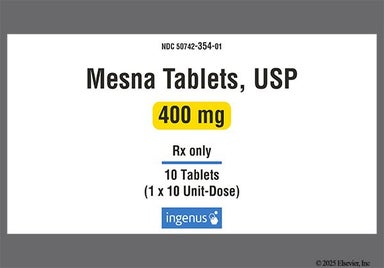
Mesna (Mesnex) images