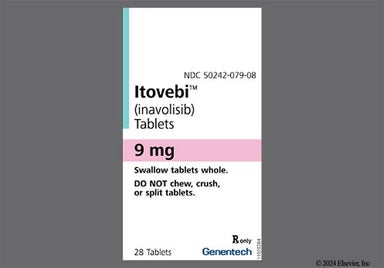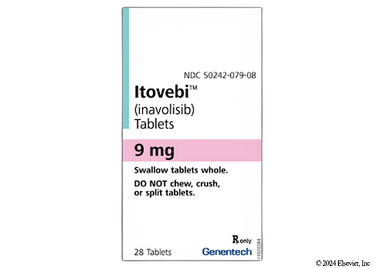
Itovebi
Itovebi (inavolisib) is used to treat adults with a certain type of advanced or metastatic breast cancer. The cancer must be hormone receptor-positive, human epidermal growth factor 2-negative (HR+, HER2-) with a PIK3CA mutation. People must have also already taken hormone therapy. Itovebi (inavolisib) works as a PI3K inhibitor to help stop the cancer from growing. It comes as tablets you swallow once a day. Common side effects include mouth sores, diarrhea, and high blood sugar. You take Itovebi (inavolisib) with two other medications, Ibrance and fulvestrant (Faslodex).


What is Itovebi (inavolisib)?
What is Itovebi (inavolisib) used for?
- HR+, HER2‑ advanced or metastatic breast cancer with a PIK3CA mutation, used with other cancer medications after hormone therapy
How Itovebi (inavolisib) works
Itovebi (inavolisib) is a kinase inhibitor. More specifically, it's a PI3K inhibitor. It blocks a kinase or protein called PI3K‑alpha.
Some HR+, HER2- breast cancers have a PIK3CA mutation. This mutation causes the cancer to grow out of control.
By blocking PI3K-alpha, Itovebi (inavolisib) slows cancer growth. It also helps break down the mutated form of PI3K-alpha, which helps reduce cancer growth further.
Drug facts
| Common Brands | Itovebi |
|---|---|
| Drug Class | PI3K inhibitor |
| Controlled Substance Classification | Not a controlled medication |
| Generic Status | No lower-cost generic available |
| Availability | Prescription only |

Side effects of Itovebi (inavolisib)
The following side effects may get better over time as your body gets used to the medication. Let your healthcare provider know immediately if you continue to experience these symptoms or if they worsen over time.
Common Side Effects
- Low white blood cell counts (95%)
- Lower hemoglobin levels (88%)
- Higher fasting blood sugar (85%)
- Low platelet count (84%)
- Mouth sores (51%)
- Diarrhea (48%)
- Low calcium (42%)
- Low potassium (38%)
- Fatigue (38%)
- Higher liver enzyme levels (34%)
- Low sodium (28%)
- Nausea (28%)
- Low magnesium (27%)
- Rash (26%)
Less Common Side Effects
- Lower appetite
- Vomiting
- Headache
- Dry skin
- Hair thinning or hair loss
- Weight loss
- Urinary tract infection (UTI)
- COVID‑19 infection (23%)
Itovebi (inavolisib) serious side effects
Contact your healthcare provider immediately if you experience any of the following.
- Very high blood sugar: excessive thirst, peeing more often, blurred vision, confusion, deep or rapid breathing, unusual hunger with weight loss, fruity breath, sleepiness, nausea or vomiting, confusion, flushed face, dry skin
- Severe mouth sores: painful redness, swelling, or open sores in the mouth; trouble eating or drinking
- Severe diarrhea: frequent diarrhea, loose or watery stools, blood or mucus in stool
- Dehydration and possible kidney problems: dizziness, fainting, urinating less
The following Itovebi (inavolisib) side effects have also been reported
Side effects that you should report to your care team as soon as possible:
- Allergic reactions—skin rash, itching, hives, swelling of the face, lips, tongue, or throat
- Diarrhea
- High blood sugar (hyperglycemia)—increased thirst or amount of urine, unusual weakness or fatigue, blurry vision
- Infection—fever, chills, cough, sore throat, wounds that don't heal, pain or trouble when passing urine, general feeling of discomfort or being unwell
- Low red blood cell level—unusual weakness or fatigue, dizziness, headache, trouble breathing
- Pain, redness, or swelling with sores inside the mouth or throat
- Unusual bruising or bleeding
Side effects that usually do not require medical attention (report these to your care team if they continue or are bothersome):
- Dry skin
- Fatigue
- Hair loss
- Headache
- Loss of appetite with weight loss
- Nausea
- Vomiting

Pros and cons of Itovebi (inavolisib)
Pros
- Taken by mouth
- Taken once every day (straightforward dosing schedule)
Cons
- Often causes mouth sores and diarrhea, which can be uncomfortable
- Need frequent blood sugar checks, especially early on

Pharmacist tips for Itovebi (inavolisib)

- Take Itovebi (inavolisib) with or without food. Take it around the same time every day. This helps keep medication levels steady in your body. Remember, Itovebi (inavolisib) is taken with two other cancer medications. Use a calendar or reminders to help you stay on track of your treatment plan.
- Swallow the Itovebi (inavolisib) tablets whole. Don’t crush, chew, or split them before swallowing. This might affect how the medication works.
- If you miss a dose of Itovebi (inavolisib) and it’s been less than 9 hours, take it as soon as possible. If it's been more than 9 hours, skip the missed dose and take your usual dose the next day. Don't take two doses at the same time to make up for a missed dose because this can raise your risk of side effects.
- If you vomit after taking Itovebi (inavolisib), don’t take an extra dose that day. Wait until the next day to take the medication at your usual dose.
- Itovebi (inavolisib) can often cause mouth sores, so take gentle care of your mouth from day one. Use a soft toothbrush to help protect your gums and mouth. Your care team might also recommend a mouthwash to help. Let your team know early if you feel mouth pain or if you see sores. Getting help early can make it easier to eat and drink and help prevent infections in the mouth.
- Diarrhea is common while taking Itovebi (inavolisib). If your care team says it's okay, keep an anti-diarrheal like loperamide (Imodium A-D) on hand. Start taking it with your first loose stool and drink plenty of fluids. Treating diarrhea early helps prevent dehydration. Tell your care team if diarrhea is hard to manage or becomes severe.
- Check your blood sugar while taking Itovebi (inavolisib). This medication can raise your blood sugar, usually early in treatment. Follow your care team's instructions on how often to check your fasting blood sugar. Check about every 3 days during week 1, weekly for the next 3 weeks, every 2 weeks for the next 8 weeks, then monthly. If your blood sugar stays high, tell your care team so they can help you manage it.
- Your care team will help you control your blood sugar during treatment with Itovebi (inavolisib). They'll talk to you about meal planning and other tips. Your prescriber might also give you medications to help lower your blood sugar. Follow their directions if they do.
- Get your blood tests done when your prescriber tells you to while taking Itovebi (inavolisib). They'll check your A1C (your average blood sugar) every 3 months. They might also check your blood counts and electrolytes. You take Itovebi (inavolisib) with two other cancer medications, which might also need regular lab tests. Based on the results, your prescriber might adjust your medications to keep you safe.
- If you can become pregnant, use non-hormonal birth control while taking Itovebi (inavolisib) and for 1 week after your last dose. This medication can harm an unborn baby. If you get pregnant during treatment, let your oncologist know right away.
- If you can get someone else pregnant, be sure to use birth control like condoms while you're taking Itovebi (inavolisib). Keep using birth control for 1 week after your last dose. If your partner becomes pregnant, tell your oncology team right away.

Risks and warnings for Itovebi (inavolisib)
Itovebi (inavolisib) can cause some serious health issues. This risk may be even higher for certain groups. If this worries you, talk to your doctor or pharmacist about other options.
High blood sugar
- Risk factors: History of diabetes | Risk of diabetes | History of high fasting blood sugar or high A1C levels
Itovebi (inavolisib) can raise blood sugar levels. Sometimes, it can get very high, which can be dangerous. Rarely, it can lead to a serious problem called ketoacidosis or be fatal.
Before starting Itovebi (inavolisib), your care team will check your fasting blood sugar. They'll also check your A1C (your average blood sugar over about 3 months). If needed, your prescriber will help get your blood sugar under control before starting treatment.
High blood sugar can happen early, sometimes within a few days of starting Itovebi (inavolisib). You'll need to check your fasting blood sugar often at the start, then once a month later on. Your prescriber will also check your A1C every 3 months. If your blood sugar stays high, they might add medications to help manage this. Sometimes, they might also pause treatment, lower your Itovebi (inavolisib) dose, or stop the cancer medication.
Call your care team right away if you notice signs of very high blood sugar. This can include extreme thirst, frequent urination, and blurry vision. Other signs include very dry mouth, fruity breath, fast or deep breathing, nausea, and confusion.
Mouth sores
Painful mouth sores are common with Itovebi (inavolisib) and can sometimes be severe. They often start to appear within the first 2 weeks of treatment. Your care team might suggest a mouthwash containing a steroid to help prevent or manage them.
Tell your care team if you have mouth pain, redness, swelling, or open sores in the mouth while taking Itovebi (inavolisib). Getting help early can make it easier to eat and drink well later on. Depending on how severe your mouth sores are, your prescriber might pause the medication, lower your dose, or stop it.
Diarrhea
Itovebi (inavolisib) can cause diarrhea. It often starts within the first 2 weeks of treatment. Sometimes, it can be very severe and lead to dehydration or kidney problems. Ask your oncologist about anti-diarrheal medications like loperamide (Imodium A-D) to keep on hand.
If diarrhea happens while taking Itovebi (inavolisib), start an anti‑diarrheal medication at the first sign of loose stools. Be sure to drink extra fluids to lower the risk of dehydration and other serious problems. Call your care team if the diarrhea is bothersome or severe, you feel dizzy, or you see blood or mucus in your stool. If it's severe, your prescriber might pause Itovebi (inavolisib), lower your dose, or stop it.
Harm to an unborn baby
Based on animal studies and how it works, Itovebi (inavolisib) can harm an unborn baby if taken during pregnancy. Before starting this medication, your prescriber might check if you're pregnant.
If you or your partner can become pregnant, use non-hormonal birth control and condoms while you're taking Itovebi (inavolisib). Keep using birth control for 1 week after your last dose. If a pregnancy happens during treatment, tell your oncology care team right away.

Itovebi (inavolisib) dosage
Typical dosage for Itovebi (inavolisib)
The typical dose is 9 mg by mouth once a day.
Your dose might be different if you have kidney problems.

What are alternatives to Itovebi (inavolisib)?

Itovebi (inavolisib) images